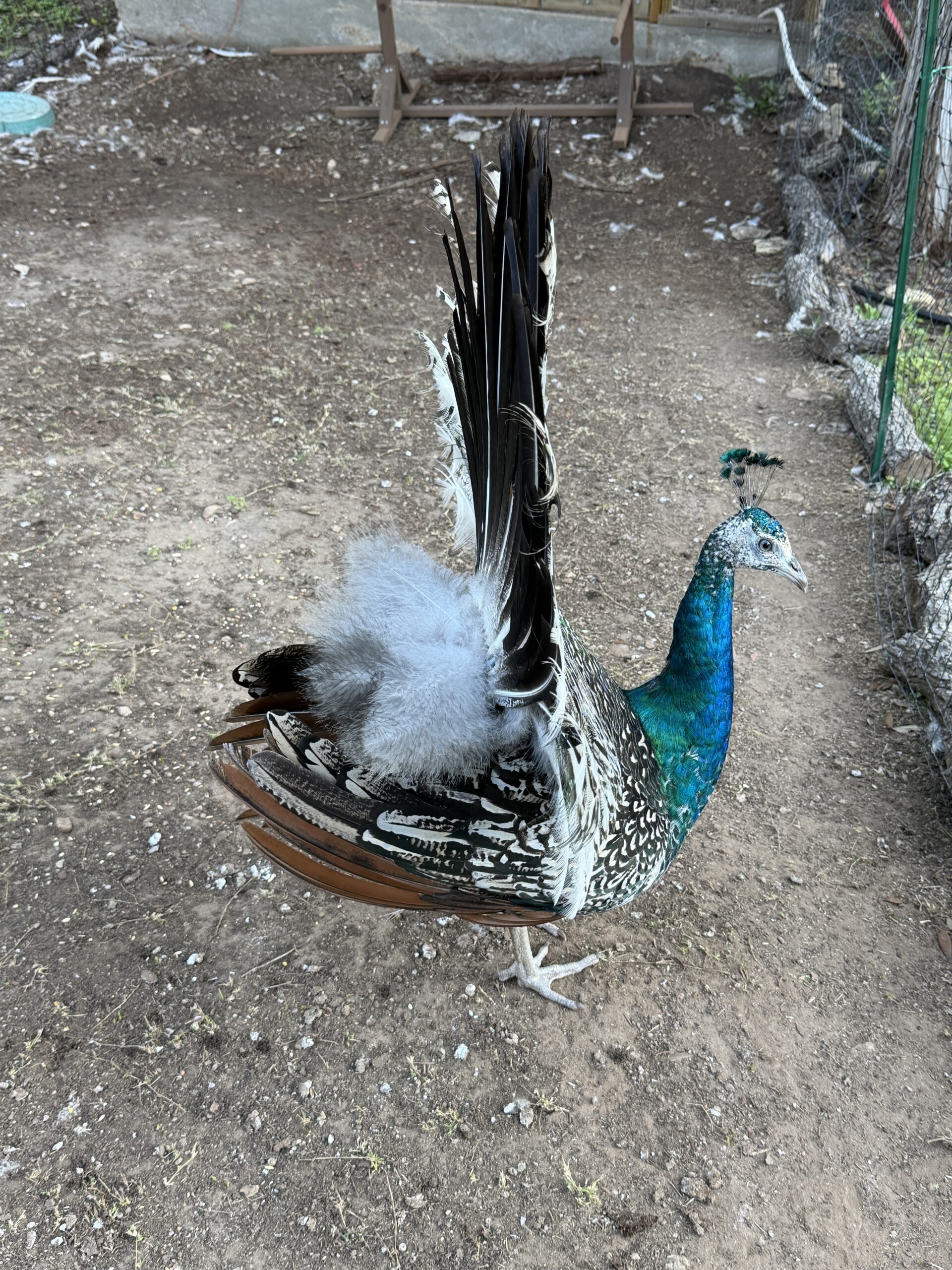
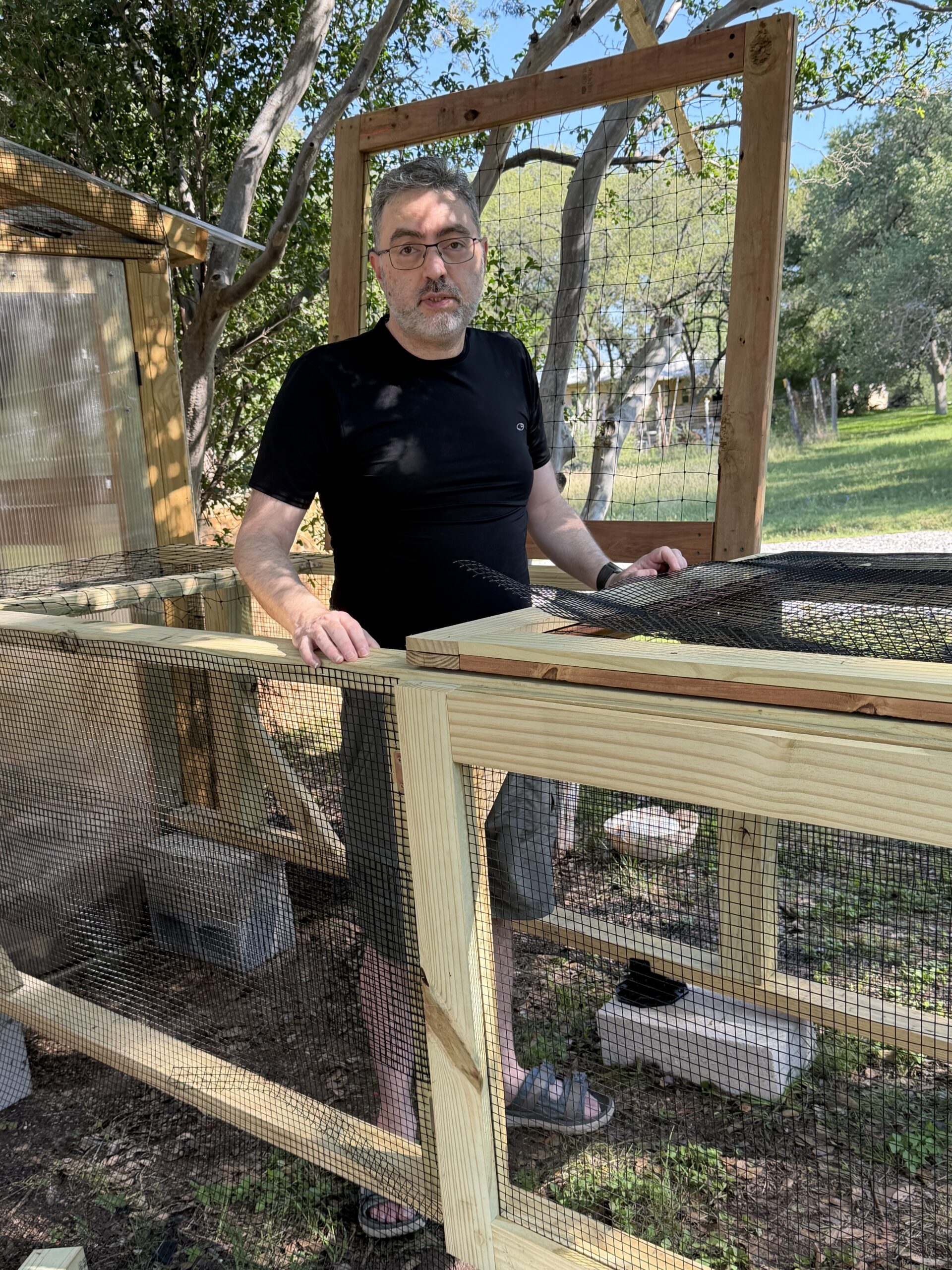
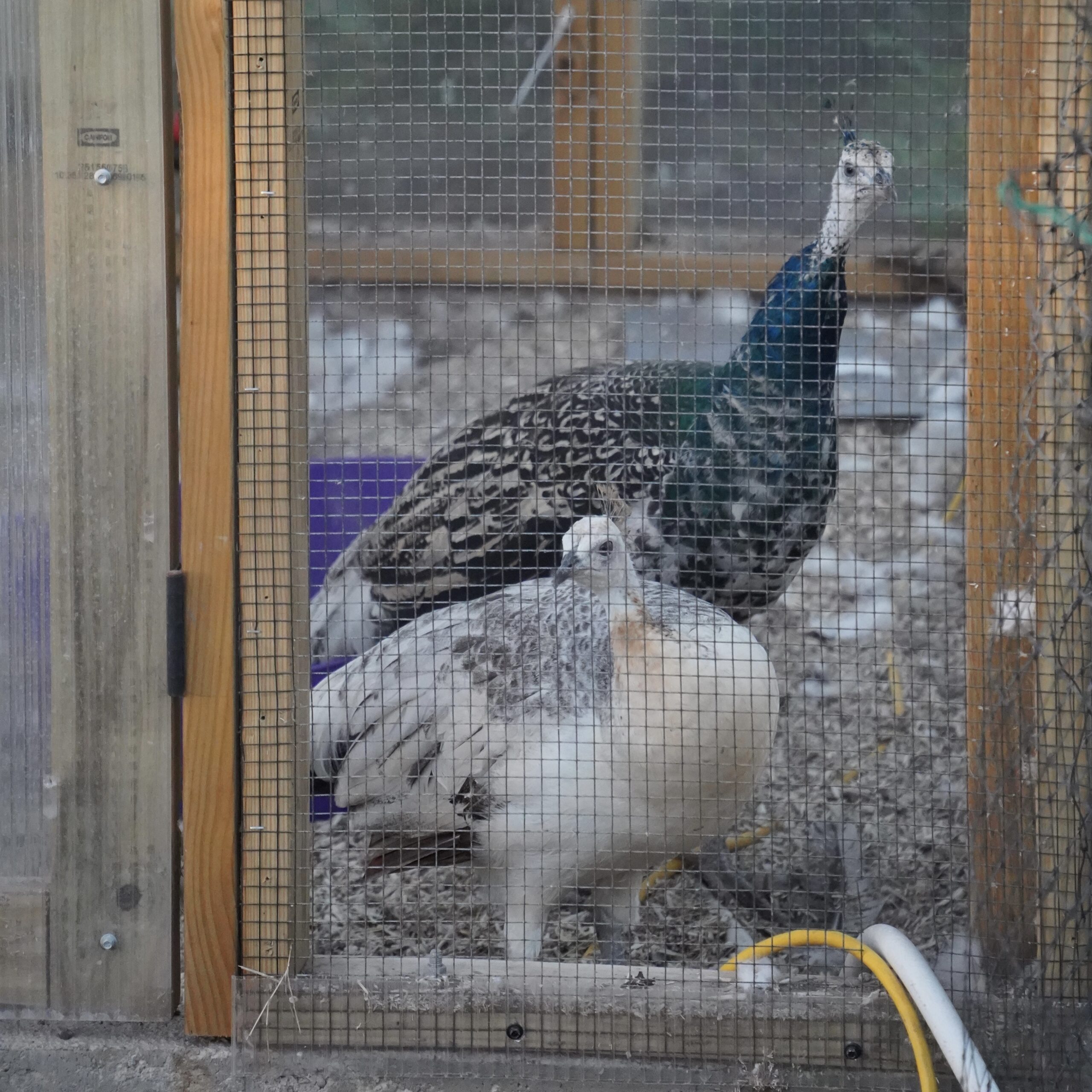
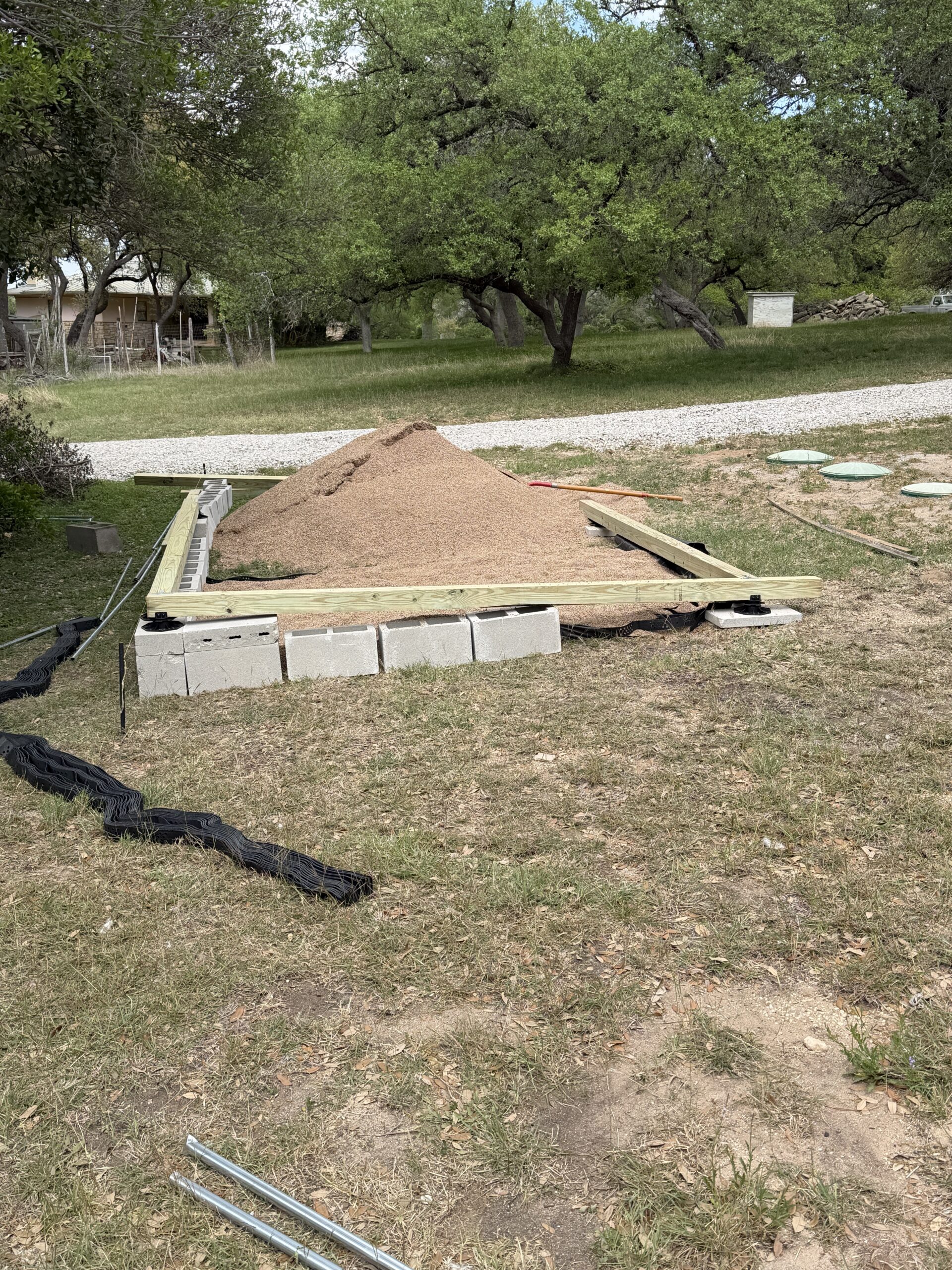
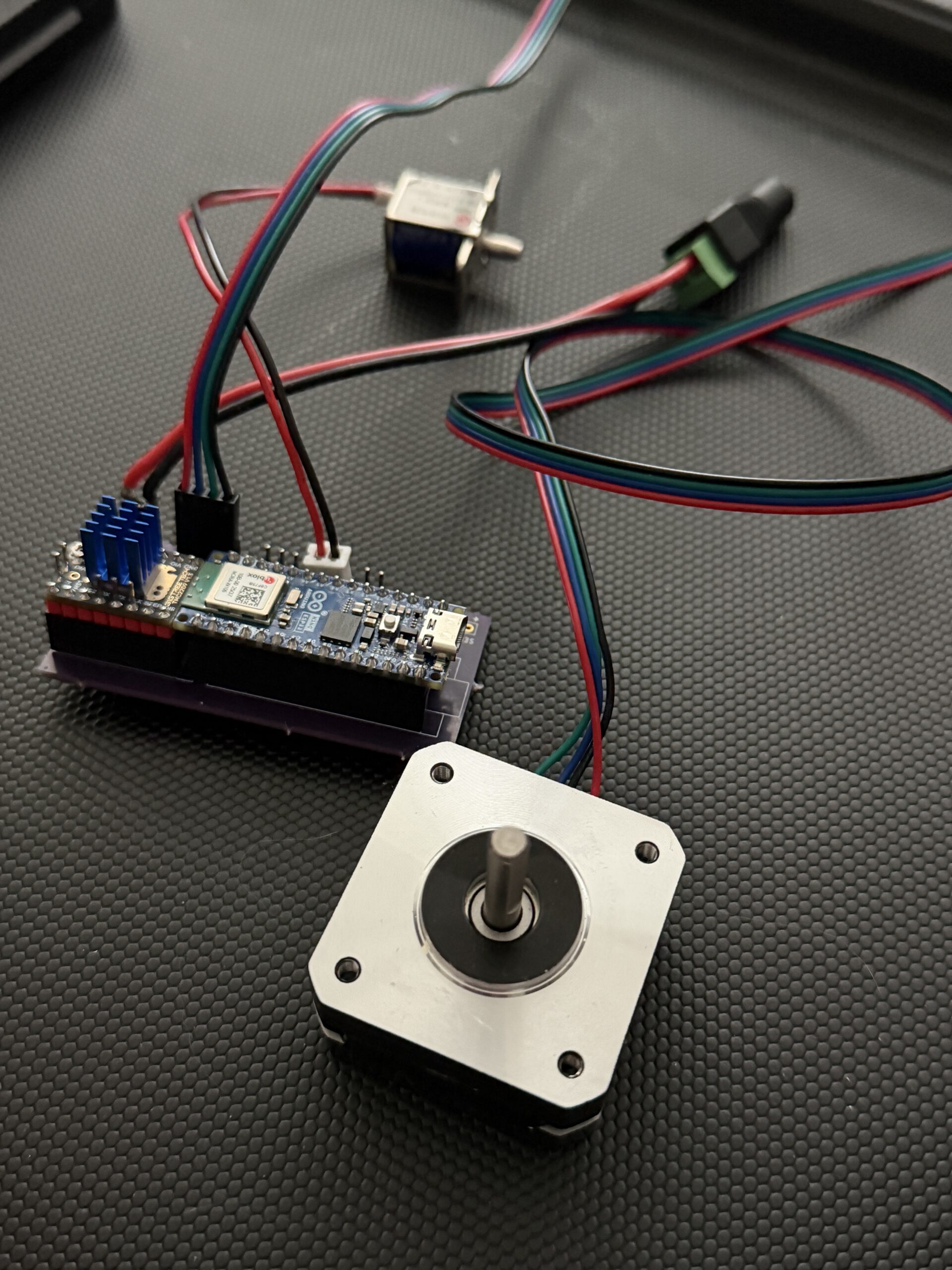
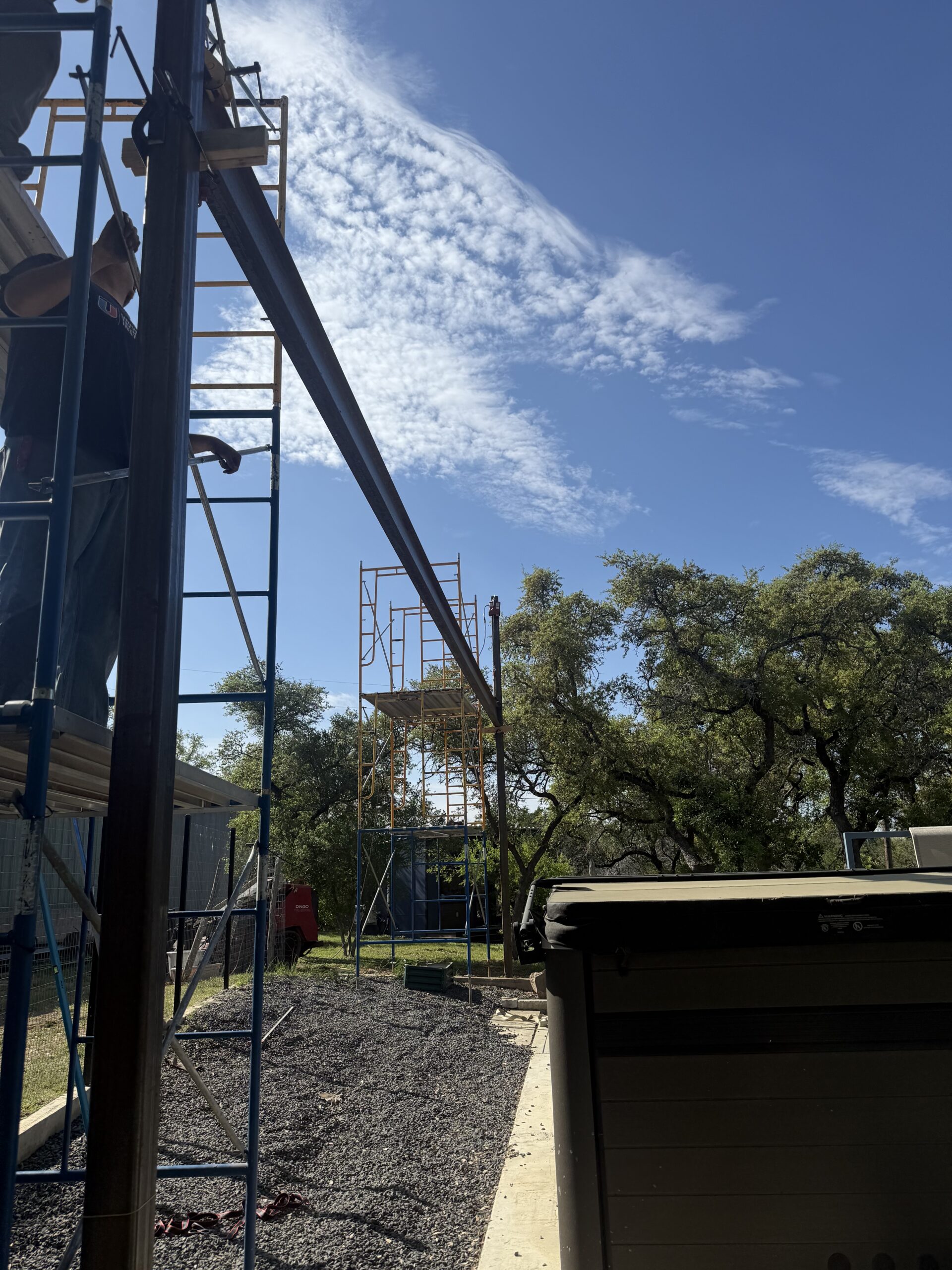
Meanwhile, at the Ranch #5

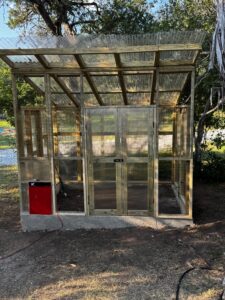
Finishing the Ranch Breezeway (and Breaking My Kneecap)

The Knee
Two rebuilds and a hard lesson later, the breezeway’s finished – a process that left me with a fractured kneecap and newfound respect for leveling every inch. The second rebuild, same reason, different section. The lesson, which I now know in my bones and also one specific kneecap: level everything.

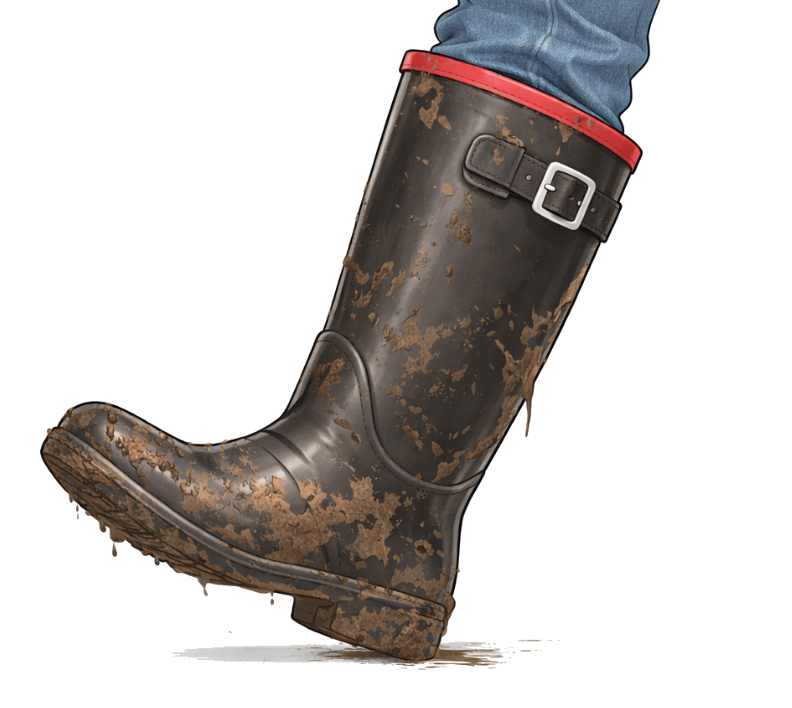
Three weeks ago, I caught my foot on a utility room bin, fracturing my kneecap on the concrete floor.

My response was to go kneel inside the almost-finished breezeway for two hours.

The kneecap lodged its objection. I overruled it.

By end of afternoon, I couldn’t walk on it. Couldn’t sleep either. At 6am I gave up, accepted defeat, and went to the ER — where a very patient ER doc used the word “fracture” in a tone that suggested she had opinions about my life choices.

Work stopped. My trip to Portland got canceled. The hardware store guys started asking where I was.

I am choosing to find that charming rather than alarming.

The Part Where I Had to Watch

Jon offered to bring Katie and the girls out. Thank goodness.

They finished the hardcloth installation on the pen and the breezeway while I watched from the sidelines with my leg immobilized and my opinions fully intact.

I am not someone who watches well — I hold the other end of things, offer real-time commentary on whether the measurement looks right, and am, according to James, a delight to work with.

He said it without making eye contact, but still.

But the project was done. The thing I started in the rain, rebuilt twice, planned with an AI who has never touched a power tool, and then knelt on for two hours on a fractured kneecap was finished.

I’ll take it.

First Day in the Pen

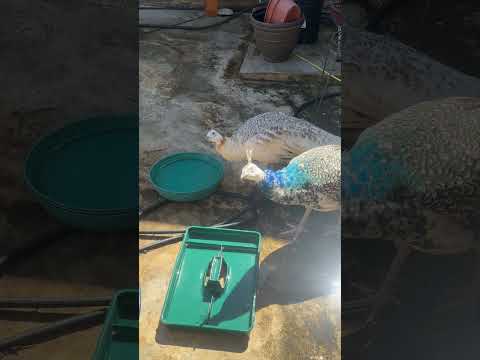
I set up a camera on a tripod to document the moment.

Neo walked over, assessed the situation, grabbed the power cord, and pulled the whole thing over in one deliberate motion.

Not an accident. A statement.

Of course he did.

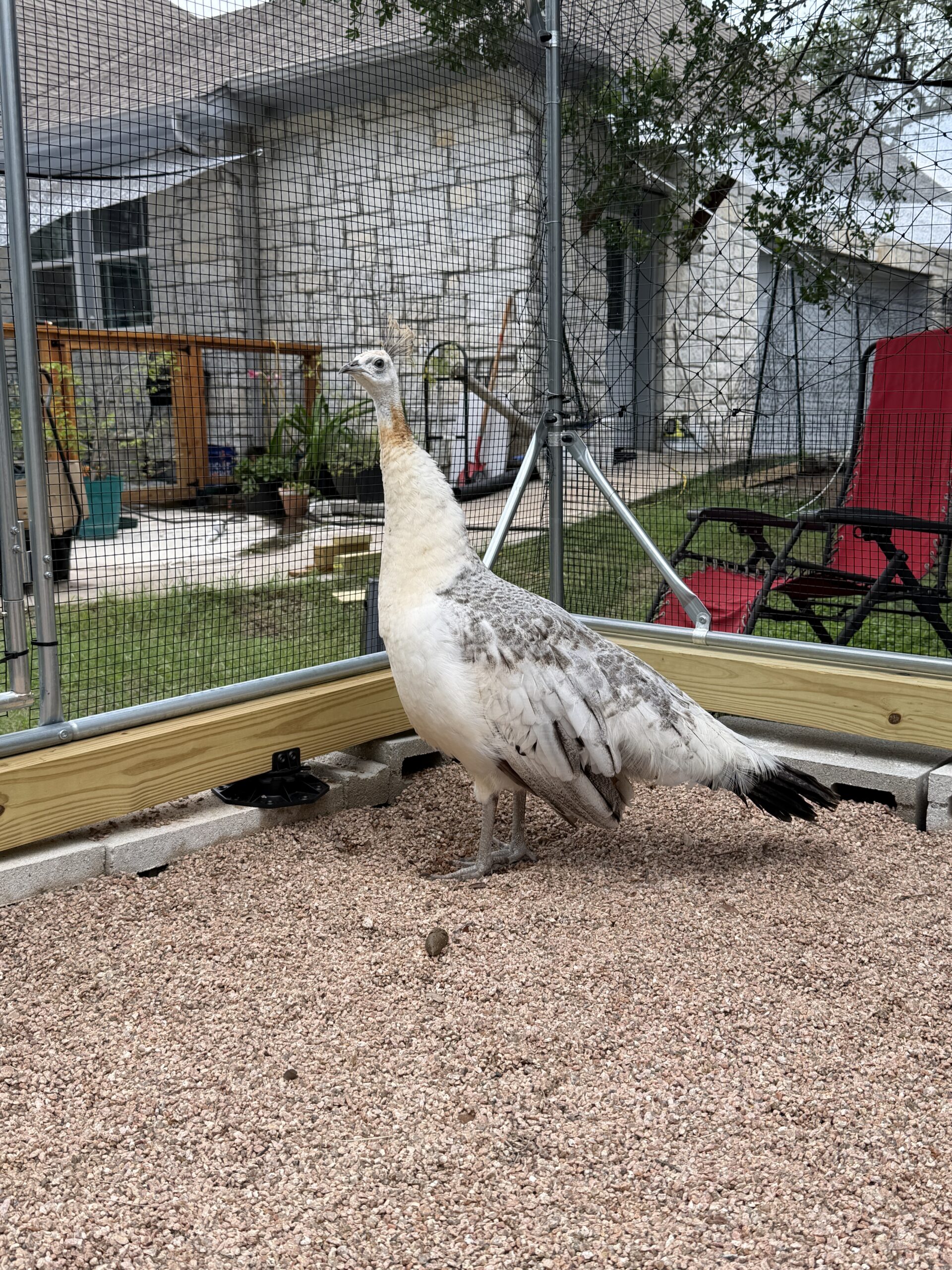
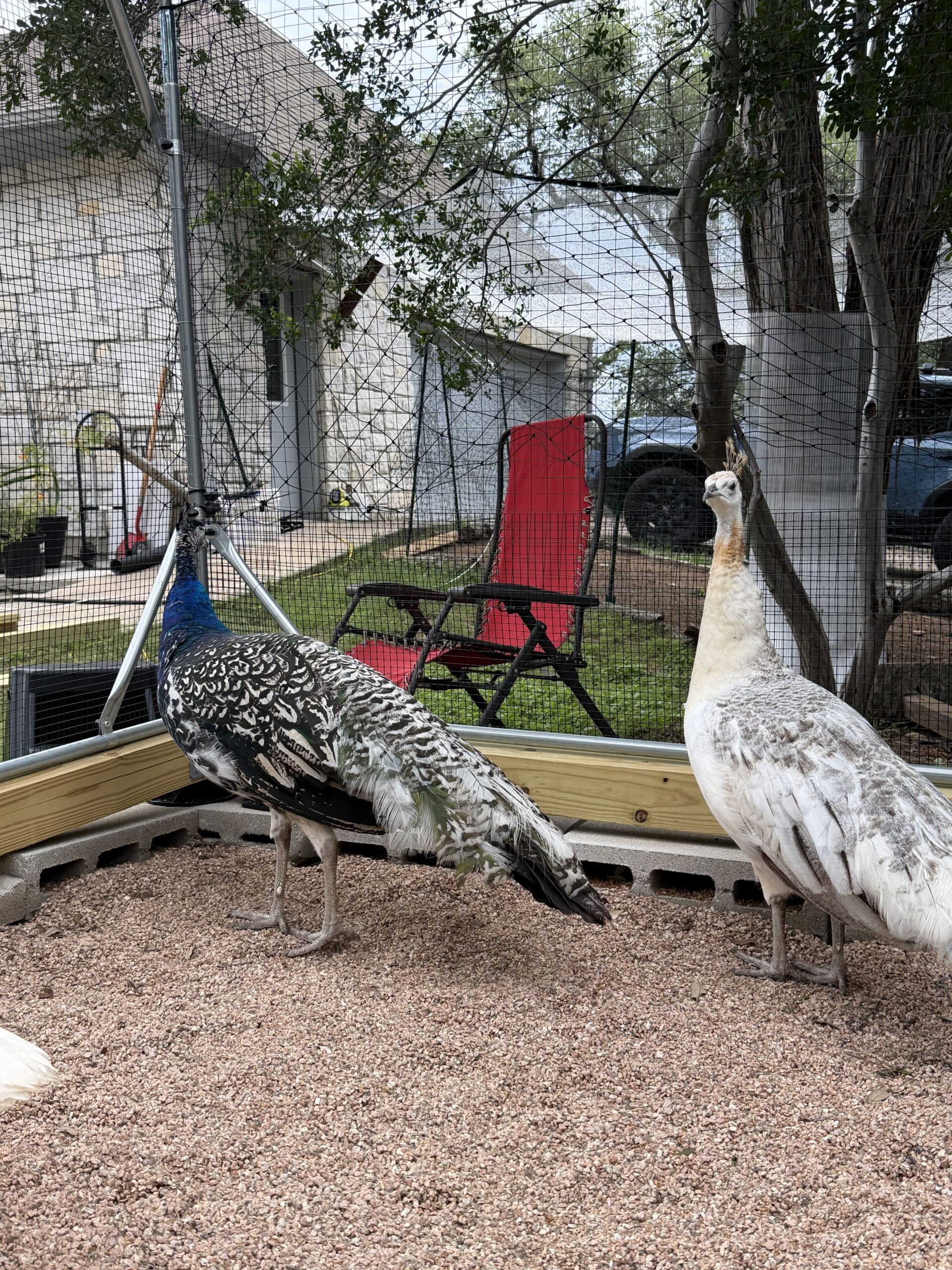
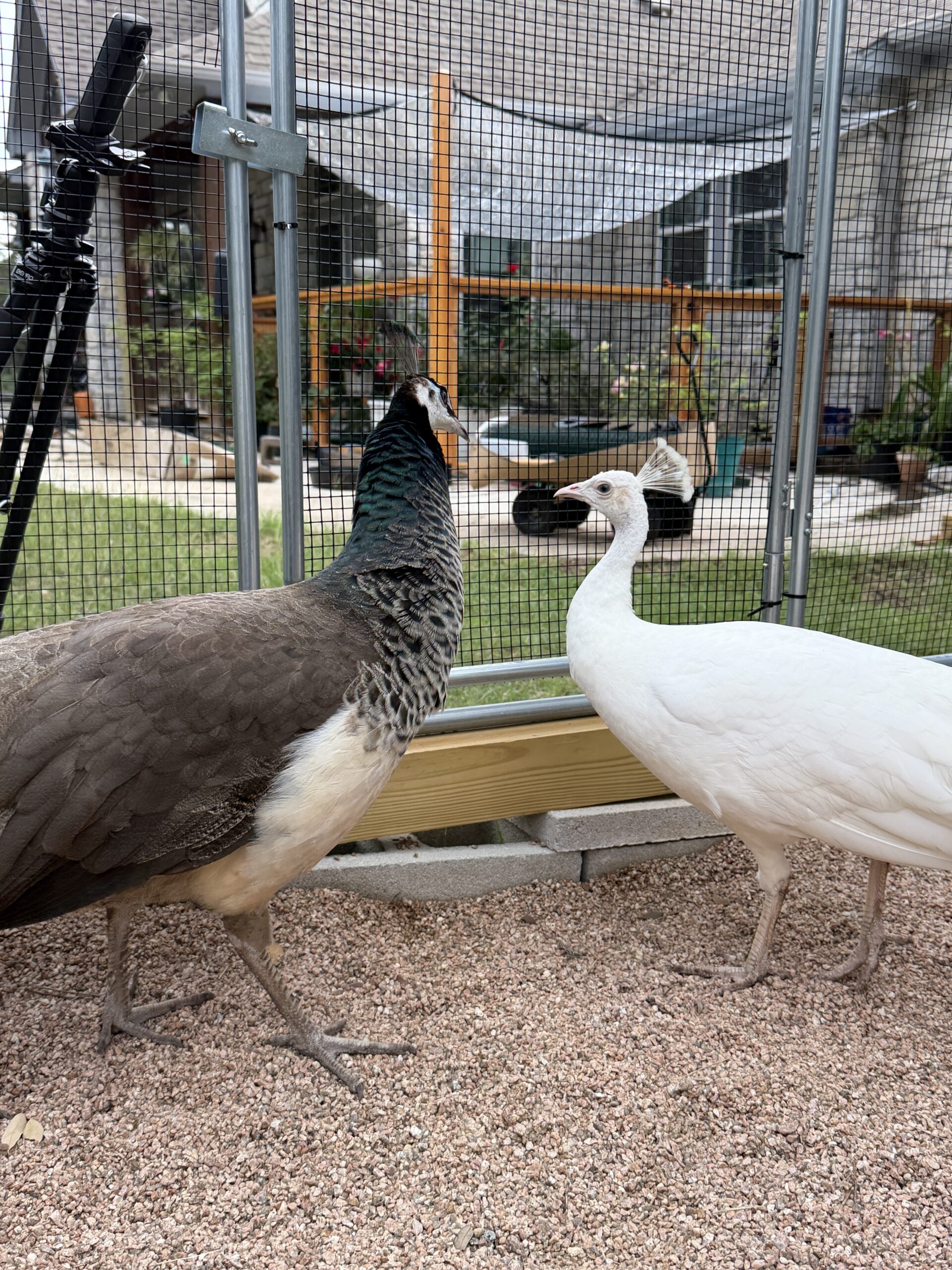
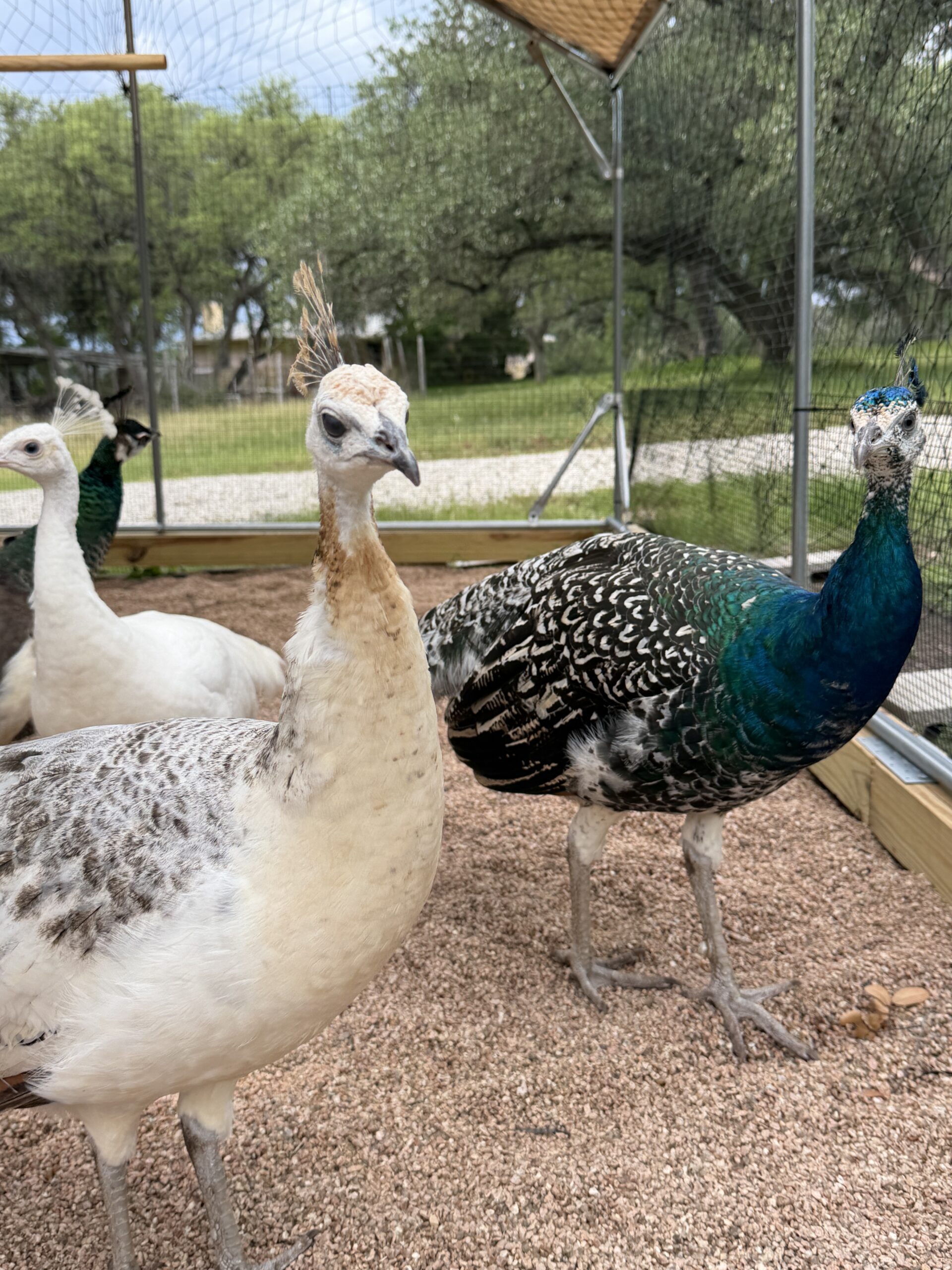
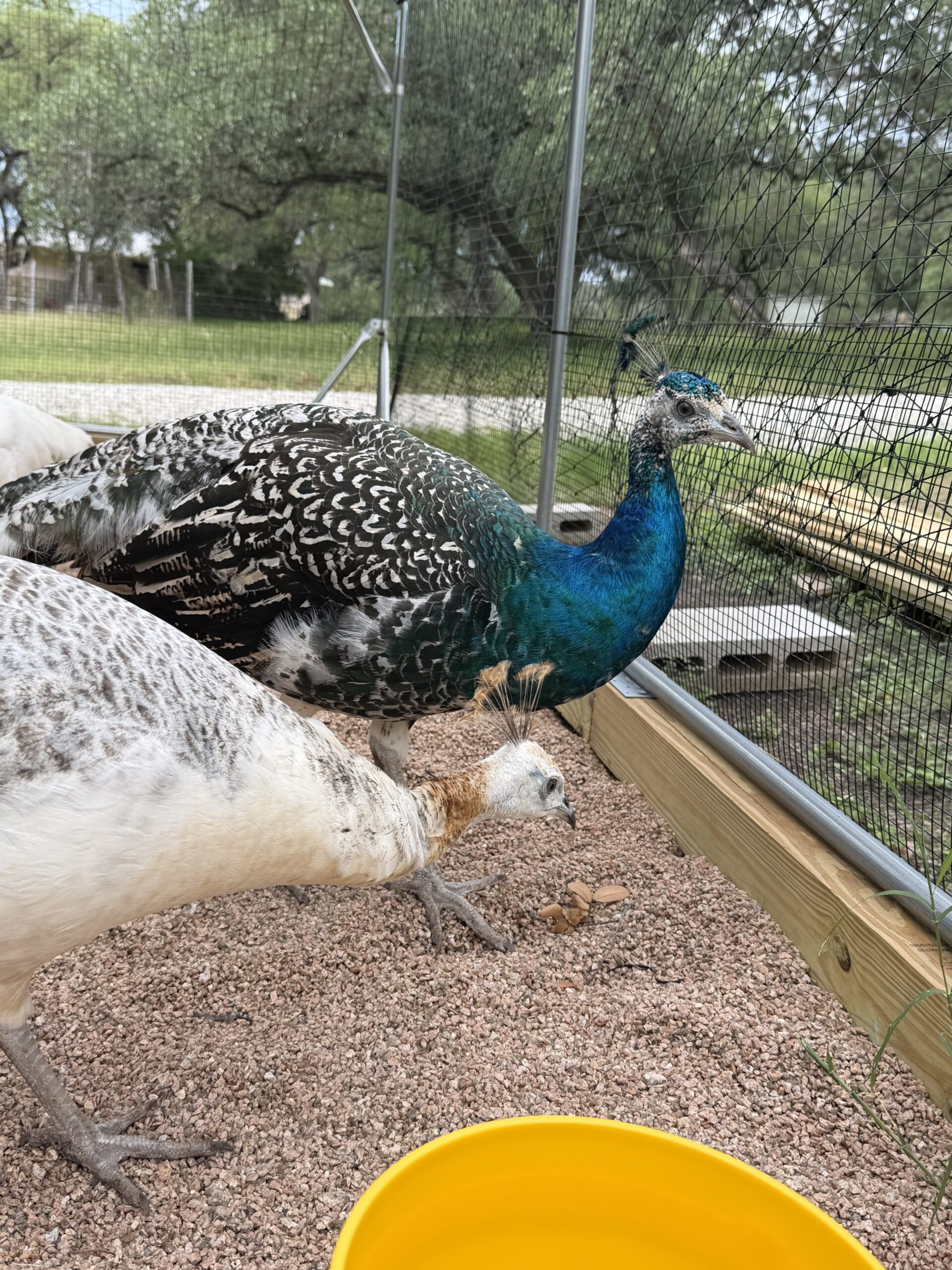
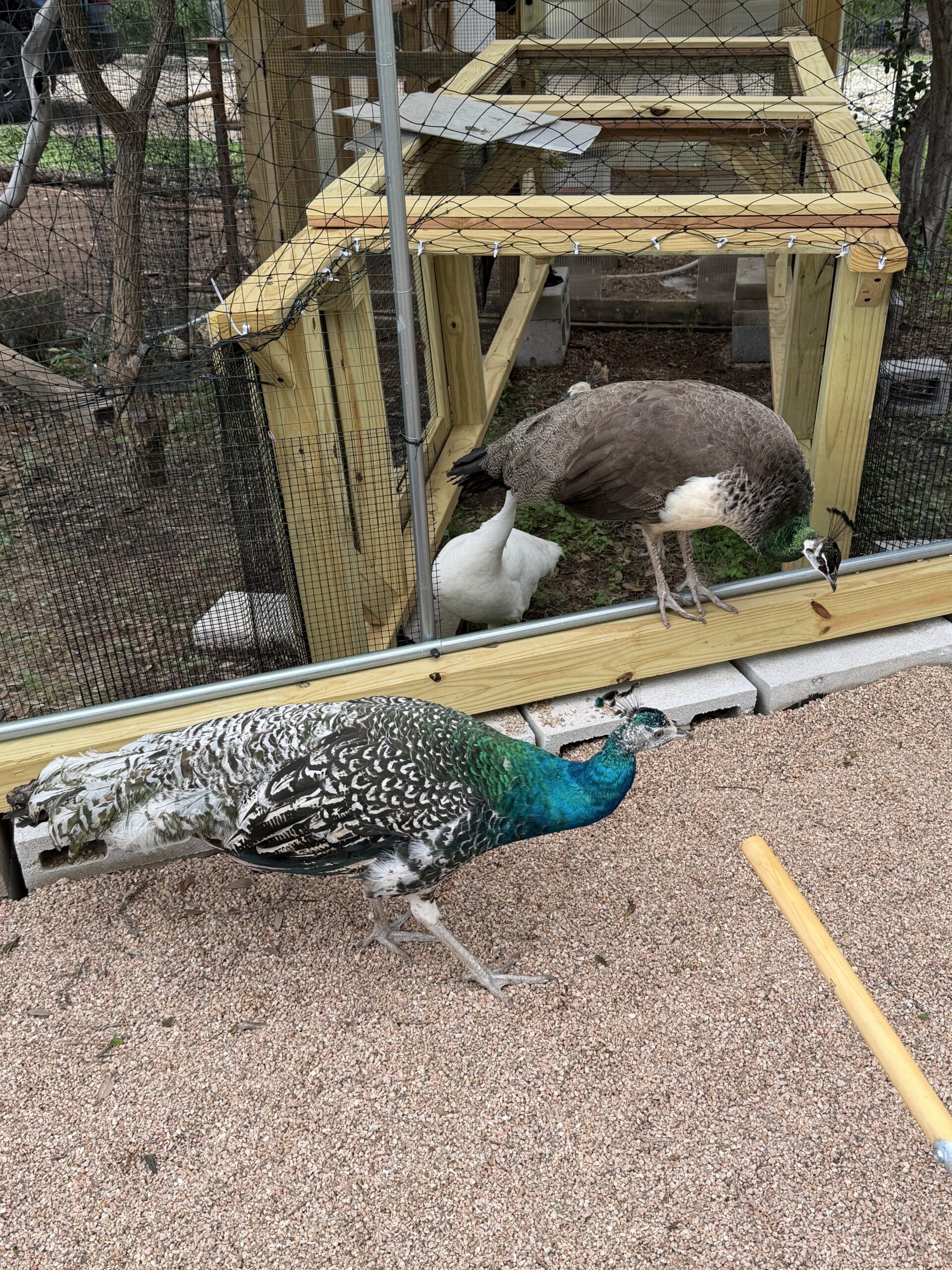
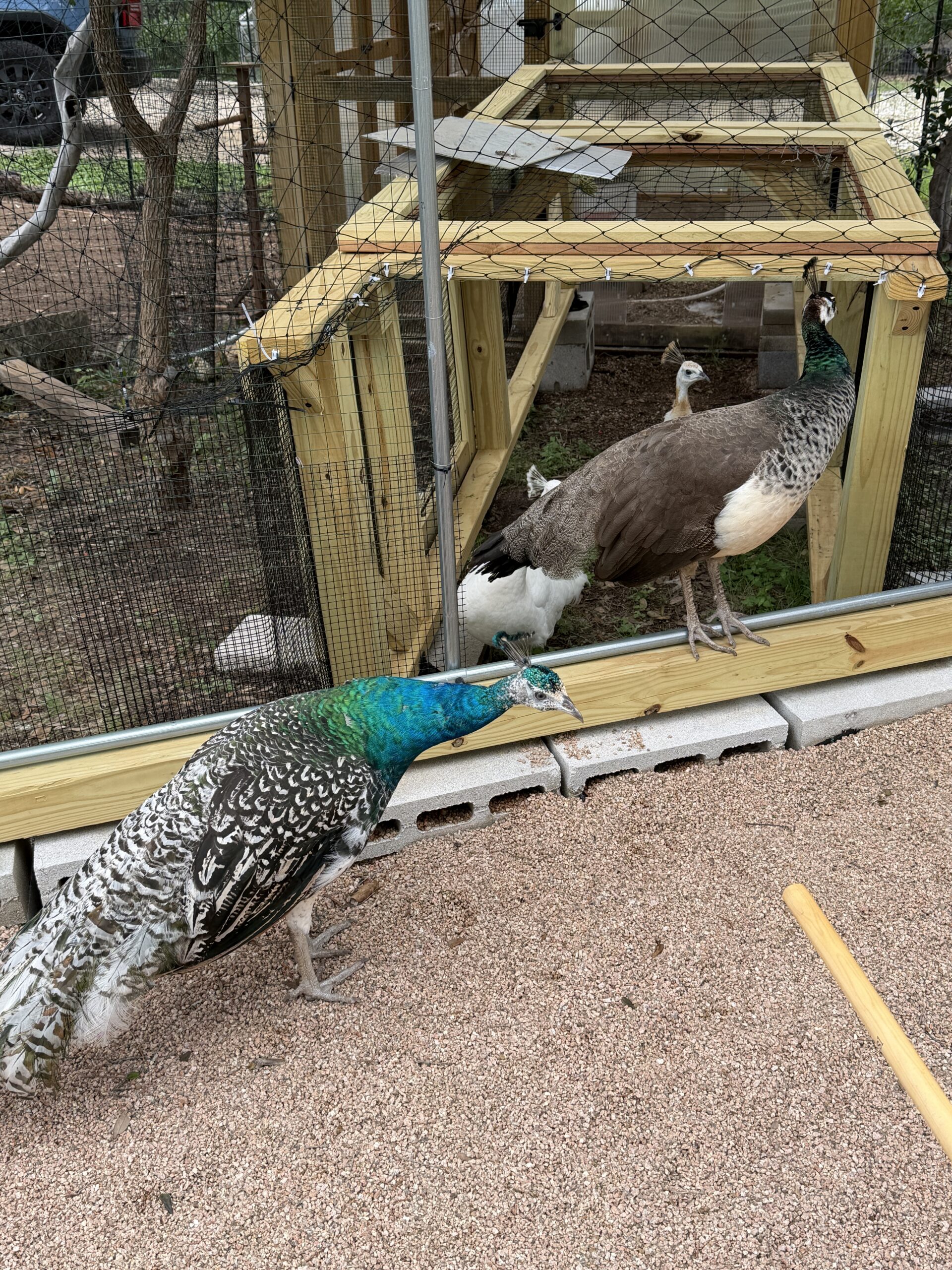
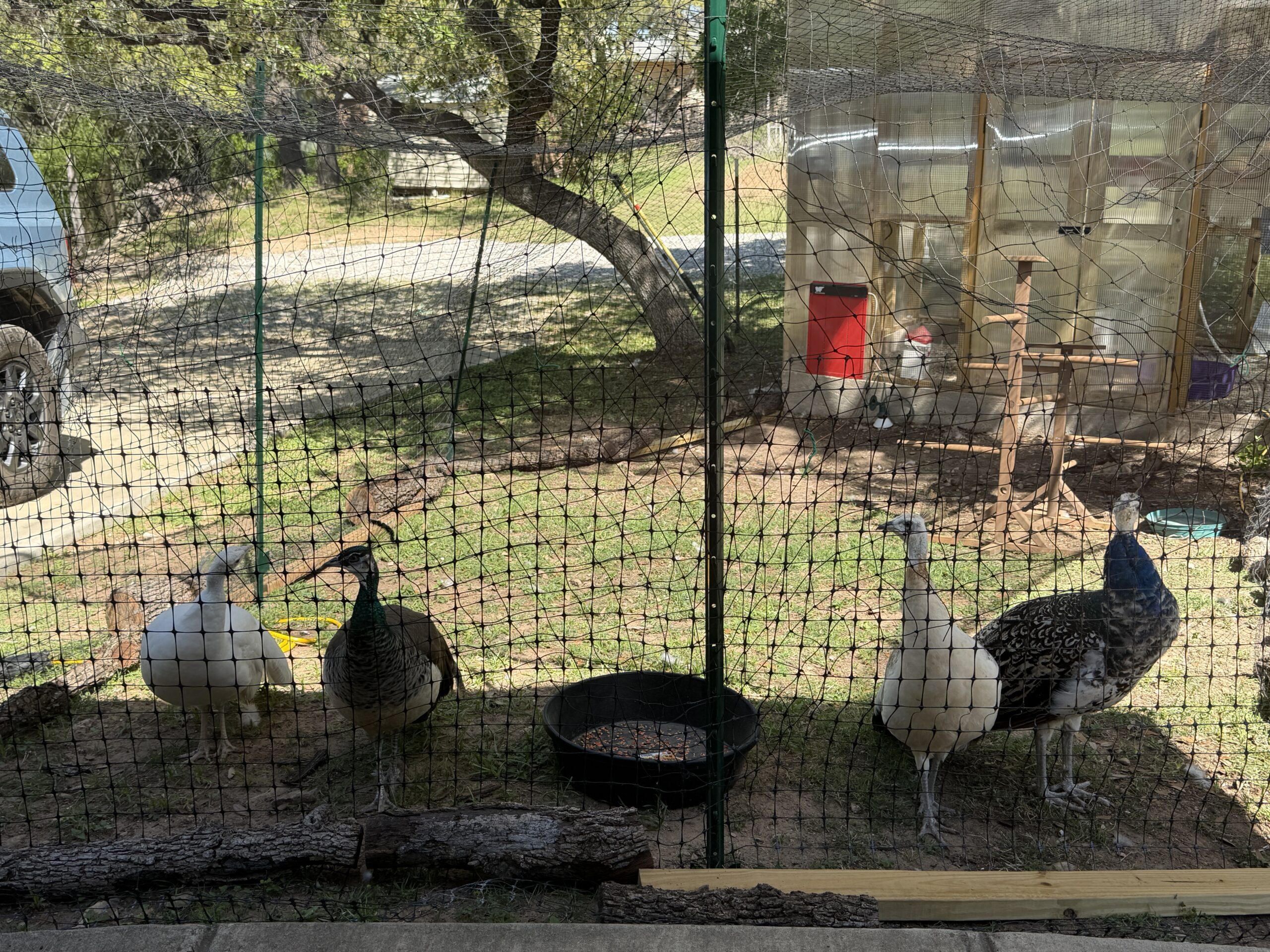
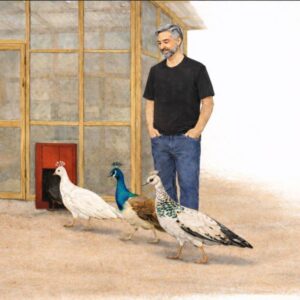
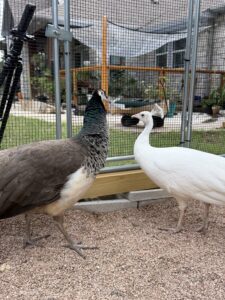
I carefully lowered myself to the gravel — fractured kneecap and all — and took pictures from their level. Which is how I ended up sitting on the ground in the new pen, surrounded by four peafowl, holding my camera with my hands like some kind of tourist.

Neo stood nearby and watched me. He didn’t help.

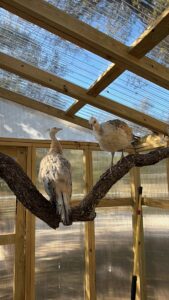
The birds were cautious. Four birds who had been waiting months for more space, and when they finally got it, they stood at the edge of it like it might be a trap.

Honestly, that was fair.

It took a few days. And then one morning I walked out and all four were in the pen — sitting down, settled, not testing anything.

Just in there. Like they’d always been there.

That was the moment it was complete.

The total cost: one kneecap, one impact driver, a lot of lumber, and way too much time and patience.

Would I do it again? Yes. Minus the kneecap part, and if I’d leveled it to start with.

The kneecap was non-negotiable, apparently.

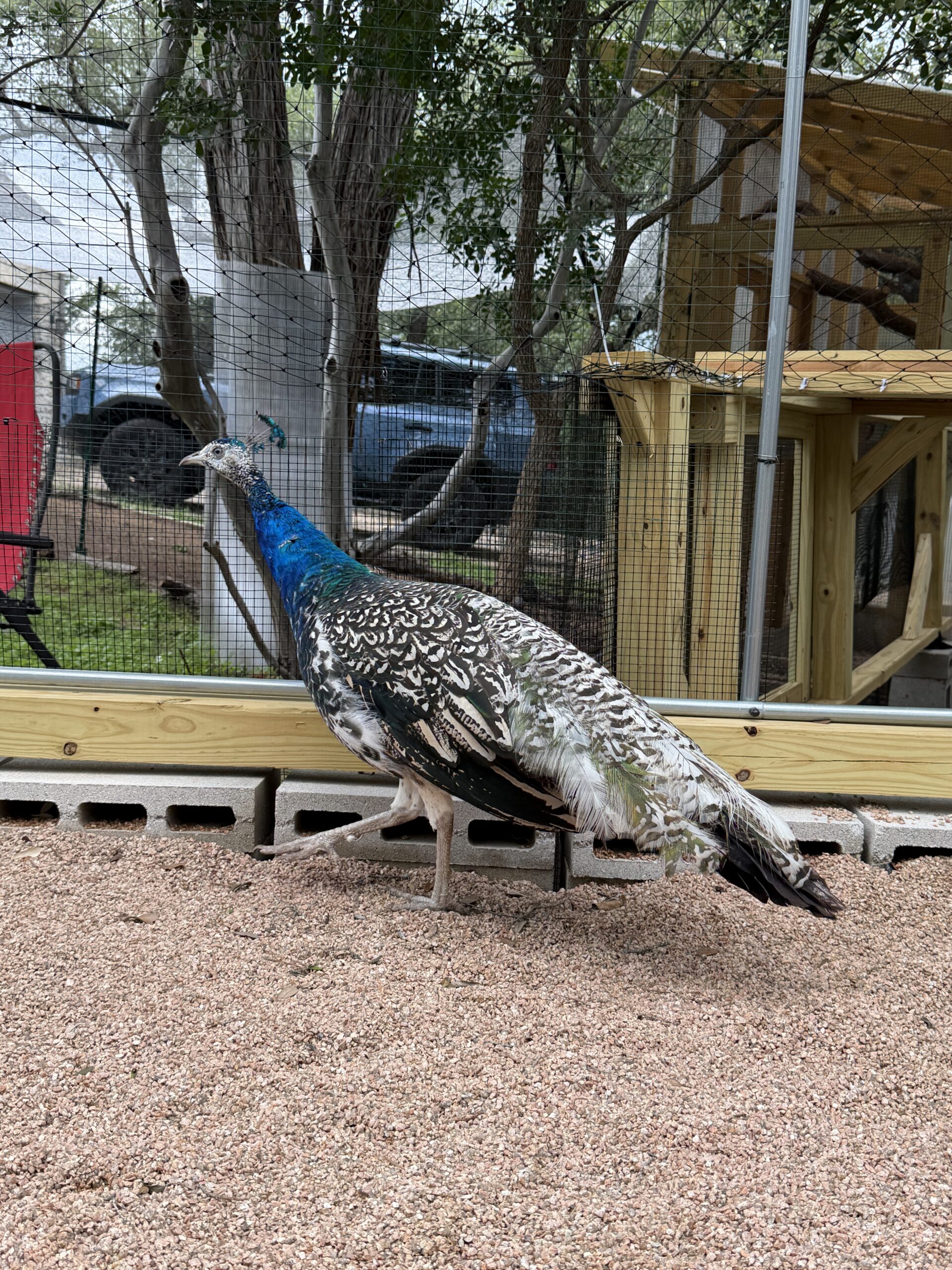
From the New Pen

Questionable Choice Award

Presented with reluctant pride

This round, the award goes to me. Again.

For the decision — made on a freshly fractured kneecap, in the final stretch of a project that had already been rebuilt twice — to keep kneeling. For two hours. Because almost done felt like a reasonable counterargument to basic structural damage.

The committee would like to note that this is the second consecutive award presented to the same recipient.

The committee would further like to note that this is not a streak anyone should be proud of.

The committee is beginning to wonder if the ranch selects for this, or produces it.

Congratulations, Shandra. The hardware store guys missed you. The birds did not notice you were gone. The kneecap has filed a formal complaint.


If you need me, I’ll be on the couch with my leg elevated, not in Portland, watching the birds on a camera Neo has not yet located — and googling “whether two hours of kneeling on a construction project with a fractured kneecap counts as aggravating the injury or just optimism.”
Meanwhile, at the Ranch #4

The Breezeway Is Under Construction.

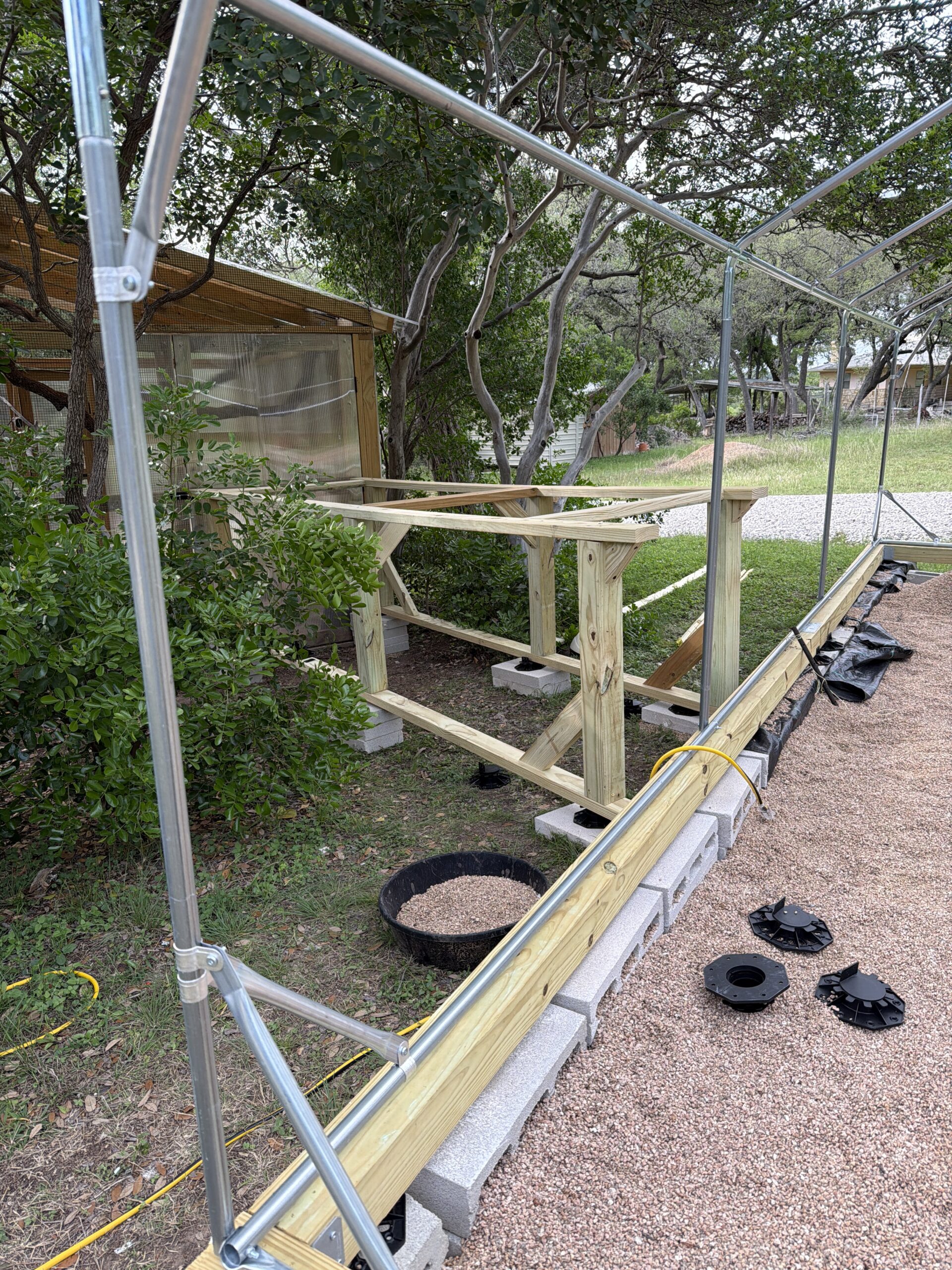
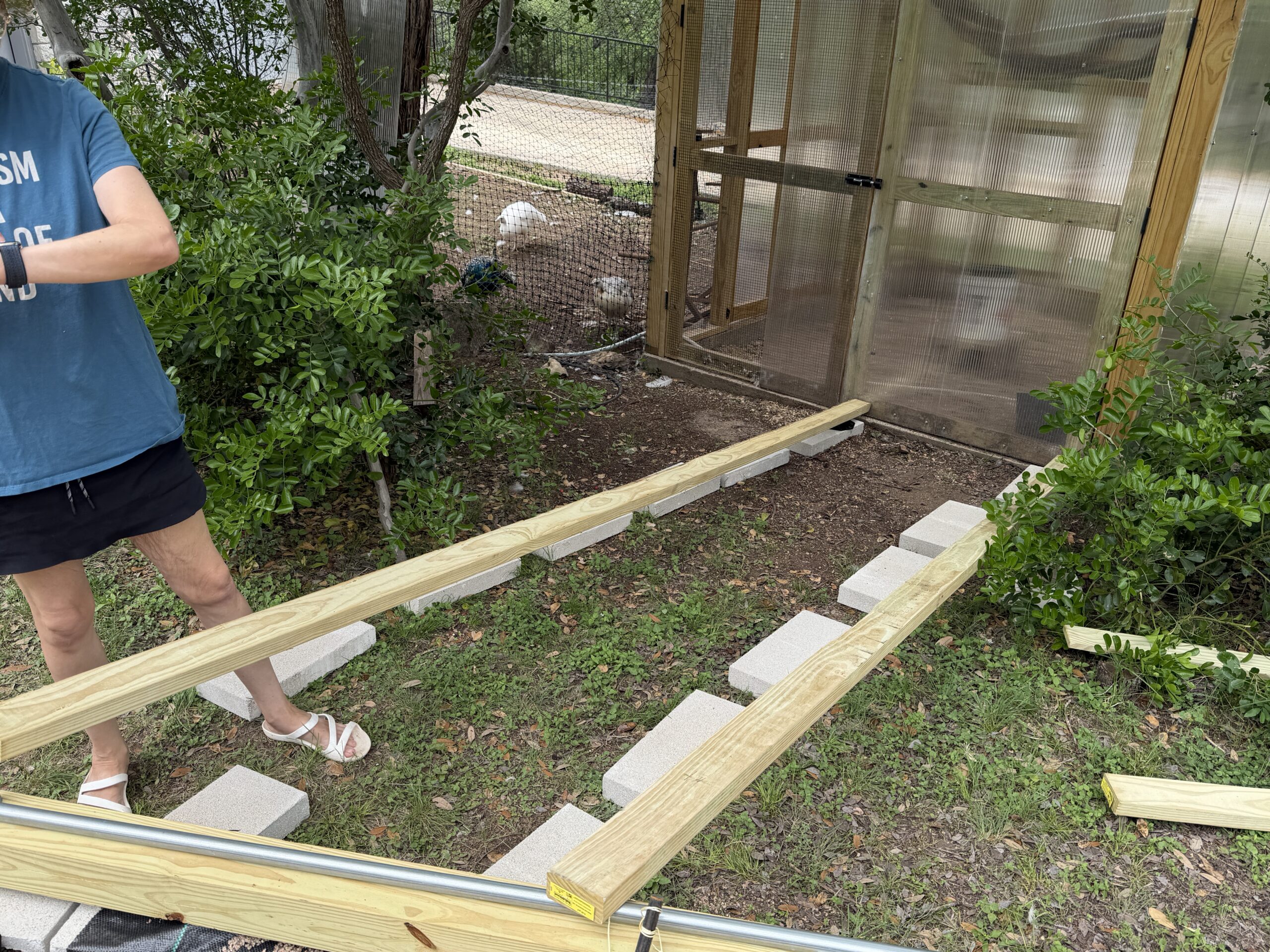
Breezeway mid-build
The base, leveled more than once.

I am building a breezeway between the greenhouse and the new run.

I have never built anything like this. Not once. In my life.

What I have built is handyman projects. A shelf. A latch. Things you can fix with a hammer and low expectations.

This is not that.

So I did what any reasonable woman in 2026 does when handed an impossible project and no qualifications: I wrote a 20-page plan with AI. Every cut. Every board. Every unfamiliar technique explained — pocket jigs, framing, leveling — like a beginner’s guide for someone whose primary qualification was having birds and a deadline.

I had diagrams. A materials spreadsheet. A cut list. And confidence, which in retrospect was the most questionable piece of equipment I brought to site.

I do not have a completed breezeway.

What I have is a build that is going to turn out fine. Eventually. At roughly ten times the original time estimate.

The First Collision

The plan was to build along the slope rather than leveling the whole base with blocks. Technically fine. It would have worked “ok” — AI-speak for “this is a great idea.”

Halfway in, I realized I needed a side panel for access. Which meant the panel needed to sit level. Which meant the base needed to be level.

Which meant taking everything apart and rebuilding it from scratch.

One day. Gone.

The good news: it is more stable. It looks nicer. The side panel was the right call. The thing I was forced into is better than the thing I planned.

I just paid for that in daylight.

The AI Gave Me Two Jobs

Every morning before I pick up a tool, I reread the plan.

Not because I’m memorizing it. Because the AI has been quietly embedding errors all along, and if I don’t catch them before I cut, I’m going to build them.

Measurements that don’t add up. Steps that assume tools I don’t own. A calculation that runs ahead of reality by half an inch.

Small things. Confident things.

The AI wrote the plan. The AI also now has me running full-time QA on the plan.

I did not know I was applying for the second job.

In fairness: I would not have known how to start without it. Pocket jigs, frame construction, the order of operations, the words I needed to search for, the diagrams when I said “show me.” It gave me a mountain I had no business climbing and the rope to climb it.

It also tied some of the knots slightly wrong.

The materials spreadsheet, meanwhile, has been the quiet hero of this operation. Every board, every cut, in order. Almost zero waste. If the plan was the mountain, the spreadsheet is the sherpa.

The sherpa has not tried to kill me once.

Morpheus on Watch

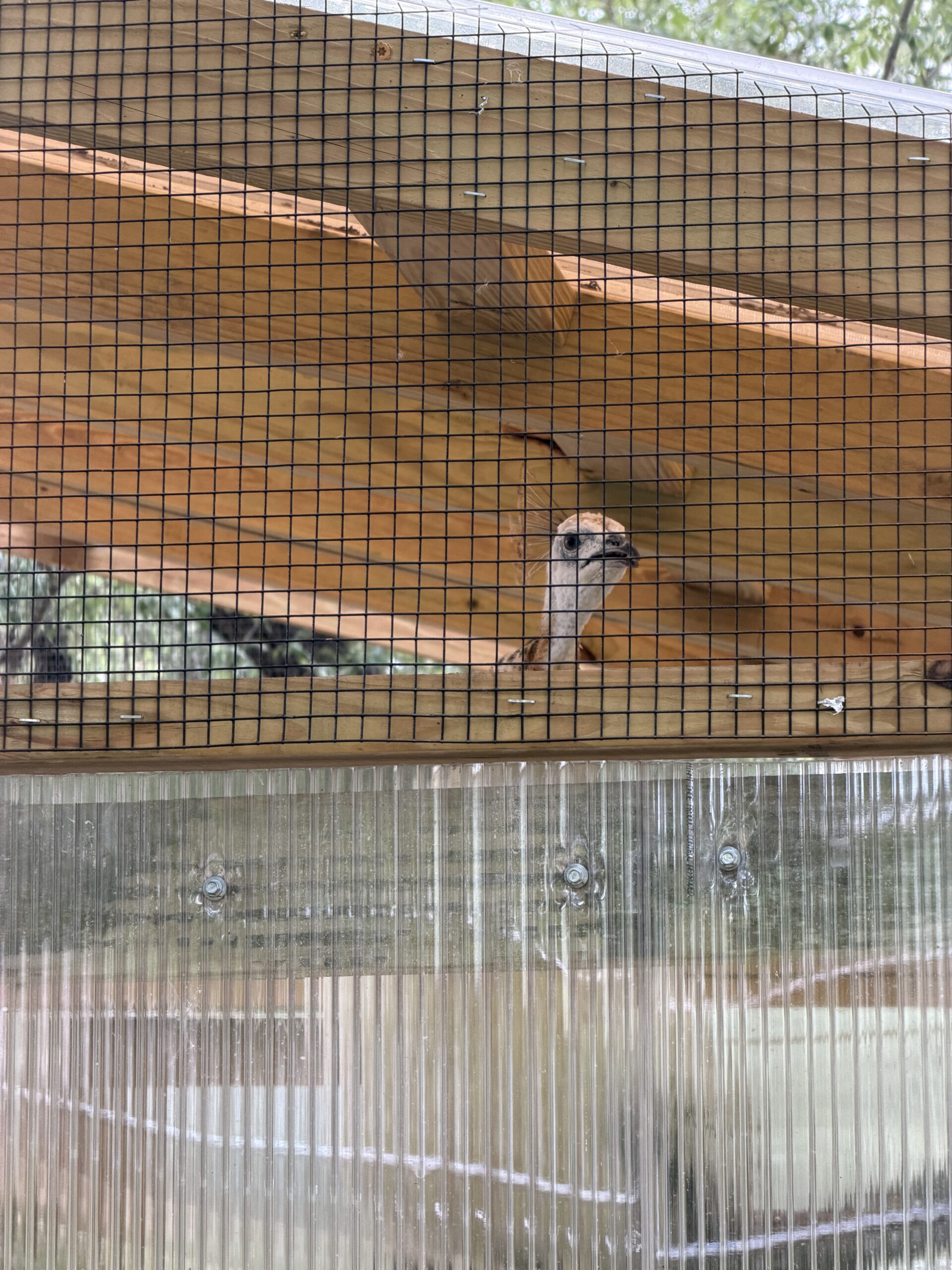
Morpheus peering through the greenhouse roofline
The angle has been identified.

Morpheus has found the angle.

There is exactly one spot inside the greenhouse — the highest perch, a specific head tilt — where a bird can look up through the roofline window and see me out on the breezeway.

He knows where it is.

When I’m working, he is there. Head tilted. Eyes on the operation.

He is not alarmed. He is not dramatic. He is, as near as I can tell, just checking in.

Han stares outward. Leia positions. Neo does his usual nothing.

Morpheus does reconnaissance.

At some point I am going to turn around and find a clipboard.

Ranch Security Report

The department remains grounded. Intel this cycle came in from the human side, because the birds were not in a position to contribute.

Spring mowing stirred up the local snake population. It was a two-snake day.

Central Texas has four venomous species to keep track of — rattlesnakes, copperheads, water moccasins, and coral snakes. We crossed paths with one of the four this week. The other snake was non-venomous. It did not feel that way in the moment.

The Texas Rat Snake. A long Texas rat snake presented itself in my path at the exact moment my foot was already in the air. There was a second in which it could have gone many ways. The birds, on any other day, would have alerted on this from a hundred yards away. The birds were inside a run. I alerted on it myself. Loudly. I made more noise about it than any of them would have.

The Coral Snake. Red touching yellow. The exact band order you hope you never have to identify in the field, because the rhyme only matters once. My 78-year-old mother took its head off with a shovel — the handled-it response we use for dangerous snakes in Central Texas, where a coral snake bite can turn bad fast. Mom has lived out here most of her life. She knows what a shovel is for. Seventy-eight and undefeated.

The Warden With Power Tools. Meanwhile, inside the run, the one genuinely unfamiliar stimulus the birds can observe — a woman ten feet away running saws and drills she is only partially qualified to operate — has been classified as television. They line up. They watch. Someone makes approving noises.

Threat assessment department has been reallocated.

Catch Up

The blog has been quiet. For a reason. I’ve been building every day. The warden has had no time to write. The warden also has sore arms.

Safer, Simpler, and Absolutely Miserable. The birds are safer. The driveway is cleaner. Nobody is standing on my car. The enrichment I didn’t know I had is gone. Read the post →

They Ate My Spider Plant. It Actually Looks Better Now. The peafowl pruning service makes its debut. No appointments. No fee. Quality of work: genuinely surprising. Watch →

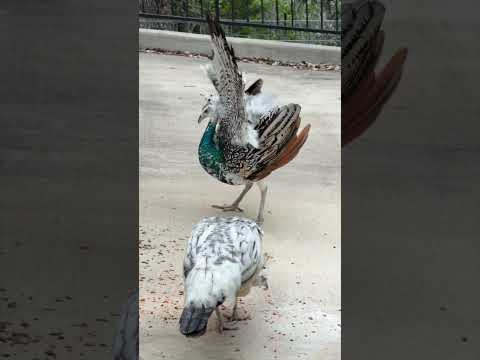
Neo Was Born for Flamenco ? Peacock Rain Dance. My dad took footage of Neo’s fan dance and cut it to flamenco guitar. Every shimmy lands on the beat. Watch →

Meanwhile, the Garden

Before the peacocks, I was a gardener.

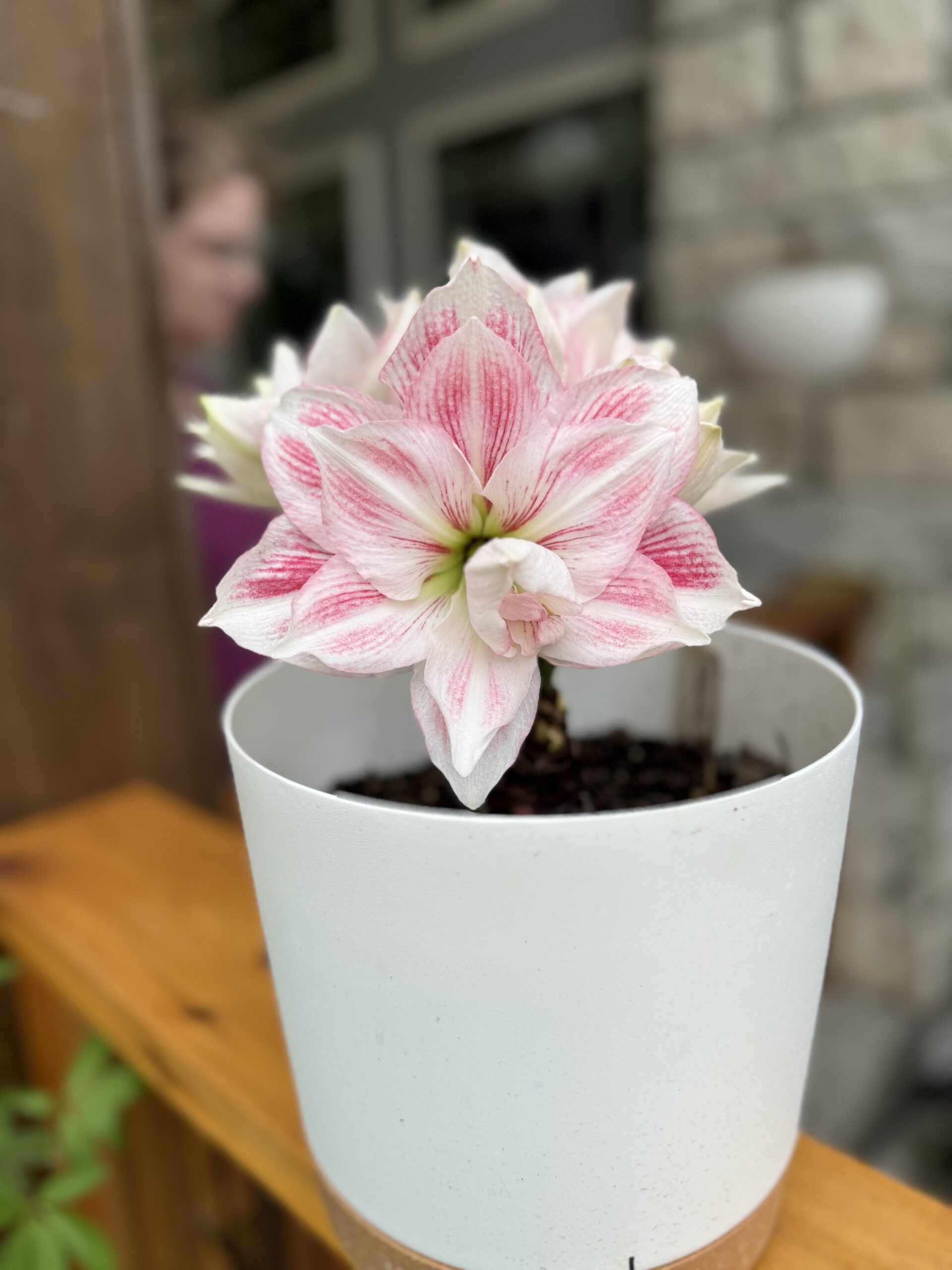
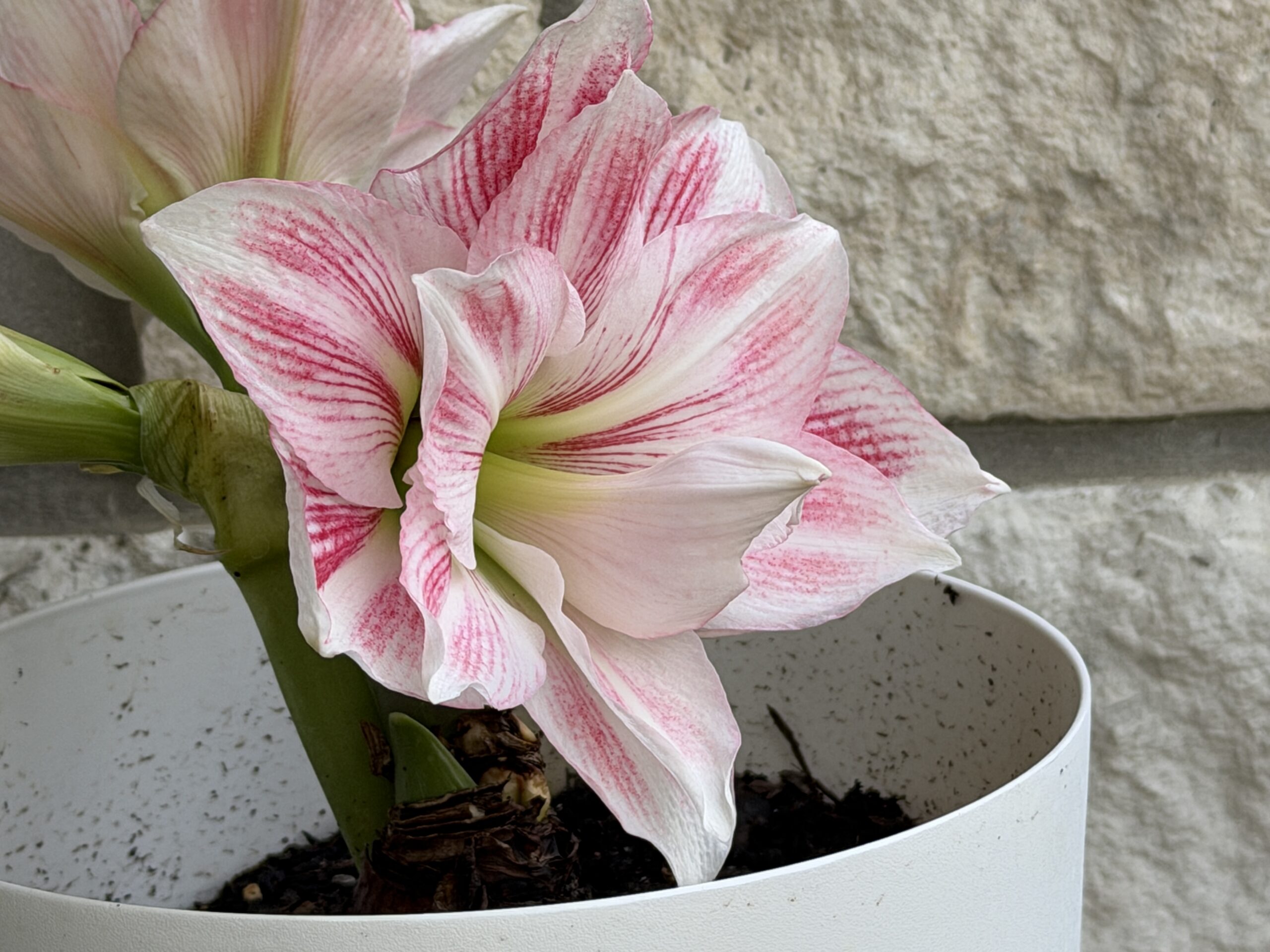
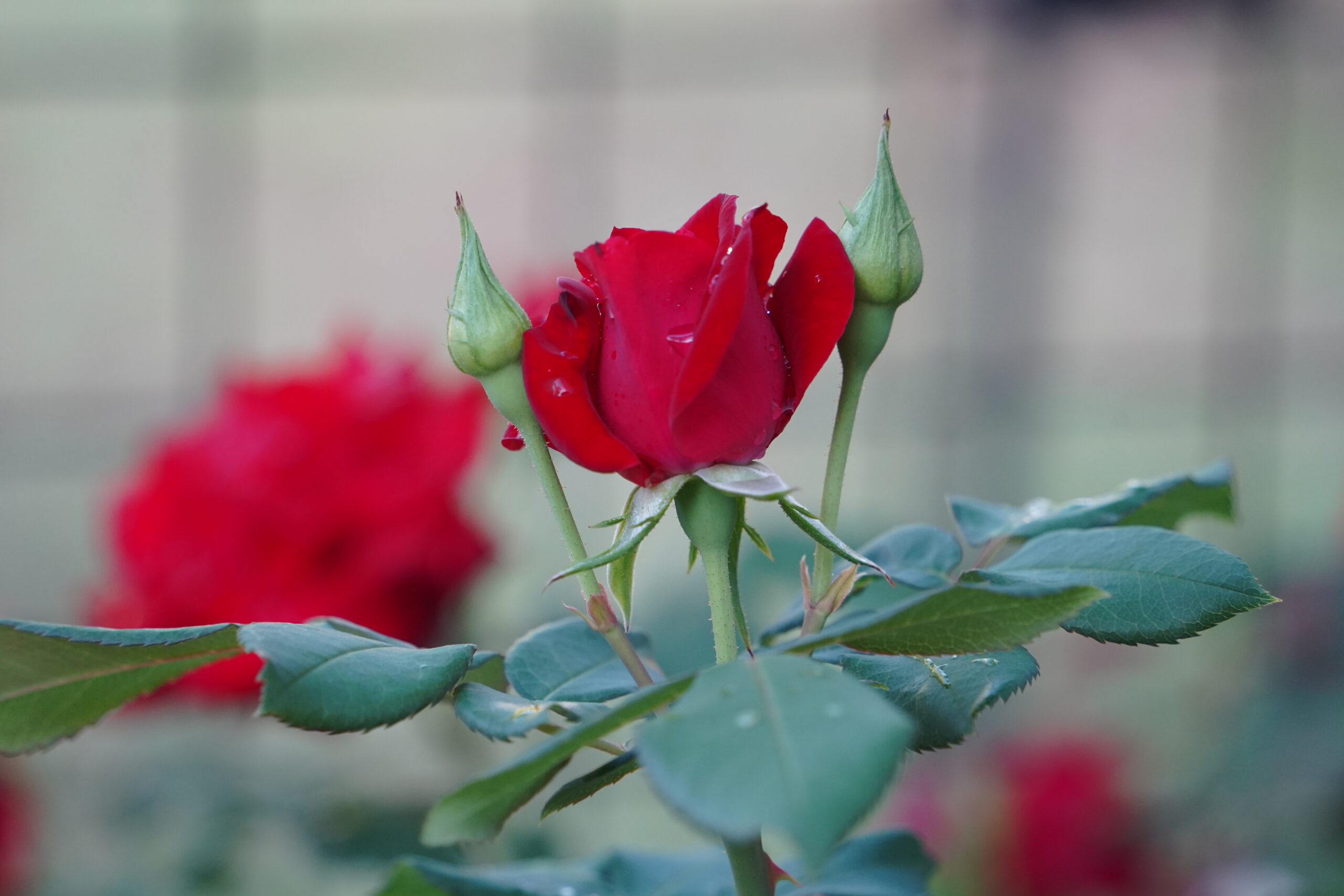
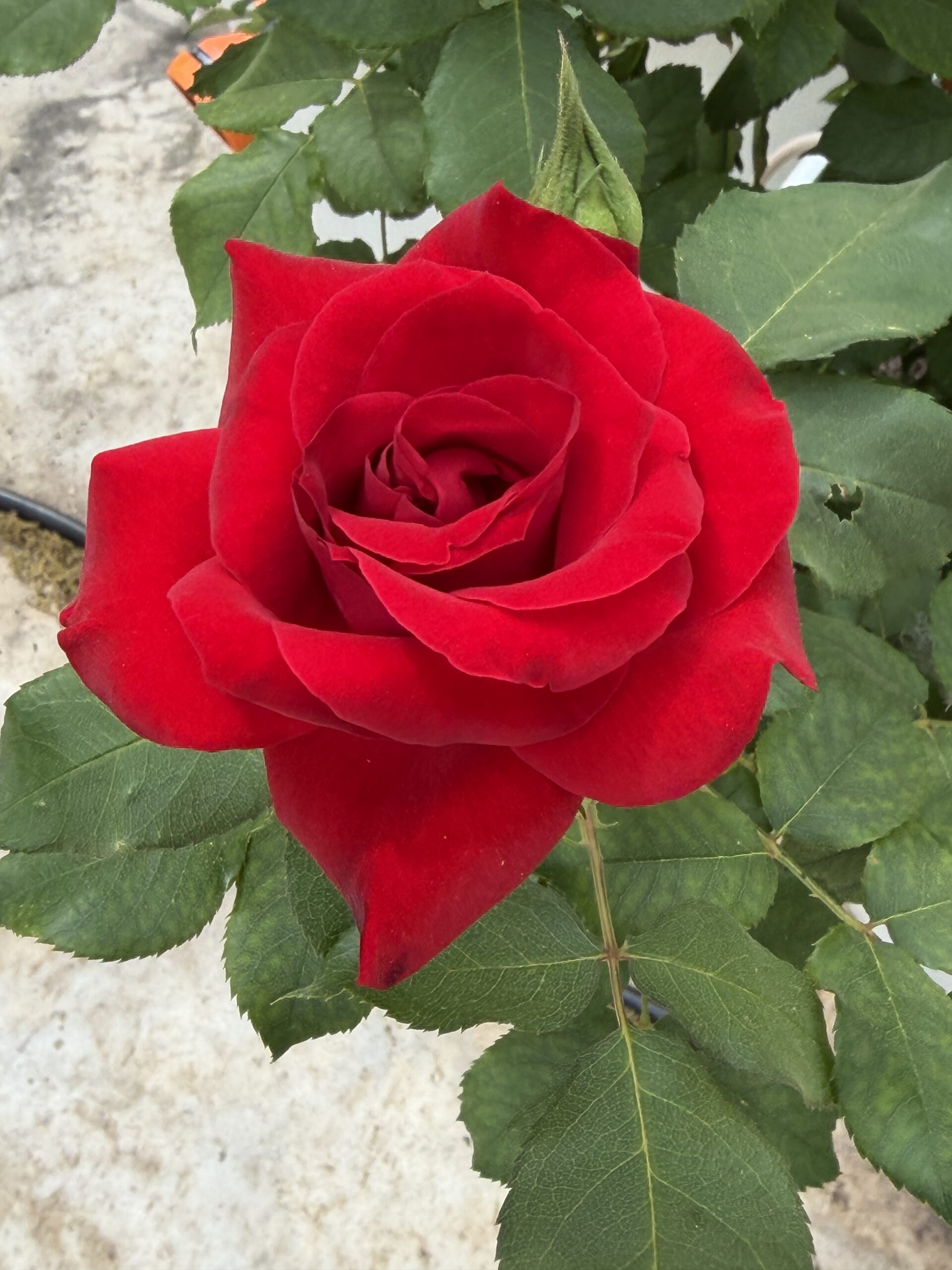
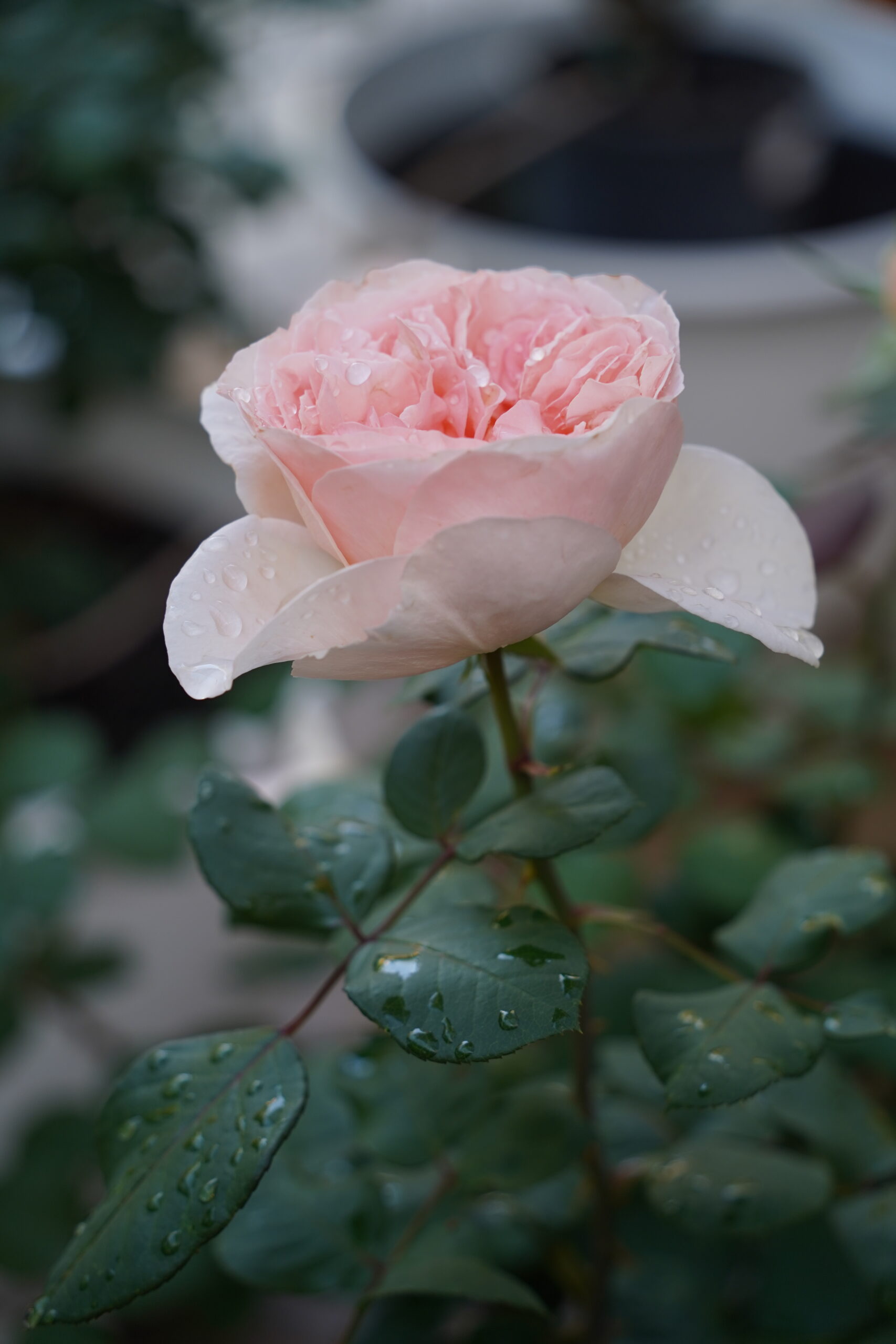
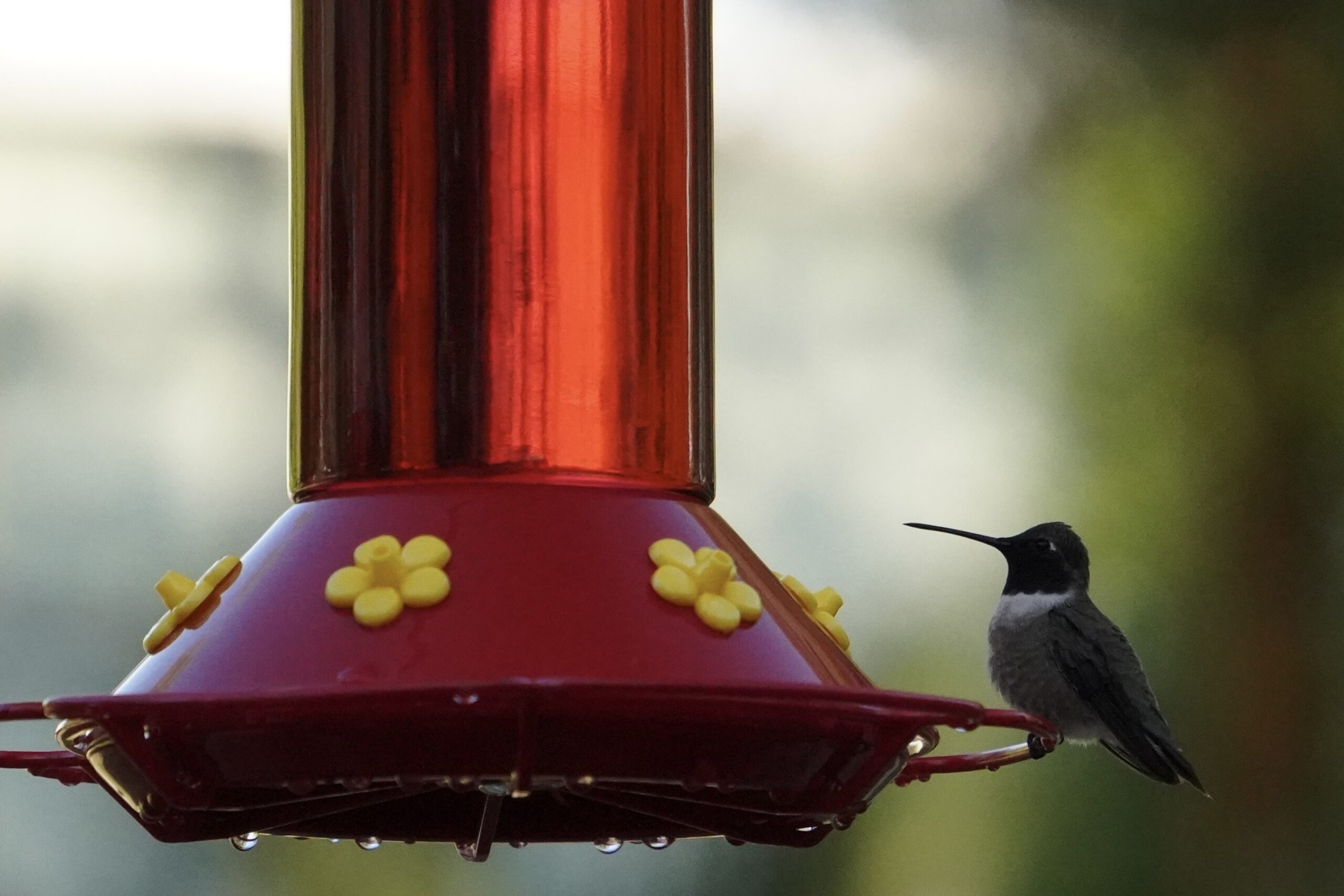
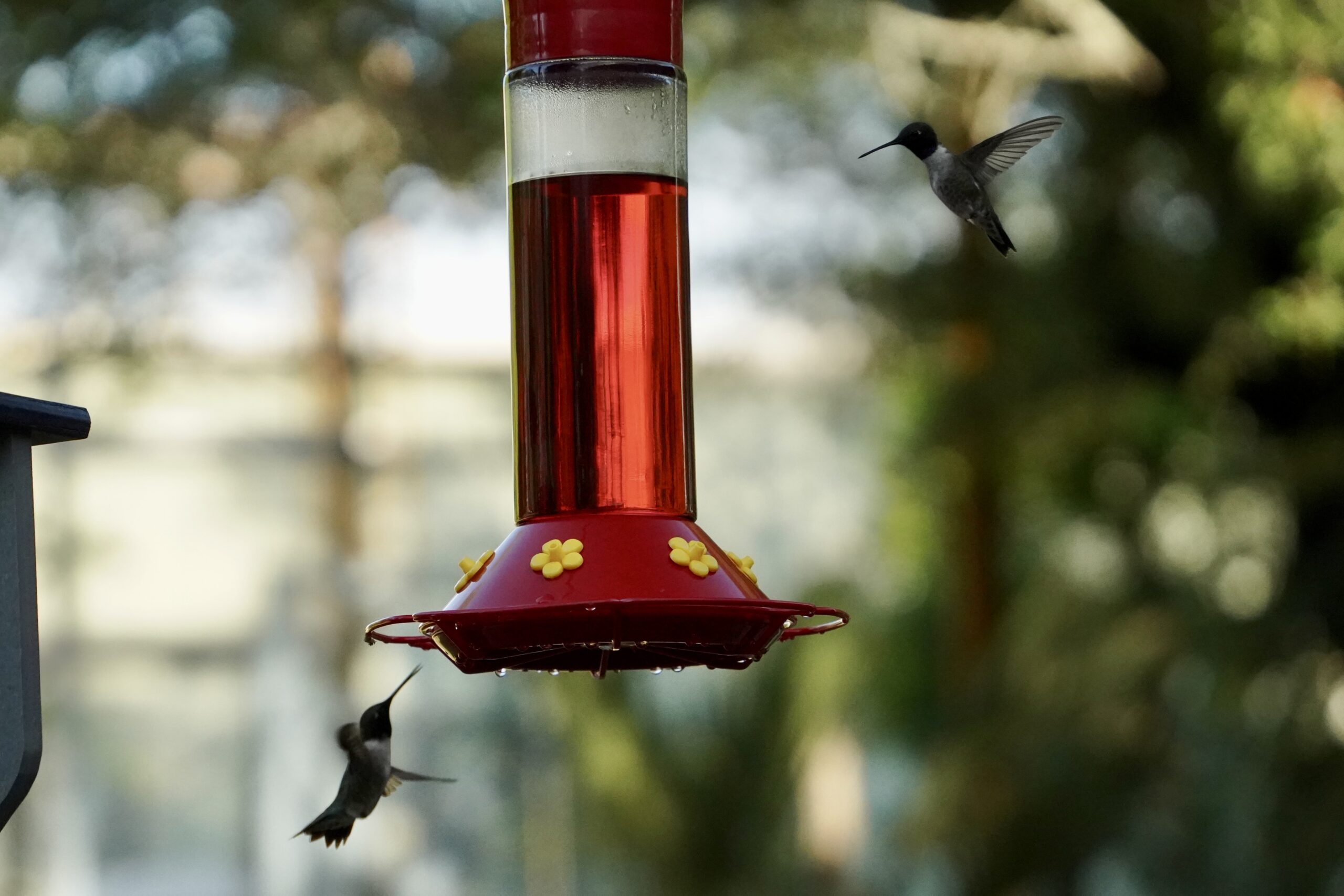
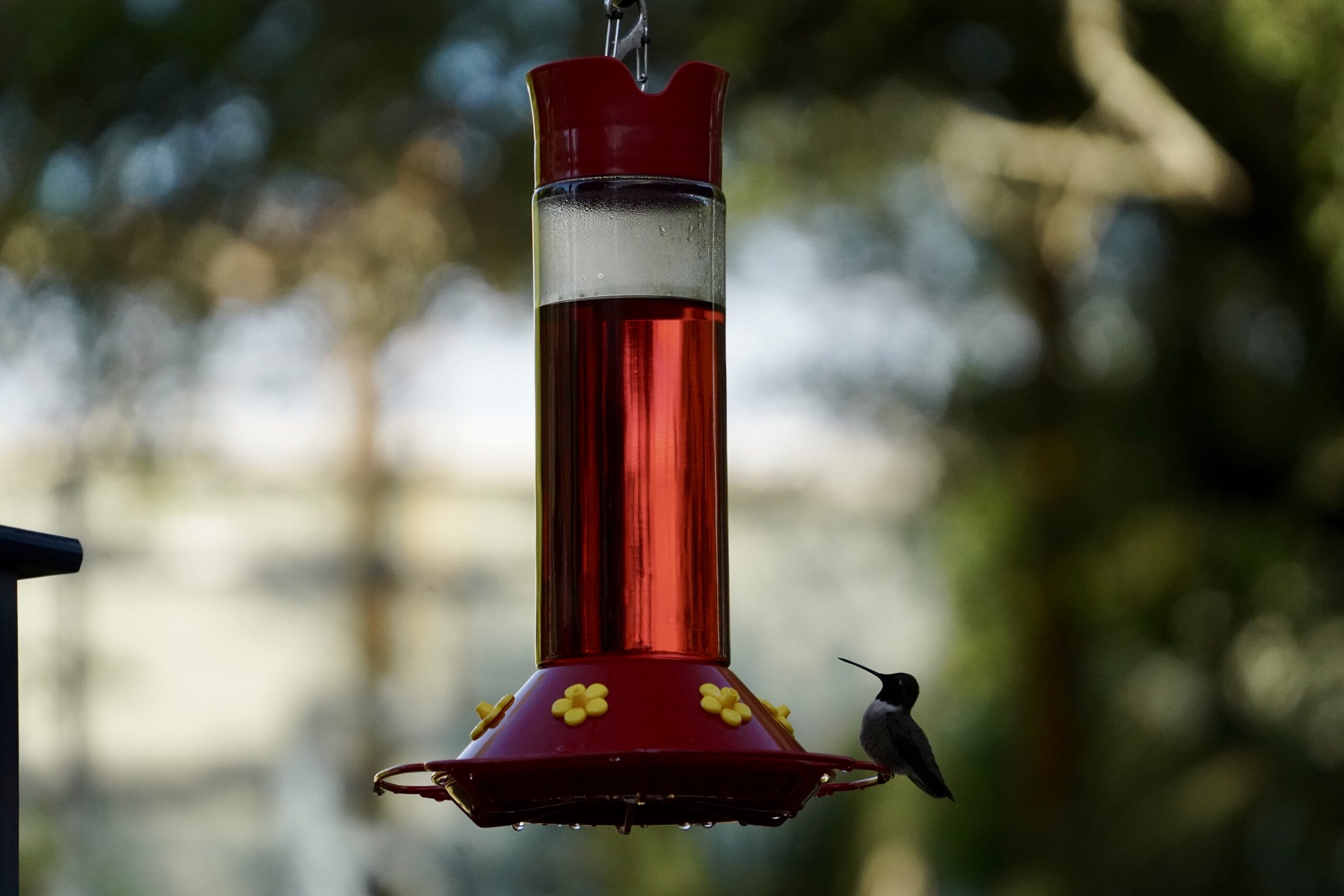
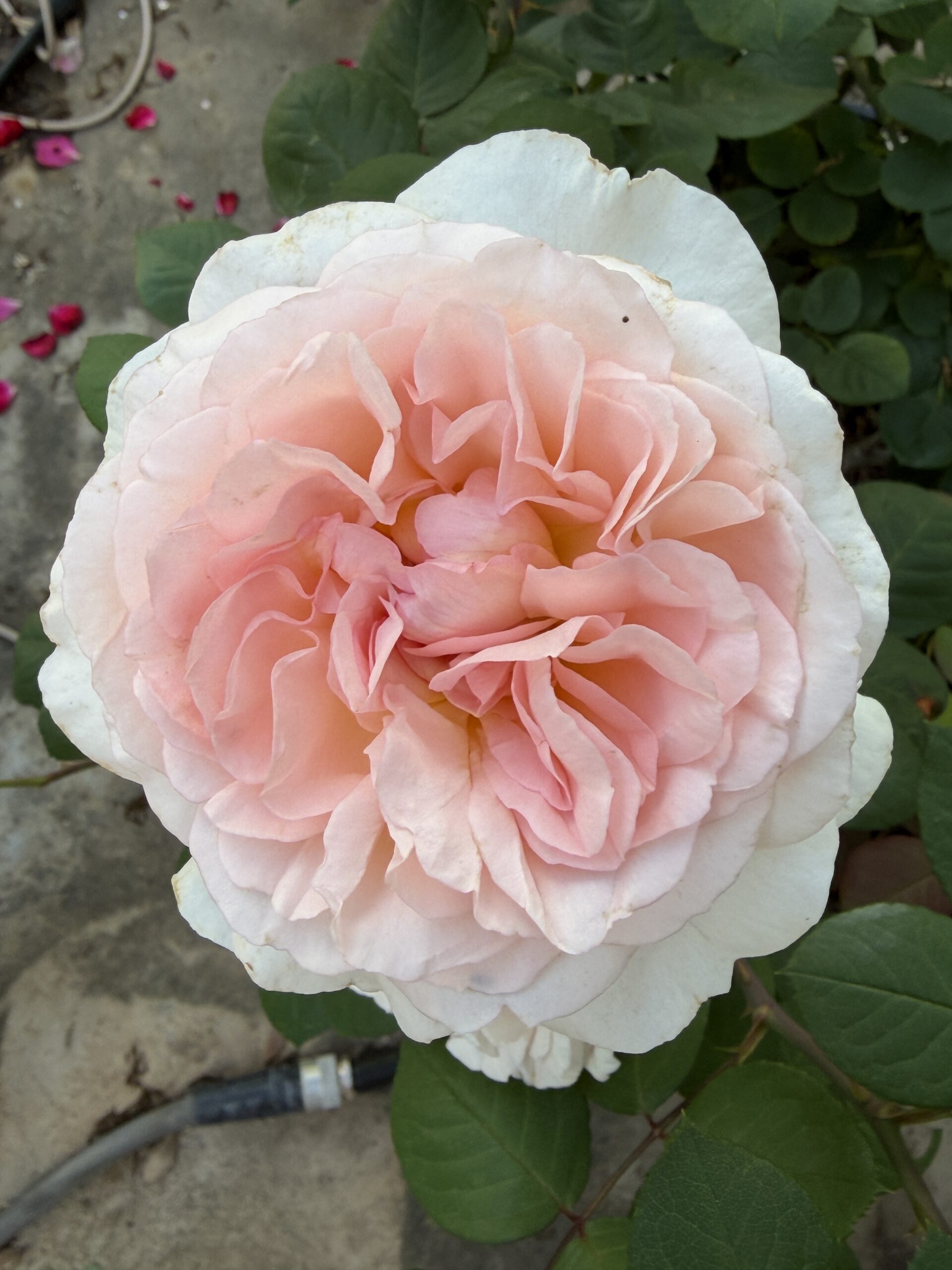
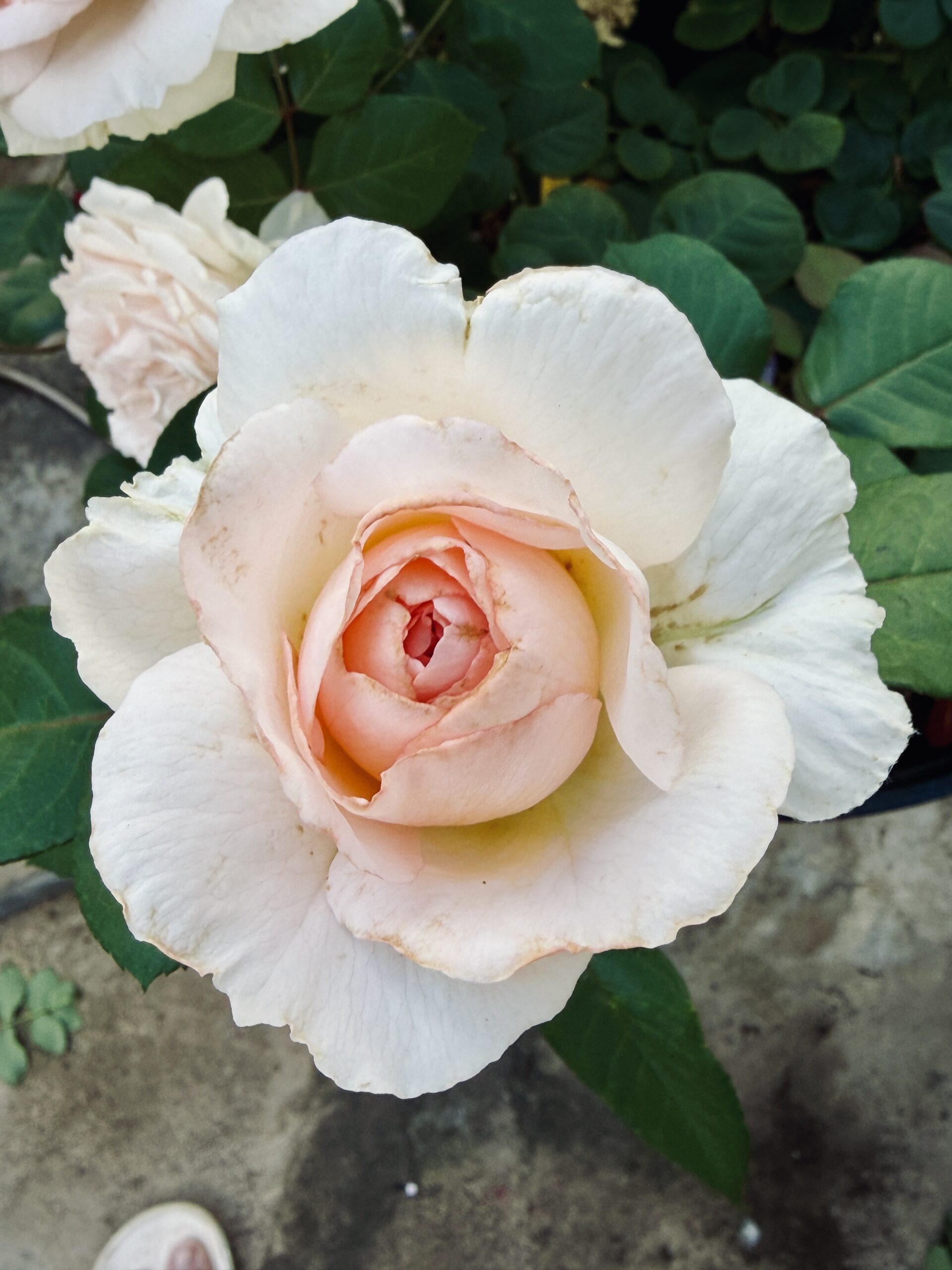
The garden has not forgotten me — even when I have been slow to return its calls. The roses are in. The amaryllis have come up. The hummingbirds are back.

Previous hobbies tend to be patient with us.

Questionable Choice Award

Breezeway build in progress
The breezeway, still growing.

This round, the award goes to me.

For the decision — made one confident afternoon — to build a breezeway between the greenhouse and the new run. By myself. With no construction experience. Armed with a 20-page plan I wrote with an AI who had also never built anything.

The outcome is going to be fine.

The choice was not.

Congratulations, Shandra. You earned this.

Welcome to the club. You were already a founding member.

If you need me, I’ll be out by the run with a drill, a spreadsheet, and a pencil, rereading the plan for its 11th pass and googling “what percentage of AI-generated construction math is supposed to be wrong.”

Safer, Simpler, and Absolutely Miserable

Not a paper route but works

The birds have been in lockdown for over a month now.

Contained. Accounted for. Not on anyone’s porch. Not standing in the driveway like they pay rent.

I made a mental list of everything that’s better with them locked up.

No sidewalks to power wash. No wondering where four semi-feral dinosaurs wandered off to. I can park in my own driveway without checking for a peacock who has decided the hood of my car is a personal stage. No Amazon drivers barreling down the drive toward birds who believe they have right-of-way. No foxes. No hawks. No frantic headcount at sunset.

It’s safer. It’s simpler. It’s objectively easier.

It’s miserable.

The Quiet Is the Problem

I didn’t expect to take it this hard.

I’d gotten used to the chaos without noticing it had become the texture of my day. The random appearances. The screaming. Han doing something structurally questionable on the roof. Morpheus materializing at the back door like a haunting with opinions.

That was my enrichment.

Now I walk outside, and it’s just… quiet. Orderly. The driveway is empty. The sidewalks are clean. Nothing is perched anywhere it shouldn’t be.

This is what I wanted, apparently.

The birds aren’t handling it much better. I’ve become convinced that all peacocks are ADHD. They need something to investigate. Something to destroy. Somewhere to be that they’re not supposed to be. Take that away and you get four birds staring at the walls of a greenhouse like inmates who’ve exhausted the prison library.

We had a more enriched life when everything was a risk.

Noted.

Never Ask an Engineer to Hang a Curtain

The permanent run is coming. That’s the jailbreak plan.

James and I spent last weekend squaring and leveling the base frame. I use “we” loosely. James squared. James leveled. I held things.

He did not get out the digital calipers to measure the exact distance the bubble sat from center on the level.

I was genuinely surprised.

This is a man who, if you ask him to hang a curtain, will discover three hours later that your wall is crooked. Not that the curtain is crooked. That the wall is crooked. And now that’s a problem.

That actually happened, by the way.

I love details. I do. But the base of a peacock run needs to be under the run. It doesn’t need to be perfect. It needs to exist, so four birds and one woman can stop losing their minds.

He showed remarkable restraint.

I Don’t Know If It’s Right, But It’s a Plan

The weather, meanwhile, had its own plan.

During the downtime, I did what any reasonable person would do: I recruited AI to help me build something I have no business building.

I don’t know anything about construction. It has the internet at its disposal. Between the two of us, we produced a thirty-page plan for building the run and breezeway from the ground up — explaining techniques and terms along the way, like a beginner’s guide written for someone whose primary qualification is “has birds and a deadline.”

I have no idea if it’s right.

As I told James: “It knows more than I do, so I’m giving it the benefit of the doubt.”

He did not argue. Which is either confidence in the plan or acceptance that this is happening regardless.

The Part Where the Rain Stopped and Backup Arrived

We got a break in the weather that happened to coincide with my daughter-in-law and granddaughters being available to help.

Non-engineer help. I cannot overstate how refreshing that was.

We got the base finished — the foundation the run will sit on top of. Progress you could stand on. The youngest spent most of the afternoon socializing with the peacocks through the greenhouse, feeding them grass and peppermint, which is one of their favorite treats.

The birds were thrilled. A new person. New attention. Snacks.

For about two hours, nobody seemed jailed.

Then the rain came back.

Of course it did.


If you need me, I’ll be staring out the window with four peacocks, all of us watching the weather radar, and googling “how to explain to a bird that the construction delay is not a personal attack.”

Meanwhile, at the Ranch #3

The Mirror Situation

Since the lockup, things have been quiet.

Suspiciously quiet.

Four peacocks locked in the run

I put a large mirror inside the greenhouse. This is not a new idea — back when Han and Leia were in the brooder, mirrors created a “virtual flock” and calmed them down almost instantly. Two chicks who couldn’t stand touching each other sat side by side and stared at themselves for hours. Peace, restored through narcissism.

The same logic applies now. Enrichment. Stimulation. Something to look at that isn’t each other.

What I did not expect was the scheduling.

Two birds stand in front of the mirror. Two birds wait out in the pen. It is always a matched pair — Han and Leia, or Morpheus and Neo. Never a mix of older and younger. They do not share mirror time across age groups.

Then, without warning or discussion, they switch.

I turn around and the two birds who were in front of the mirror are gone, and the other two are inside, in position, like they’ve been there all along.

No argument. No drama. No one had to be asked.

The birds who spent weeks fighting over perch inches have apparently worked out an orderly timeshare arrangement for a mirror. On their own. Without me.

I cannot tell if this is impressive or deeply unsettling. Possibly both.

• • •

Ranch Projects in Progress

Build Update
The Not-a-Chicken-Run
The framing for the not-a-chicken-run starts today. Three tons of sand are already on site. James has been buried with work, so this may be a solo project for a while. That’s fine. I know how to handle solo projects.First stop: the hardware store.I will not be taking questions about how many times I’ve been there this week. Details.

James’s Project
The Automatic Coop Door
Not sourcing one. Not installing a kit. Building one from the ground up — PCB designed, components assembled, firmware written, door being cut. This is the same man who solved a week of peacock bedtime battles by standing quietly in a yard and doing nothing. He apparently contains multitudes.

Ongoing
The Pool Structure
A welding crew has been replacing the steel superstructure that holds the shade canopy over my therapy pool. Almost halfway done after two weeks — a proper rebuild, not a patch.

• • •

Catch Up

What’s New — Dispatches from the Ranch

The Night My Birds Ran Away From Home
Blog Post
The Night My Birds Ran Away From Home
Read the post →
The Neighbor's Flower Bed Is Not an Option, Morpheus
Blog Post
The Neighbor’s Flower Bed Is Not an Option, Morpheus
Read the post →
Jail Birds
Blog Post
Jail Birds
Read the post →

Short Videos

The Nightly Peacock Roundup

YouTube Short

The Nightly Peacock Roundup
The Neo Fan Dance

YouTube Short

The Neo Fan Dance
Peacocks Calling From the Trees

YouTube Short

Peacocks Calling to Each Other From the Trees

• • •

Award ribbon

Questionable Choice Award

Presented with reluctant pride


Four birds clearing the fence

Collectively. Unanimously. With footage.

What we have on camera is all four of them clearing the fence in a line — calmly, deliberately, like a small delegation that had somewhere to be and simply hadn’t mentioned it. They walked two properties down to visit the neighbor, hung out for a while, and wandered back when they felt like it.

Not lost. Not fleeing anything. Just out.

The escape is why they’re in jail now. But the award is for the escape itself.

Congratulations to Han Solo, Princess Leia, Morpheus, and Neo — this round’s Questionable Choice Award winners. You caused a 45-minute search, a minor breakdown, and a commute I did not apply for.

Welcome to the club. You were already founding members.

See the award →

• • •

If you need me, I’ll be at the hardware store for the 8th time this week and googling “can peafowl recognize themselves in a mirror or are they just impressed by the company.”

Jail Birds

Nobody is happy.

Four birds are in jail. James is stressed. And I have become the warden of a 300-square-foot holding facility, explaining to peafowl who used to roam acres that they are grounded until further notice.

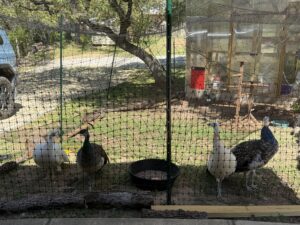
Four peacocks behind a fence

They do not accept the explanation.

They would like to speak to management.


How We Got Here

They didn’t come home.

That’s the short version.

The long version involves a 92-year-old neighbor, porch droppings, a flower bed that became a pseudo-nursery, and the slow, undeniable realization that “semi-free-range” had become “they live at someone else’s house now and I have visiting hours.”

The last retrieval mission ended it. I hiked over at dusk. The neighbor — gently, kindly — let me know he’d appreciate it if they stopped congregating on his porch.

I was already losing sleep over Morpheus nesting in his flower bed. A peahen on the ground at night, on someone else’s property, with nothing between her and every predator in Central Texas?

That’s not a risk. That’s a countdown.

My first thought was to pen up just the girls. Break the nesting pattern. Keep the boys out.

James shut that down.

“That’s just hoping it works. You need a real solution.”

He was right.

I will not be taking questions about how that felt.


The Prophecy, Fulfilled

A year ago — it feels like three years — I stood in front of my husband and delivered a 37-point presentation on why peafowl were not chickens.

They roost in trees. They free range. They eat from the land.

No coop. No cleaning. No extra work for him.

I answered every objection before he could raise it. I closed with “This is your one chance. If you say no, I will not do it.”

He said yes.

I am now building a permanent chicken run.

Not a “peacock run.” Not a “peafowl enclosure.” I started calling it a chicken run without thinking, and it stuck. Probably because James is helping build it, and the irony deserved a name.

Every problem I have ever had with these birds, I have solved the same way.

Shopping and power tools.

They won’t go to bed? Spotlight. Bullying each other? Cameras. Cold? Heaters. On the roof? More lights. Every crisis has ended with me standing in a hardware store, convinced that the right purchase will fix a bird problem.

This is the first time shopping and power tools were not enough.

Three tons of sand just arrived. James is out there building a run he was promised would never exist. The greenhouse is a coop. And peacocks, let’s be honest, are really just fancy, expensive chickens.

Poultry is poultry.

James has not said “I told you so.”

He hasn’t had to. The sand is saying it for him.


300 Square Feet of Opinions

They went from acres of space to pacing a pen.

They want me to know this is unacceptable.

Han stands at the fence and stares outward like a man who used to have a corner office and now works in a cubicle.

Leia has positioned herself near the gate. She is not upset. She is studying it.

The Little Ones are worse.

Morpheus has been testing every seam, every corner, every place where the fencing meets the frame. Not frantically. Not desperately.

Methodically.

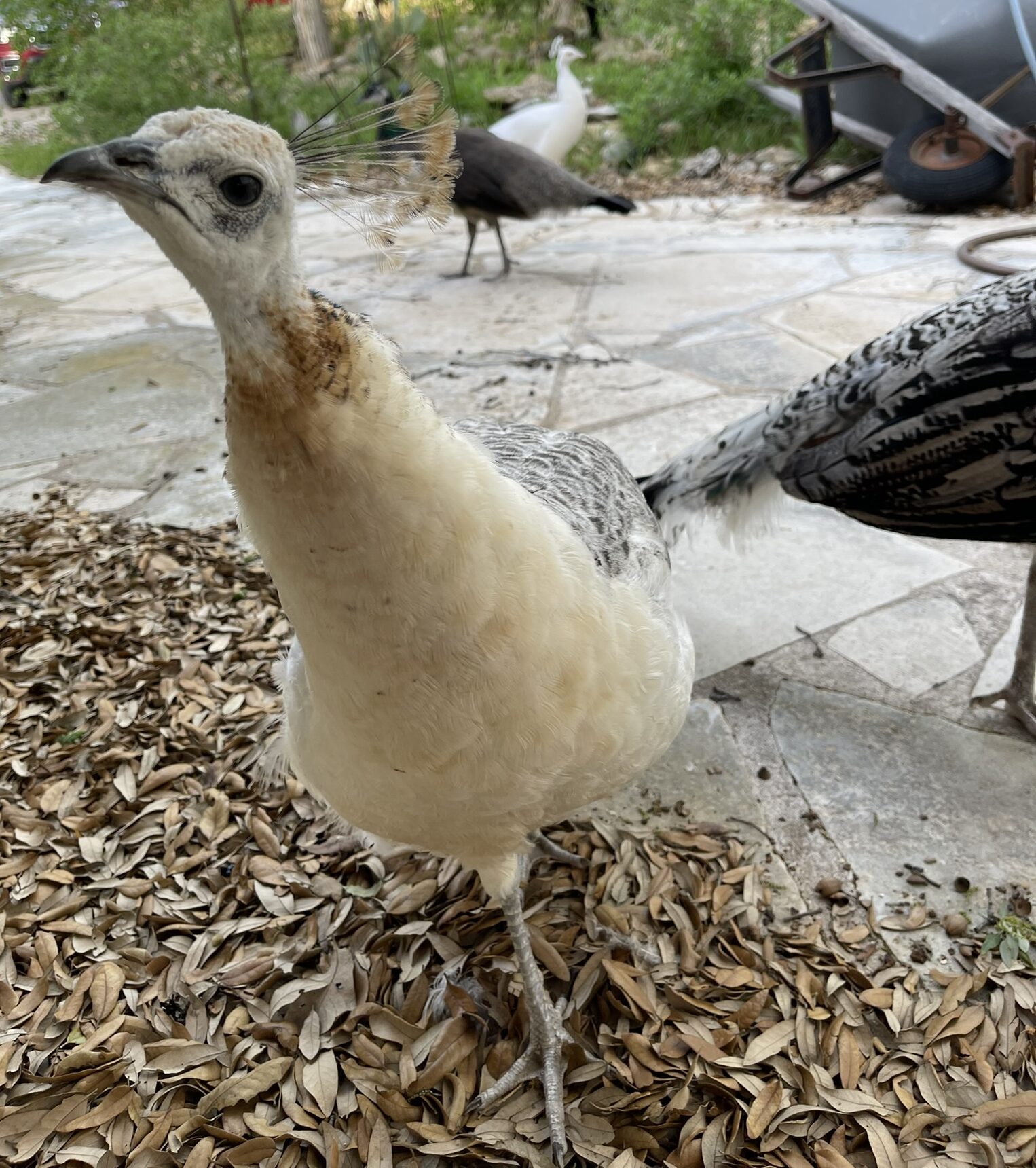
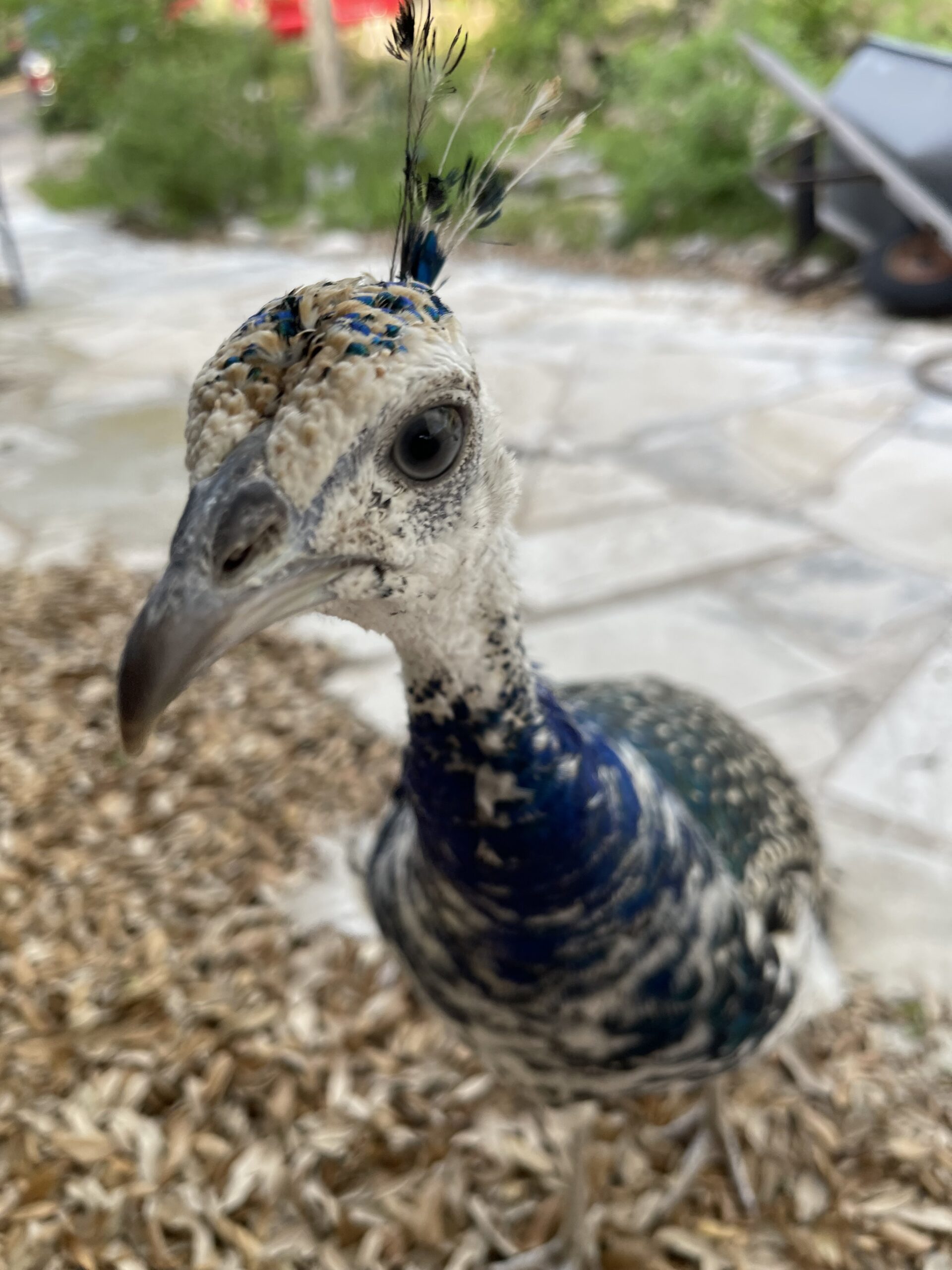
This is the same bird who tore down ceiling netting and squeezed through a gap I didn’t know existed. Containment is not a barrier for Morpheus. It is a puzzle she hasn’t solved yet.

Neo watches her work. He doesn’t test anything himself.

He doesn’t need to. He’s the one who walks through the hole after she makes it.

They’ve always had a system.


The Part Where I Sit With It

The birds are safe. The birds are furious. The birds are contained. The only happy person is the neighbor, who called to let me know he appreciated that “they didn’t come back.”

And I am building the thing I promised would never need to exist, for the animals I promised would be no trouble, with the help of the man I promised would never be involved.

Every single clause of the original agreement has been violated.

So much for the 37-point plan.

If you need me, I’ll be standing in a hardware store for the 47th time this year and googling “how to explain to four inmates that this is for their own good and also my marriage.”

The Night My Birds Ran Away From Home

They have a heated greenhouse with custom perches. Cameras. Heaters. A dedicated pen. A yard full of bugs and a woman who will hand-deliver mealworms like room service.

They chose the 92-year-old neighbor’s porch.


How It Started

The routine was working. Days out on the property, nights locked up safe in the greenhouse. Semi-free-range. Controlled. Responsible.

A few weeks ago, I started noticing the flock wandering a little farther than usual. Then a lot farther. Then in one very specific direction.

Every day. Same direction. Like they had a reservation.

At first, the neighbor thought it was charming. Who wouldn’t? Four gorgeous peafowl showing up to visit. It’s a novelty. It’s interesting. It’s a great story to tell at dinner.

Then they started pooping on his porch.

The charm wore off fast.


The 92-Year-Old and the Garden Hose

Our neighbor is 92 years old. I’ve known him my whole life. He is genuinely one of the nicest people you will ever meet.

But even the nicest man on earth has limits, and four peacocks treating his porch like a rest stop found them.

He got the hose.

I was not there to witness this, but I got the report.

Here’s the thing about peafowl and a garden hose: they do not care.

They moved just out of spray range.

Then they stood there. Watching.

Like it was a show.

Like a 92-year-old man spraying water in their general direction was the most entertaining thing that had happened all week. Which, to be fair, it probably was.

This is what I’m dealing with.


The Ringleader

I blame Leia.

I have cameras. I have footage. I have evidence.

Every morning, Leia is the first one to jump the gate. Not wander past it. Not test it. Jump it with purpose — like she has somewhere to be and that somewhere is not here.

Then she beelines for the neighbor’s property.

And everyone follows.

Han. Morpheus. Neo. Single file. Like she sent a group text and they all agreed on a destination without consulting me.

When Leia was little, she seemed like the worrier. The nervous one. The hen who fussed over everything like she was concerned about everyone’s wellbeing.

She was not concerned about everyone’s wellbeing.

She was managing everyone’s wellbeing. There’s a difference.

What looked like worry was strategy. What looked like fussing was control. And Han — who, bless him, has never had an original thought that wasn’t about food — has been taking direction from her since day one without realizing it.

She is the smartest bird on this property.

And right now, that is not working in my favor.


The Night They Didn’t Come Home

Last night, I tried to get them back.

I called. I bribed. I stood at the neighbor’s driveway doing the things you do when you are a grown woman trying to convince four birds that home is better than wherever they currently are.

They were not convinced.

They looked at me. They looked at each other. They looked at the trees.

We live here now.

All four ignored me. And instead of their nice, warm, locked greenhouse — the one I built for them, the one with perches and heaters and everything a reasonable bird could want — they spent the night in the trees at the neighbor’s property.

Not on our property. Not in our trees. Not even close.

Acres away from home.

So much for semi-free-range.


The Morning Search

This morning, I did what every responsible bird owner does when four peafowl have decided to relocate without filing a forwarding address.

I went looking.

It was 7:30 a.m. and 32 degrees.

I hiked over three properties. Down the slope to the lake. Back up. Calling the whole way.

Nothing.

No birds. No sound. No response.

Then the neighbor called. They’d seen them heading one property further. Away from us.

Because why would they make this easy.

So I hiked over. Found all four on the wrong side of a fence.

Here’s a thing about peacocks and fences: when they are determined and organized, they fly right over. When they’re scattered and confused, a fence becomes an impassable barrier. There is no in-between. A peacock is either a fighter jet or a chicken who forgot how legs work.

I got the attention of Morpheus and Neo first. I had food. They were hungry. They followed me home like nothing had happened and walked straight into the greenhouse.

Two down. Two to go.

The older two usually follow the younger ones. So I dangled food in front of Han and Leia, got them halfway home —

And then Han stopped.

He looked left. He looked right. He looked behind him.

Two birds. There should be four. Something was wrong.

They were not at the neighbor’s. They were locked in the greenhouse. But Han didn’t know that. Han is not a details guy. Once he decided the flock was incomplete, he turned around.

Leia didn’t hesitate. She was already walking.

Back to the neighbor’s.

Great.


The Part Where I’m Writing This From the Middle of a Crisis

I am writing this from my kitchen.

The younger two are locked in the greenhouse. The older two are at the neighbor’s house, doing whatever it is they do over there that is apparently so much more interesting than anything I have to offer.

My current plan involves finding a video of their alarm honk — the one they use to locate each other — and playing it from our property to see if that will pull them home.

I have not tried this yet.

I have no idea if it will work.

But beyond that, it’s time for a new plan. A real one. A permanent pen. Something Leia cannot jump, charm, or strategize her way out of every morning.

Because right now, the routine is broken. The pattern has been set. Leia knows where she wants to go, and she has successfully convinced the entire flock that the neighbor’s house is the better option.

I have to break that pattern before the nicest 92-year-old man I’ve ever known gets creative with his next deterrent. He won’t hurt them. But I would not put it past him to engineer something.

Update: I just got a call from the neighbor. Han and Leia are sleeping on his porch.

Not in a tree. Not in a field. On his porch.

Like guests who have decided checkout is optional.


Update #2: The miracle came sideways.

That evening, the neighbor’s visiting daughter happened to show me a video she’d taken that morning — all four birds in the trees, calling to each other. That sound. The honk they use to find each other when the flock is split.

I played it from my phone.

Han and Leia’s heads snapped up like someone had said their names.

I walked. I played the calls. They followed. All the way home. Into the greenhouse. Doors shut.

The most stressful 24 hours I have had with these birds, ended by me silently begging birds to walk home with cell phone video.

Everyone is home. Everyone is safe. Everyone is grounded until further notice.

Now comes the hard part and it involves another plan.

If you need me, I’ll be playing peacock alarm calls from a Bluetooth speaker like a woman who has lost all dignity and googling “how to win back a peacock who has clearly moved on emotionally.”

The Neighbor’s Flower Bed Is Not an Option, Morpheus

The peacocks have been leaving at dawn.

morpheus at the neighbors

Not sneaking out. Not testing boundaries.

Full, deliberate, sunrise departures. All four of them. Single file. Headed straight for the neighbors’ property like they’d clocked in for a shift.

Every morning. Every single morning.

They don’t come back until nightfall.

Under normal circumstances, this would be a problem. But we’ve had construction crews on the property this week, and honestly, four opinionated peafowl wandering through a work zone was not a complication I needed to manage.

Peafowl are curious. Peafowl investigate. Peafowl will walk directly up to a stranger operating heavy equipment and stare at him like they’re conducting a safety inspection.

You would think large construction workers would not be intimidated by birds.

You would be wrong.

I have watched grown men tell me they were scared of my peacocks. These are guys who move lumber and pour concrete for a living, and they do not want to find out what Han Solo’s deal is.

For the record, my birds are perfectly nice to strangers. Friendly, even. But when a four-foot wingspan opens up three feet from your face because a bird got startled by a nail gun, “friendly” is not the word that comes to mind.

So the neighbor migration was actually convenient.

For about a week.

I missed my birds.


The Part Where Convenient Became a Problem

The birds need to stay on our property during the day. Period.

Free range does not mean free country. They have acres. They have bugs. They have everything they need right here.

But the neighbors have a flower bed.

And apparently, a flower bed is worth committing to.

Retrieving them at dusk is normally a straightforward operation. I call. They ignore me for a while. Then I make the commute — which is not a word I expected to use for birds — and they follow me home single file like they were always planning to and my yelling was simply not a factor.

Not last night.

Last night, they did not want to leave.

I walked over to see what was going on. Han, Leia, and Neo were milling around nearby.

But Morpheus was in the flower bed.

Lying down.

Not standing. Not pecking. Not doing anything that looked like a bird who was about to cooperate.

Just lying there.


The Part Where I Panicked (Briefly)

My first thought was injury.

Is she hurt. What happened. What did she get into.

I reached down, and she stood up.

She was fine. Morpheus my problem chick always give me heart attacks.

She was also covered in dirt. Not “I rolled around a little” dirty. Head to tail, covered in it. And beneath her was a perfect hollow — scooped out, shaped, deliberate.

She had made a nest.

I stood there, staring at the hollow in my neighbor’s flower bed, while the phrase formed in my head before I could stop it:

Oh no.


A Sidebar About Teenage Peafowl

Peafowl don’t reach sexual maturity until around two years old.

I knew this. I had read this. I had taken comfort in this.

I was adorable.

What the reading failed to adequately emphasize is that teenage peafowl — like teenage everything — practice.

They practice their mating dances. They practice their displays. And apparently, they practice nesting behavior.

Think of it as the peafowl equivalent of teenagers sneaking off to make out somewhere their parents can’t see them.

Except in this case, “somewhere their parents can’t see them” is the neighbor’s flower bed.

And “making out” is scooping a hollow in someone else’s dirt and sitting in it like you’ve found your forever home.

So much for having more time.


Why This Is Actually a Problem

Here’s the thing about peahens and nesting.

Once a peahen decides to sit on eggs, she commits. She leaves the nest only briefly. She does not take breaks. She sits there, on the ground, exposed, for close to a month.

Even at night.

On the ground means vulnerable. To coyotes. To foxes. To raccoons. To everything that moves through this property after dark.

This is why most people who raise peafowl pen up their hens in the spring. You contain them. You control the nesting environment. You don’t let them pick a spot in an unsecured flower bed on someone else’s property and hope for the best.

I thought I had more time to figure out how to handle this.

Morpheus is not even a year old. She’s a teenager playing house. But the instinct is already there, and the instinct does not care about my timeline.

I got them all home last night.

But as I’m writing this, I would bet money that if I walked over to the neighbors’ right now, Morpheus would be back in that flower bed.

Sitting in her hollow.

Practicing for a future I am not ready for.

If you need me, I’ll be standing in someone else’s flower bed at dusk and googling “how to explain property lines to a peahen who is not interested in property lines.”

Meanwhile, at the Ranch #2


Turkey Mating Season (Nobody Is Having a Good Time)

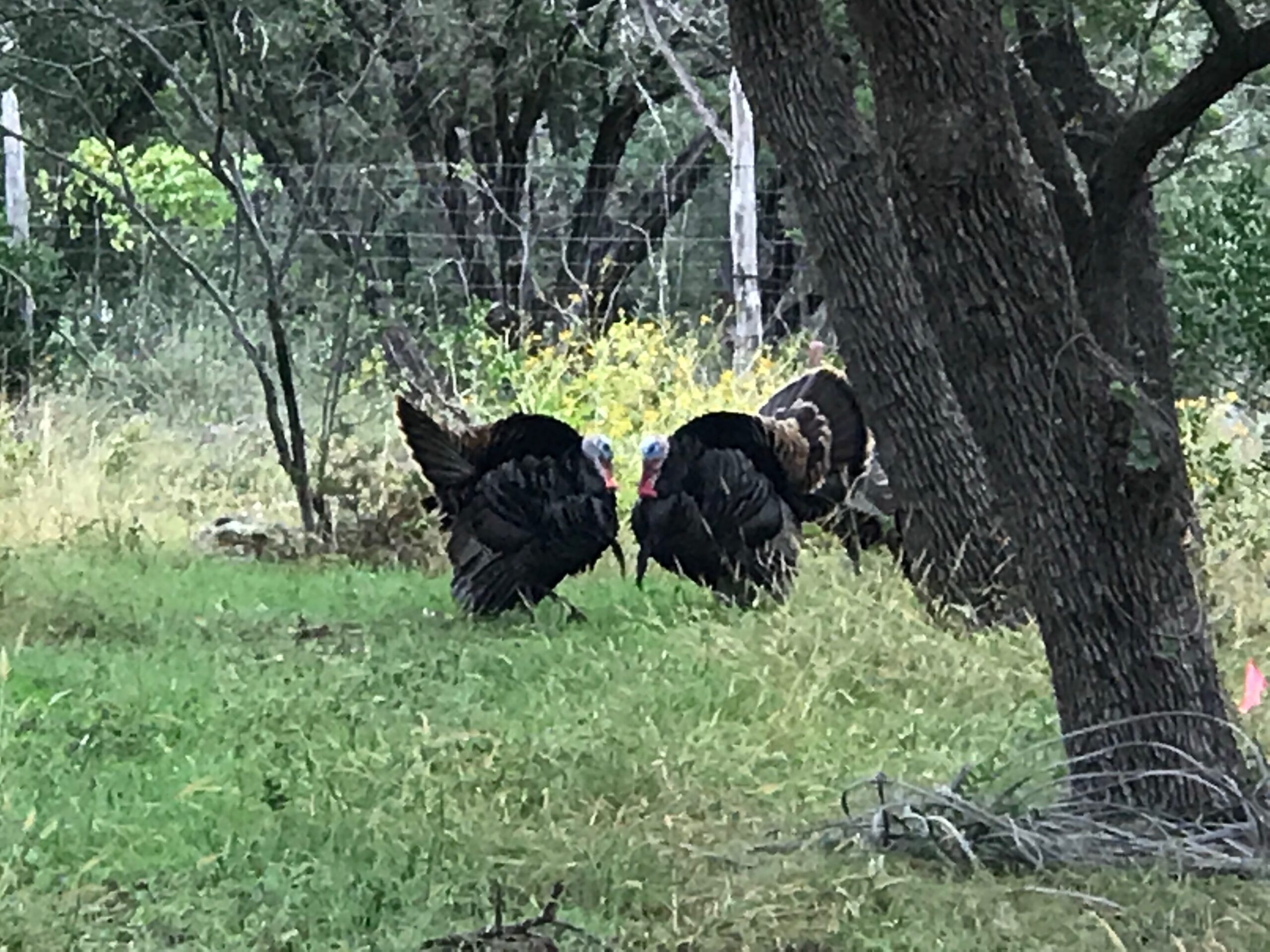
Wild turkeys in the pasture

The wild turkeys are in full mating season, and they have brought the party to our property.

If you’ve never seen a wild turkey tom in full display, picture a feathered bowling ball puffed to maximum capacity, dragging his wings on the ground, and making a sound that is somewhere between a drum roll and a car that won’t start. Now picture several of them. All day. In the middle of the peafowl’s territory.

The toms are displaying. The hens are unimpressed. And the whole flock has decided that the best place to stage this production is right where my birds eat, patrol, and exist.

The peafowl are not amused. They did not audition for this. They did not agree to share the yard with a dozen inflated cousins who have no volume control and zero sense of personal space.

At least when my birds are dramatic, they have the courtesy to do it on their own property.

The Neighbor Visits

Remember the night all four birds vanished at dusk and I walked two properties, drove the gravel road, and called until I was hoarse?

I found out where they were going.

The next day, I got a call from our 92-year-old neighbor. He lives two properties down — nearly 300 yards through the brush.

He wanted to tell me how much he liked the peacocks visiting.

Visiting.

They weren’t lost. They weren’t confused. They weren’t running from a predator.

They were making social calls.

Apparently, all four birds had been walking down to his place, hanging out with him and his wife, and then — when they felt like it — wandering back.

Which is good. Because they have continued doing it. Every day. For the last week.

Sometimes they come home on their own. Most nights, I take an evening walk through the brush to go get them. The good news is they follow me home and go right into the greenhouse for bedtime, like the nightly roundup is a tradition they have grudgingly agreed to honor.

The bad news is I now have a commute.

For birds.

Ranch Security Report

The flock takes perimeter defense seriously. Their threat assessment, however, continues to need work.

🏗️

The construction crew. Threat: Imaginary

The workers have been on the property all week. The birds love them. They greet every truck, escort workers across the yard, and generally act like a welcoming committee that nobody requested. Not one alarm call.

🪜

The ladder. Threat: Imaginary

The moment a worker went vertical, all four birds lost their minds. Not when the strangers arrived. Not when power tools started. When a human went ten feet in the air. Apparently, a person at ground level is a friend. A person above the roofline is a threat requiring immediate response.

Threat assessment still needs work. But at least they’re alarming for something now.

Progress.

• • •

Catch Up

The origin story is complete.
The full run of Timeline posts — from “No chickens” to the ranch finally looking like the plan — is now live. If you’re new here, that’s where the story begins.

The Final Timeline Posts

Episode 10

The Accidental Walkabout

The birds went free range for the first time. Nobody asked if they were ready.

Read the Full Story →

Episode 11

The Great Relocation

Moving four teenage peafowl out of the porch and into the greenhouse. A process.

Read the Full Story →

Episode 12

The Part Where the Ranch Finally Looked Like the Plan

The last post in the origin story. The one where it all came together. Mostly.

Read the Full Story →

What’s New — Dispatches from the Ranch

The Night Nobody Slept (Including the Raccoons)

Read the post →

The Night They All Disappeared

Read the post →

The Day Han Solo Finally Got the Tesla

Read the post →

Short Videos

My Peacocks Sound Like Velociraptors

Watch →

Thunderstorm? My Peacocks Chose the Porch.

Watch →

Wild Turkey Throws Himself at a Moving Car — Twice

Watch →

The Nightly Peacock Roundup

Watch →

• • •

Questionable Choice Award

Presented with reluctant pride


Watch the footage

Watch the footage →

This round, the award goes to all four birds.

Collectively. Unanimously. With footage.

We caught them on camera clearing the fence in a line — calmly, deliberately, like a small delegation that had somewhere to be and had simply not mentioned it.

So I fixed the gate. With power tools. Problem solved.

They found a new spot.

I don’t know where it is yet. But they are still visiting the neighbors daily, which means they have already identified an alternate route and are not inclined to share it.

Congratulations to Han Solo, Princess Leia, Morpheus, and Neo — this round’s Questionable Choice Award winners. You earned it.

Welcome to the club. You were already members.

If you need me, I’ll be walking through the brush at dusk like a woman with a commute she didn’t apply for, googling “do peacocks visit neighbors on purpose or is this just a coincidence I’m going to have to manage.”

Meanwhile, at the Ranch #2


Turkey Mating Season (Nobody Is Having a Good Time)

Wild turkeys in the pasture

The uninvited guests

The wild turkeys are in full mating season, and they have brought the party to our property.

If you’ve never seen a wild turkey tom in full display, picture a feathered bowling ball puffed to maximum capacity, dragging his wings on the ground, and making a sound that is somewhere between a drum roll and a car that won’t start. Now picture several of them. All day. In the middle of the peafowl’s territory.

The toms are displaying. The hens are unimpressed. And the whole flock has decided that the best place to stage this production is right where my birds eat, patrol, and exist.

The peafowl are not amused. They did not audition for this. They did not agree to share the yard with a dozen inflated cousins who have no volume control and zero sense of personal space.

At least when my birds are dramatic, they have the courtesy to do it on their own property.

The Neighbor Visits

Remember the night all four birds vanished at dusk and I walked two properties, drove the gravel road, and called until I was hoarse?

I found out where they were going.

The next day, I got a call from our 92-year-old neighbor. He lives two properties down — nearly 300 yards through the brush.

He wanted to tell me how much he liked the peacocks visiting.

Visiting.

They weren’t lost. They weren’t confused. They weren’t running from a predator.

They were making social calls.

Apparently, all four birds had been walking down to his place, hanging out with him and his wife, and then — when they felt like it — wandering back.

Which is good. Because they have continued doing it. Every day. For the last week.

Sometimes they come home on their own. Most nights, I take an evening walk through the brush to go get them. The good news is they follow me home and go right into the greenhouse for bedtime, like the nightly roundup is a tradition they have grudgingly agreed to honor.

The bad news is I now have a commute.

For birds.

Ranch Security Report

The flock takes perimeter defense seriously. Their threat assessment, however, continues to need work.

?️
The construction crew.
Threat: Imaginary

The workers have been on the property all week. The birds love them. They greet every truck, escort workers across the yard, and generally act like a welcoming committee that nobody requested. Not one alarm call.

?
The ladder.
Threat: Imaginary

The moment a worker went vertical, all four birds lost their minds. Not when the strangers arrived. Not when power tools started. When a human went ten feet in the air. Apparently, a person at ground level is a friend. A person above the roofline is a threat requiring immediate response.

Threat assessment still needs work. But at least they’re alarming for something now.

Progress.

• • •

Catch Up

The origin story is complete.
The full run of Timeline posts — from “No chickens” to the ranch finally looking like the plan — is now live. If you’re new here, that’s where the story begins. The last three posts in the arc are below.

The Final Timeline Posts

Episode 10
The Accidental Walkabout
The birds went free range for the first time. Nobody asked if they were ready.
Read the Full Story →

Episode 11
The Great Relocation
Moving four teenage peafowl out of the porch and into the greenhouse. A process.
Read the Full Story →

Episode 12
The Part Where the Ranch Finally Looked Like the Plan
The last post in the origin story. The one where it all came together. Mostly.
Read the Full Story →

What’s New — Dispatches from the Ranch

The Night Nobody Slept
Blog Post
The Night Nobody Slept (Including the Raccoons)

The Night They All Disappeared
Blog Post
The Night They All Disappeared

The Day Han Solo Finally Got the Tesla
Blog Post
The Day Han Solo Finally Got the Tesla

Short Videos

My Peacocks Sound Like Velociraptors

YouTube Short

My Peacocks Sound Like Velociraptors

Thunderstorm? My Peacocks Chose the Porch.

YouTube

Thunderstorm? My Peacocks Chose the Porch.

Wild Turkey Throws Himself at a Moving Car

YouTube

Wild Turkey Throws Himself at a Moving Car — Twice

The Nightly Peacock Roundup

YouTube

The Nightly Peacock Roundup

• • •

Questionable Choice Award
Presented with reluctant pride

This round, the award goes to all four birds.

Collectively. Unanimously. With footage.

We caught them on camera clearing the fence in a line — calmly, deliberately, like a small delegation that had somewhere to be and had simply not mentioned it.

So I fixed the gate. With power tools. Problem solved.

They found a new spot.

I don’t know where it is yet. But they are still visiting the neighbors daily, which means they have already identified an alternate route and are not inclined to share it.

Congratulations to Han Solo, Princess Leia, Morpheus, and Neo — this round’s Questionable Choice Award winners. You earned it.

Welcome to the club. You were already members.

If you need me, I’ll be walking through the brush at dusk like a woman with a commute she didn’t apply for, googling “do peacocks visit neighbors on purpose or is this just a coincidence I’m going to have to manage.”

The Part Where the Ranch Finally Looked Like the Plan

The Part Where the Ranch Finally Looked Like the Plan

The pen became unnecessary gradually, and then all at once.

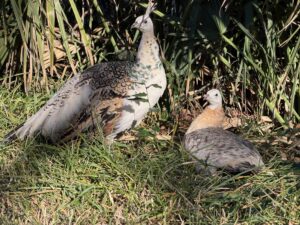
Morpheus, Neo - Peacock and Peahen in Grass

For the first eight weeks in the greenhouse, I ran supervised walkabouts. Out to the pen in the morning for the younger ones, Han and Leia were back in before dusk. Controlled range. Predictable return. The kind of routine that sounds simple and requires constant management.

The birds were not nervous about this. They took to the property like they had read the survey and had opinions about the acreage.

Han Solo appointed himself perimeter patrol immediately. Leia appointed herself supervisor of Han’s patrol.

By week four, they were moving like they’d always lived here. They were old pros who had simply been waiting on the paperwork.


The Part Where the Pen Became Unnecessary

Morpheus made the case first.

Animal Enclosure Night View

She had always treated containment as a puzzle rather than a boundary, and the pen divider was no exception. One morning I went out to find her on the wrong side of it, Neo still on the correct side, both of them looking at me with entirely different energies.

Morpheus: calm, expectant, ready for the day.

Neo: present, waiting, committed to whatever happened next.

I took the divider down.

For a while after that, the two pairs maintained their own territories out of habit — Han and Leia on one end, Morpheus and Neo on the other. The pecking order doesn’t end when the netting comes down. It just gets bigger. More square footage, same social architecture.

But they were sharing space. Moving around each other. Coexisting on a ranch-sized scale instead of a pen-sized one.

This was the plan.


What This Was Always Going To Be

Eight months before this, I had sat across from my husband and laid out a 37-point case for why peacocks were a reasonable life choice.

The pitch included: they roost in trees, they free range, they don’t need a coop, they’ll find a lot of their own food, and I will handle all of it.

The promise to James wasn’t fully delivered yet — there was still the greenhouse, still daily care, still a lot of moving parts that hadn’t simplified. But the work was all mine. He hadn’t been dragged into any of it.

I could see the shape of that promise starting to form.

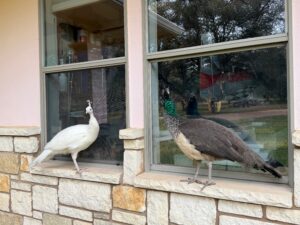
Han Solo, Leia - Peacocks on Window Sill

Four peafowl, loose on the property, doing what peafowl do. Patrolling. Foraging. Making noise about things that may or may not warrant noise.

There is no last plan. There is only the next one.

Spoiler: it was not even close to the last one.

This is how it started. A loophole, a pitch meeting, a box of peachicks, and a ranch that earned its name in the first week.

Everything after this? That’s just dispatches from the field. If you want to continue the stories go there and sort oldest to newest.

If you need me, I’ll be watching four birds pretend they’ve always lived here, updating my blog and googling “at what point does chaos become normal and is there a support group.”

The Day Han Solo Finally Got the Tesla

The Day Han Solo Finally Got the Tesla

It started with a turkey. It will probably end with a peacock.

And somewhere in the middle, James just wants to park his car without incident.


Lewis, Clark, and the 370z

About ten years ago, before the ranch was the ranch — before the peafowl, before Ted and Bill claimed the couch, before any of this — we were building our house in Texas.

I was borrowing James’ car at the time. A Nissan 370Z. I used it while staying nearby during the build.

The property came with neighbors. Not the human kind.

A pair of wild turkey toms had claimed the area, and because I am who I am, they got names. Lewis and Clark.

Clark was fine. Clark minded his business. Clark understood boundaries.

Lewis did not.

Lewis fell in love with the 370Z.

Not a passing interest. Not a casual admiration of its lines.

Full, committed, throw-your-body-in-front-of-a-moving-vehicle love.

If I tried to leave the property, Lewis would launch himself at the car — while it was moving — to stop me from leaving. He did this more than once. He did this on camera. My family stood there and filmed it, because apparently watching a turkey bodycheck a sports car is entertaining.

I have the footage. Lewis throws himself at the car twice in one clip.

He was not injured. He was not deterred.

He was in love.

The 370Z’s paint did not survive the affair. Lewis left his mark. Literally.

And that’s when James decided his cars would never spend a night outdoors again. Not once. Not ever. A policy that held firm for a decade.

Until it didn’t.


Enter the Peafowl

Lewis and Clark eventually moved on. And then — because it always starts out as a good idea — I got peafowl.

They have the run of the property and opinions about everything on it.

And from day one, Han Solo has had his eye on the cars.

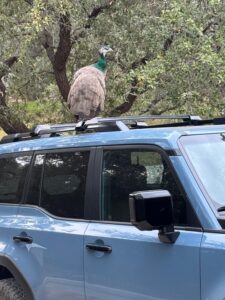
When I brought home my new Land Cruiser last fall, it took Han exactly three days to perch on it. Three days.

Probably less time if I had realized it sooner.

Han Solo - Peacock on Car Roof

But the car that really gets them going is James’ Tesla. It’s electric — quiet, smooth, no roar. Whatever the reason, all four birds zero in on it every time it comes out of the garage.

Han especially. He treats that Tesla like it belongs to him.


The Garage Incident

A few days ago, James accidentally left the garage door open overnight.

The peafowl had only been out of the greenhouse for a few hours that day. Just long enough to do a perimeter sweep and find the one thing they shouldn’t have access to.

I was sitting in the house the next morning, drinking my coffee, when I heard something fall off a shelf in the garage. Not a crash. Just a thud and a clatter.

The kind of sound that makes you set your mug down and go investigate even though you’re pretty sure you don’t want to know.

I stepped into the garage.

Han Solo and Princess Leia were perched on the Tesla roof. Just sitting there, side by side, like they owned it. Like this was always the plan and James had finally cooperated.

Morpheus and Neo were on the other side of the garage, on James’ CNC machine.

Just… exploring. With their feet.

And their complete disregard for James’ personal property.

Droppings on the car. Items knocked over. I ushered them out.

If you’ve never tried to herd peafowl out of a space they’ve decided is theirs — it is not a quick process. They’re big. They’re stubborn. And they absolutely did not want to leave.

But I got them out. Got the garage door shut. Cleaned up the evidence.

Then I went to go tell James.


The Inspection

James’ first concern was the car. Which — fair. It’s a Tesla.

But I’d already checked. Somehow, impossibly, there wasn’t a scratch on it. No idea how four birds with claws spent hours on and around that car without leaving a mark.

We got lucky. Really lucky.

The birds were fine too. And James’ reaction when I told him was… measured.

He didn’t shoot them.

The look on his face said he was weighing his options. I’m still not sure if the options were for the birds or the woman who bought them.

An open garage overnight could just as easily have attracted a raccoon — and if you think four peafowl make a mess, imagine that.

They saw an opportunity. Han had been waiting for this moment.

He finally got to sit on that Tesla.

And he brought Leia along for the occasion.

If you need me, I’ll be checking the garage door twice and googling “how to tell your husband there are two large birds sitting on his beloved car.”

The Night They All Disappeared

The Night They All Disappeared

feather on the drive

It was fifteen minutes before sunset.

No birds.

No sound.

Not a honk, not a rustle, not a single entitled demand for mealworms. Nothing.

Usually, when they’re hundreds of yards out, I can still hear them. They are not quiet animals. Especially when they’re responding to my calls — which, on a normal evening, sounds less like a woman summoning birds and more like a hostage negotiation conducted across open terrain.

But tonight, I was calling into silence.

Fifteen minutes. Then twenty. Then thirty.

By 6:30, they should have been penned up. The next fifteen minutes felt like an hour.


The Search

I walked both neighbors’ properties. I drove the gravel road. I checked fence lines, wondering if they’d gotten on the wrong side of one.

Lately, they’d developed a habit of completely ignoring me until dusk. Then, right on cue, all four would single-file it home like they’d been planning to come back the whole time and my yelling was simply not a factor.

But not tonight.

By 6:40, I was hoarse.

They would have roosted by now. Wherever they were, they were locked in for the night. There was nothing left to do but pick it up in the morning. Hope they’d find their way back.

I went inside with tears streaming down my face.

This was it.


The Part Where My Brain Did What Brains Do

My mind was already writing the story.

The one where you tell everyone they disappeared. The one where you find a pile of feathers that used to be your bird.

I have lived that story before.

Years ago, I lost every one of my chickens in a single day. A deranged wild animal, broad daylight. All I found were little spots across the yard — each one a small pile of feathers where a bird used to be.

You don’t forget what that looks like.

I had prepared myself to lose peafowl one by one. The odds are not gentle. There are 101 ways a peafowl can die, and I have read about every single one of them.

But to lose all four. In one night.

What kind of bird parent lets that happen.

A terrible one.


6:45 p.m.

I walked out onto the screened porch. The one that looks down the slope where they hunt for bugs in the late afternoon.

I stood there.

Listening.

Listening.

Listening.

At 6:45, I heard a sound to my left.

Not an alarm call. Not a whistle.

The sound of a bird walking through grass.

There was Morpheus.

I tore through the house. Nearly knocked James off his feet.

He caught my arm. “Is everything okay?”

“No — yes — now it is. They were all gone. They just showed up.”

I didn’t stop moving.

I got to the end of the driveway, looked across the back of the house, and there they were. All four. Led by Morpheus.

Morpheus and Neo ran to me and straight into the greenhouse. Han wanted to follow, but Leia had already decided she was sleeping outside tonight. He waited for her. She did not come. He finally gave up and went to her, and they flew to the roof and up to their tree.

Everyone accounted for.

Everyone home.


The Theory

Maybe they were so busy ignoring me that they lost track of time.

Maybe they wandered farther than usual and the fences confused them on the way back.

Or maybe Morpheus — my imprinted peahen, the one who has been yelling for me since she was three ounces of fluff and lungs — finally said:

Hey guys. I don’t know about you, but Mom’s been yelling her head off for 45 minutes and I’m just gonna go home.

I’d like to think it was that.

I’d also like to think my voice still means something to at least one of them.

Probably.


One Year

A year ago, I was planning a 37-point presentation to convince my husband that peacocks were a reasonable life choice.

Nine months ago, I was lying in a hospital with six broken ribs, worrying about peachicks I hadn’t picked up yet.

Tonight, I was standing in the dark with tears on my face, worrying about four peafowl who couldn’t be bothered to answer me.

They have grown. They have matured. They have learned to chase foxes, roost in trees, patrol the property, and completely disregard the woman who raised them — right up until the moment she’s about to fall apart.

Then they come home.

Next time they’re in a tree in the yard and I’m annoyed about something trivial, I’m going to remind myself:

At least they’re in a tree in the yard.

If you need me, I’ll be sitting on the porch with swollen eyes and a hoarse voice, googling “do peafowl understand the concept of curfew or do they just enjoy watching you suffer.”

The Great Relocation

The Great Relocation (Or: How I Got My Porch Back)

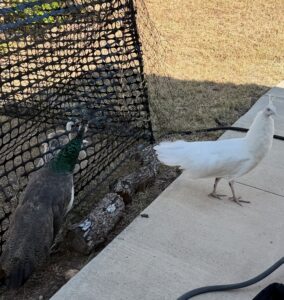
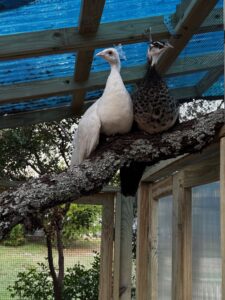
Han Solo, Leia, Morpheus, Neo - Peacock and White Peacock Near Fence

Morpheus and Neo were ready to move out.

I knew it. They knew it. My porch knew it.

Han and Leia had been in the not-a-coop greenhouse for about a month. In that time, the little ones had been doing what Morpheus and Neo do best: wandering, growing, developing opinions, and generally maturing at a pace that suggested they had somewhere to be.

It was time.

The problem was that nobody had told Han and Leia.


Peachick Daycare (Also Known as Pecking Order 101)

For weeks before the move, I’d been running a daily social experiment that was going exactly as well as you’d expect.

Every morning, I took Morpheus and Neo outside to a segregated section of the pen for what I had generously started calling Peachick Daycare. Separated by netting. Perfectly safe. Just getting everyone used to the idea of each other.

There is a reason they call it a pecking order.

It is not a metaphor. It is not a polite suggestion. It is a very literal system in which the older birds remind the younger birds, repeatedly and without apology, exactly where they stand in the hierarchy. The younger birds learn this by trying. And trying. And trying again. Until they understand that deference is not optional, and the older birds’ personal space is not a suggestion.

Morpheus and Neo tried.

Han and Leia treated every session like a border incursion that needed to be repelled immediately. The moment the little ones appeared, the older birds postured, rushed the netting, and made it abundantly clear that these smaller birds were not welcome, had never been welcome, and should consider other living arrangements.

Indefinitely.

The chicks kept trying. The older birds kept correcting them. This is, technically, how it is supposed to work. The younger birds eventually learn to read the room — to respect the bubble, defer to their elders, and stop poking the situation with a stick.

It just takes a while.

And until it clicks, someone is always getting pecked.

It became clear that if I waited for harmony to arrive on its own schedule, I would be waiting until Morpheus and Neo were old enough to retire.


The Plan (Such As It Was)

I needed a solution that didn’t require anyone’s cooperation.

The greenhouse had to be divided. One side for the little ones, with access to the pen. One side for Han and Leia — except Han and Leia weren’t going to be in it anymore.

That was the other part of the plan.

It was time for Han and Leia to be spending their days semi-free ranging anyway.

So the plan was: give half the greenhouse to Morpheus and Neo. Let Han and Leia spend their days outside the pen, roosting back in the greenhouse at night. Everyone gets more space. Nobody has to agree to anything.

I was determined not to feel guilty about it.

I needed my porch back.


The Move

Morpheus and Neo moved into their new quarters with the energy of soldiers who had won this war — never mind the details of how many times they’d been pecked getting here — and were not going to waste a single square foot of hard-earned territory.

They had a lovely pen. They had space. They had each other.

Han and Leia had the whole yard.

It was not lost on them.


The Morpheus Adjustment Period

Morpheus - White Peacock Standing

The move was a lot of changes at once, and Morpheus — my imprinted peahen, the one who has been announcing her feelings since she was three ounces of lungs — processed all of them at full volume.

New space. New routine. Older birds visible but unreachable. And mom?

Mom was not on the porch anymore.

For five months, I had been right there. A door away. Close enough that Morpheus could push a curtain aside and confirm I still existed. The porch had been home base — hers, mine, ours by default.

Now I was inside.

And she was outside.

And the greenhouse was not the porch.

She had thoughts.

It wasn’t the smoothest transition. Morpheus made sure I knew, in the way Morpheus always makes sure I know things: repeatedly, at volume, until the message had been received and confirmed.

I kept my distance. Held the boundary. Reminded myself that this was right and necessary and good for both of us.

Probably.


The Part Nobody Expected

Here is the thing I did not anticipate.

The cats noticed.

For five months, Ted and Bill had lived alongside the porch brooder situation with the tolerance of two animals who did not consent to any of this but had decided to make it work. They watched. They observed. They maintained the dignified distance of creatures who had opinions but chose not to voice them.

Bill, especially, had developed a habit of sitting at the back door.

Just watching.

Every day. The birds going about their business. The chaos of the brooder. The sound and the motion and the whole ridiculous operation happening six feet away through the glass.

After the move, I caught him at the back door again.

Same spot.

Just — not watching anything.

The porch was quiet. The brooder was gone. Five months of feathered entertainment, abruptly cancelled.

I had not expected the cats to miss them.


The First Night

Morpheus, Neo - Peacocks in Wooden Enclosure

That evening, I watched the little ones figure out what to do with themselves at dusk.

On the other side of the netting, Han and Leia settled onto their perches — the ones they’d been using for a month, the ones that were theirs, the routine they’d established without any input from me.

Morpheus and Neo watched them.

Then they flew up to the branch I’d installed on their side.

First try.

They just looked at what the older birds were doing.

And they did it.

I stood there for a moment, watching four peacocks arranged on either side of a piece of netting, each pair on their own perch, settling in for the night.

Nobody was fighting. Nobody required Andrea Bocelli.

If you need me, I’ll be on my porch enjoying the quiet and googling “how long before peacocks find a new way to complicate things.”

The Accidental Walkabout

The Accidental Walkabout

Han and Leia moved into the greenhouse.

Han Solo, Leia - White and Black Peacocks on Branch

This sounds simple. It was not entirely simple. Within the first few days I discovered they’d been flying up to roost in the upper windows every night, which meant they needed an actual branch to grip. The branch I cut came in at sixty pounds and took two people to install. Han and Leia used it on their schedule, appreciated it on their schedule, and have never once acknowledged the effort.

But they were out of the rabbit hutch, which meant Morpheus and Neo could finally move up.


What I Noticed

Morpheus and Neo graduated to the rabbit hutch.

They were thrilled. You could tell. They ran the length of it immediately — back and forth, back and forth — confirming the square footage like birds who had been promised this and were now verifying the terms.

The porch, for the first time in months, had breathing room.

Sort of.

When I let them out on the porch floor, they followed me.

Not in a vague, loosely-in-the-same-direction way.

Right behind me. Both of them. Wherever I went, they went. If I stopped, they stopped. If I turned around, two small birds were looking up at me waiting for the next development.

They were underfoot constantly. On my feet, behind my feet, in the way of my feet. The porch that had just gotten its breathing room back was already a minefield of small birds who had decided I was the most interesting thing in it.

Which is how I found out they would follow me anywhere.


The Cat Carrier

My first idea was a proper field trip.

I had an enclosed garden area outside — big enough to explore, secure enough that nobody was getting lost. Good bugs. Real dirt. I got out the cat carrier.

Morpheus and Neo had opinions about the cat carrier.

These opinions were unanimous and loud.

I managed to get them in. I managed to get them to the garden. I got them out. They ran every inch of that space with the energy of birds who had been waiting their whole short lives for exactly this.

Then I had to get them back in the carrier.

I managed it once.

Once.

The carrier was retired. We do not talk about it.

Which left an obvious question.


How to get them outside

I opened the porch door, stepped outside, and looked back.

Morpheus and Neo looked at the door. Looked at me.

And walked out.

We started small — two weeks on the driveway, short loops, nothing ambitious. They stayed right behind me, investigating gravel, pecking at things that probably weren’t food, conducting whatever quality-control process a peachick runs on a gravel driveway.

Then I started wondering how far they’d actually go.


300 Yards

My parents live next door. About 300 yards of open ground between us.

I turned and started walking.

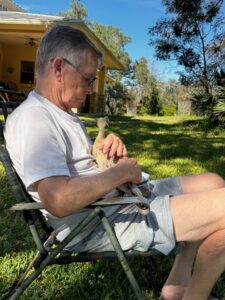
Morpheus - Man Holding Small Bird

Morpheus and Neo followed.

Not just to the edge of the yard. Not just partway. The whole distance, through the grass, single file.

My parents were sitting outside in lawn chairs. The birds walked right up, looked around, and immediately found the dense scrub-grass area at the edge of the yard that apparently ticked every box a peachick has for an ideal afternoon.

They burrowed into it. Sat down. Looked extremely satisfied.

When my parents held out treats, both birds came right over and jumped up to investigate — checking pockets, checking hands, checking whether any of this was edible.

It was, by every measure, a success.


The Weekly Ritual

This became a thing.

Every week, same route, same visit. My parents waiting in the lawn chairs, the birds heading straight for the scrub grass and then circling back for treats. Neo and Morpheus getting comfortable with different ground, different trees, different sounds.

When it was time to go, I’d turn around and start walking back.

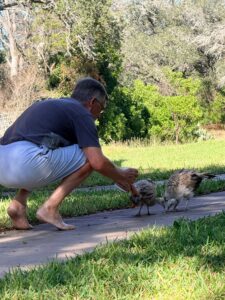
Morpheus, Neo - Man feeding peacocks outdoors

They followed.

Every time.

All the way home. Up into the porch. Down for dinner. Done.

I want to be clear that none of this was a training program. The walkabouts were the accidental result of a cat carrier that only worked once and two birds who’d decided I was worth following.

But every time I tried to let them spend time near Han and Leia, I got the same answer. The older birds made it clear immediately and without subtlety that “nearby” was not an option they were offering.

So the walkabouts were what we had instead.

And they were, against all odds, exactly enough.

If you need me, I’ll be wherever they’ve decided we’re going today, googling “at what point does the human realize she was the one being trained.”

The Night Nobody Slept (Including the Raccoons)

Our springtime is usually pretty quiet out here.

Raccoon Climbing Tree

Today took the cake for sounds.

I was lucky to shuttle James off to bed tonight with any nerves left in his body. Between the fox, the escape, and the panic calls, this evening delivered more chaos per hour than most weeks manage in total.

And it wasn ‘t even over yet.


Fox Patrol (They’re Getting Good at This)

It started this afternoon with a fox who apparently did not read the property line.

All four birds took to the air with a wall of alarm calls — sharp, staccato, overlapping honks that sound like someone is stepping on a dozen angry car horns in rapid succession. It is not a graceful sound. It is the sound of four birds who have collectively decided that something must die or leave immediately.

Neo led the charge — side by side with Han, wings out, full sprint, like small feathered raptors who had finally found a reason to take their jobs seriously.

He’s always been the quicker study. Han provided the volume. Neo provided the direction.

Together, they chased that fox out of the yard like it owed them money.

I was genuinely impressed.

This is the part of the story that goes well.


The Great Escape (Morpheus, Obviously)

All four birds had been camping out earlier in the weekend. With the mild weather, I didn’t blame them. They needed the practice. The last thing I want is for them to get stuck outside one night and not know how to find a tree and roost.

Tonight, though, I wanted them in.

I put Morpheus and Neo into the greenhouse on their side and shut the doors. Everyone secured. Plan executed.

That lasted about an hour.

We heard it from inside. Not the Morpheus Whistle. Not the nightly aria. This was full panic calling. The kind that makes you put your shoes on before your brain catches up.

I went out to find Han, Leia, and Morpheus in their preferred tree.

Wait.

Morpheus was in the greenhouse when I left. Doors closed.

Of course she was.

I looked around. No Neo. I went back to the greenhouse to check, and there he was — still inside, exactly where I’d put him. Except now the netting I’d hung from the ceiling was torn down, hanging in shreds like evidence from a crime scene.

Morpheus had figured out how to pull it loose, squeeze through, and leave.

Without Neo.

Tomorrow the netting comes down for good. She’s gotten too good at finding ways out, and I don’t want either of them getting tangled and hurt. The netting was supposed to be a barrier.

Morpheus treated it like a puzzle.


The Part Where Morpheus Realized She’d Left Someone Behind

Here’s the thing about Morpheus.

She will break out of anything. She will defy containment with the focus of someone who has studied the blueprints and identified the weak point.

But she will not check to see if her brother made it out too.

Darkness fell. Morpheus was in the tree. Neo was in the greenhouse. And the moment Morpheus realized Neo wasn’t beside her, the Morpheus Whistle — the one she’d perfected as a chick, the one that once required Andrea Bocelli to manage — came back.

Not the baby version.

The grown-up, full-volume, something-is-very-wrong version.

There was nothing I could do. It was dark. Neo was safe inside. Morpheus was safe in the tree. Nobody was in danger.

They just didn’t know where each other were.

Same whistle. Higher stakes.

I monitored Neo on the cameras. Stressed, pacing, but settling. After about thirty minutes, everyone went quiet.

James, meanwhile, was watching all of this unfold from inside with the look of a man who had been promised this would be simple.


Intermission (It Was Not the End)

I thought that was it. Peak chaos. Evening complete.

A short time later, James and I both heard a sound from outside that I can only describe as what happens when you combine a human scream with a horror movie and set it loose in the dark.

Blood-curdling. Repeated. Close enough to matter.

We shot out of our seats to check the birds.

Everyone was settled. Tree. Greenhouse. Not a peep. Four birds acting like they had been asleep for hours and had no idea what we were talking about.

It happened again.

This time I could tell it was coming from the next property over. And now I was standing outside in bare feet with a flashlight, which is exactly the kind of protection that works in zero scenarios.

I went inside, grabbed my phone, came back out, and recorded it.

Then I looked it up.

Raccoons. Fighting or mating — and honestly, with raccoons, those two activities sound identical and may in fact be the same event.

I’d heard that sound years ago. You don’t forget it. It’s the kind of noise that makes you understand why people in the 1800s believed in monsters.


The Last Nerve

James, at that point, had his last nerve plucked. He bailed for bed.

Fair.

This is the piece that stays with me after the chaos settles.

The birds have to get used to the sounds. The temperatures. The things that move through the dark.

Raccoons are known to climb trees and knock roosting birds off their perches at night. I am hoping ours are too fat and lazy to bother, and that my birds are roosting high enough to not be worth the trip.

Hoping.

This too shall pass. They have to learn. They have to adjust.

And so will James.

(As I finished writing this near midnight, I caught a raccoon trying to get into the greenhouse. Officially wearing out my last nerve as well.)

If you need me, I’ll be the woman standing outside in bare feet with a flashlight at 11pm, googling “raccoon mating screams,” while her husband retreats to bed and questions every decision that led to this moment.

Meanwhile, at the Ranch #1

Biweekly Roundup


The Turkey Summit

The wild turkeys live here year-round. This is their property too, technically, though no one has informed Leia.

The two groups have never actually met face to face. Different schedules. Different parts of the property. A polite mutual ignorance.

That ended this week when about five turkey hens discovered the spilled birdseed on the ground.

The same spilled birdseed the peacocks had already claimed.

Leia puffed up to roughly twice her size, which is impressive given that she is already convinced she is the largest creature on this property. She postured. She stalked. She made it very clear that this was her birdseed, on her ground, and whatever these oversized cousins thought they were doing, they could rethink it immediately.

Han held position nearby, doing his best impression of a bouncer who wasn’t sure if he was supposed to intervene or just look large.

No contact was made. But the energy was hostile.

The turkey hens, for their part, did not even look up. Five of them continued pecking at the ground like a lunch rush that could not be intimidated by management.

Film at 11.


Ranch Security Report

The flock takes perimeter defense seriously. Their threat assessment, however, needs work.

The fox. All four birds chased an actual fox out of the yard this week. Full sprint. Wings out. Like small feathered raptors straight out of Jurassic Park. This was a legitimate threat and they handled it like professionals.

The package. Han alerted us to a box from Amazon on the porch. Full alarm call. The box was motionless. Threatening no one. The delivery driver who walked right past him? Not a sound.

The squirrel. All four birds lost their collective minds over a squirrel in a tree. I ran outside expecting a predator. The squirrel did not care. The peacocks have not recovered.

One out of three ain ‘t bad.


Catch Up

? Morpheus and the Nightly Aria
A problem chick, a nightly whistle, and the discovery that Andrea Bocelli could do what Tim McGraw could not.
Read the post →

? Four Peacocks. One Squirrel. Zero Chill.
All four birds sounding the alarm. The intruder was a squirrel.
Watch the short →

? The Rooftop Camping Saga Continues
The bedtime rebellion is alive and well. They were asked nicely. They said no.
Watch the short →


Questionable Choice Award

This one goes to a collared lizard who misjudged his reentry into his hibernation spot.

We had a warm day that turned cold fast at dusk, and he got stuck. Don’t worry — the next day it warmed up enough for him to get back inside.

So our little Mr. Collared Lizard is the first winner of the Questionable Choice Award.

Welcome to the club, buddy. You ‘ll fit right in.


If you need me, I’ll be refereeing a birdseed custody dispute and googling “do peafowl hold grudges against other poultry or is it personal.”

The Structure That Was Definitely Not a Coop

The Structure That Was Definitely Not a Coop

Sketch of Building with Text

Here’s the thing about peachicks: they grow.

I know that sounds obvious. All baby animals grow. But peachicks grow in a way that suggests they are personally offended by the size of their enclosure and are determined to make it feel inadequate as fast as possible.

Han and Leia had started in the red brooder on the porch. Cozy. Manageable. A sensible amount of bird in a sensible amount of space.

Then they got bigger.

Then they got bigger fast.

By the time I was incubating the eggs that would become Morpheus and Neo, I’d already had to build the older two a rabbit hutch — eight feet long with a four-foot run attached — just to give them room to stretch, flap, and pace without turning the brooder into a demolition derby.

The upgrade worked. For a while.

But now I had four chicks on the porch, two age groups, and Han and Leia were putting on size like they’d made it a personal goal. The rabbit hutch that had felt generous two weeks ago was starting to feel like a studio apartment for birds who had discovered they had opinions about square footage.

Meanwhile, Morpheus and Neo were outgrowing the red brooder at a pace that suggested they had read ahead in the manual and were skipping chapters.

It was becoming very clear, very quickly, that the next step needed to happen soon.

Probably yesterday.


The Housing Crisis (A Progression Nobody Planned)

I had not set out to build three enclosures.

The red brooder was supposed to be it. One brooder. Simple.

Then Han and Leia needed more room, so I built the rabbit hutch.

Then Morpheus and Neo hatched and inherited the red brooder, which meant I now had two enclosures on a porch that was never designed to be an aviary.

Now the older birds needed to move outside. They needed real quarters — space to grow for the next six to nine months while they matured. Something with room. Something secure. Something that could handle birds who were getting big enough that the rabbit hutch was starting to look like a suggestion rather than a boundary.

Every enclosure I’d built had been a response to the same realization: birds grow faster than plans.

I was chasing a moving target with lumber and screen.

I needed a plan.

Of course I did.


The Constraint That Shaped Everything

There was one rule I could not break.

I had promised James: no coop.

The whole peacock pitch — the 37-point plan, the careful presentation, the “this is your one chance” moment — had been built on a foundation of “they roost in trees” and “they free range” and “you will not have to clean anything.”

A coop would have been an admission that this was, in fact, poultry ownership with infrastructure.

A coop would have meant James was right.

A coop was not an option.

So I started looking up plans online. Walk-in coops. Predator-proof enclosures. Large bird shelters.

And that’s when I noticed something interesting.

Every single “walk-in coop” plan I found was essentially a greenhouse with screen on it.

A greenhouse.

I love to garden. I had been wanting a greenhouse for years. And here, staring back at me from the internet, was a structure that was clearly, obviously, and undeniably a greenhouse.

It could just also house birds with some modifications.

The logic was airtight.


The Pitch (Such As It Was)

A wooden greenhouse with transparent panels and a red storage unit at the side, situated in a garden with trees in the background.

I proposed it to James as: “Hey, can I build a greenhouse that can temporarily be used for the birds?”

I didn’t get an objection.

I took that as permission and moved on.

I designed it myself.

Side entry doors. Wide front doors. Tall enough to walk in comfortably. Wide enough on the sides to eventually store the family mower.

It was a gardening structure. It would house the birds for the interim — six to nine months, maybe a year — and then transition into a proper greenhouse for me.

A greenhouse that could have tree-limb perches.

And heaters.

And eventually, cameras.

Details.

I hired two of the guys who had worked on previous outside projects with me, and construction began. We built it with a twenty-five-by-fifteen-foot pen attached, giving Han and Leia the kind of square footage that peafowl actually need.


Definitely a Greenhouse

The structure went up quickly.

It had screen walls. A solid roof. Doors that latched. A pen where the birds could spend their days with room to run, flap, and do whatever teenage peafowl do when they think no one is watching.

It was everything Han and Leia needed for the next chapter.

And it was absolutely, unequivocally, without question, a greenhouse.

If it looked like a coop, functioned like a coop, and housed birds like a coop — well, that was just a coincidence that nobody in this household needed to discuss.

If you need me, I’ll be adjusting the perches in my “greenhouse” and googling “at what point does a gardening structure become a coop and is there a legal precedent.”

The Morning Morpheus Scalped His Brother

The Morning Morpheus Scalped His Brother

One of the things nobody prepares you for with peachicks is the picking.

They pick at everything.

Not casually. Not occasionally. Obsessively. If something exists and it is slightly different from the thing next to it, a peachick will find it, examine it, and attempt to remove it from the surface of the earth.

A loose thread on your shirt. A seam on a shoe. A freckle on your hand.

Morpheus was especially gifted in this department. He would zero in on a freckle on my hand — a personal offense, clearly. Not a peck. A project. A deliberate, focused attempt to correct what he felt was a manufacturing defect in my skin.

I’d learned early on with Han and Leia that this habit doesn’t stop at inanimate objects. They’d pecked at each other’s faces so relentlessly that I’d added mirrors to the brooder — instant virtual flock, instant calm. Han was especially committed. He’d park himself in front of the mirror for hours — finally, someone who understood him.

But mirrors only solve the boredom problem. They don’t solve the “something new just appeared on my sibling and I need to investigate it immediately” problem.


The Crime Scene

One morning, I checked on the little ones and found Neo looking as though he’d lost a fight he didn’t know he was in.

The tiny crest feathers that had just started to emerge — barely there, brand new, the first sign of the bird he was becoming — were gone.

Just gone.

In their place: a small bloody spot on the top of his head.

And another one on his neck.

I stared at him.

I stared at Morpheus.

Morpheus stared back with the vacant, cheerful expression of someone who had absolutely no memory of committing a crime.

He had scalped his own brother.

Not out of malice. Not out of aggression. Out of pure, unrelenting curiosity. New feathers had emerged. They were different. They were there. And Morpheus could not leave them alone until they weren’t.


The Day I Turned My Bird Purple

I scooped up Neo and brought him inside.

He was fine. Annoyed, maybe. But fine. The spots were small, and he was more confused about the sudden change of scenery than bothered by the tiny wounds.

In my first aid kit — the one I’d been assembling since the morning I lost Luke — I had Blue-Kote. It’s a gentian violet antiseptic with a dauber applicator, designed for exactly this kind of thing. You dab it on. It disinfects. It discourages further picking because the taste is terrible.

It also turns everything it touches a vivid, unapologetic purple.

I dabbed Neo’s head. I dabbed his neck.

And then I stood back and looked at what I’d done.

My tiny yellow chick now had two enormous purple splotches — head and neck — as if a very small graffiti artist had tagged him while I wasn’t looking.

This was not the look I was going for.

And now I had a new problem: I was about to put this freshly purple bird back in with Morpheus, the chick who could not resist anything that looked different.

Two giant purple spots on an otherwise yellow bird?

That was a neon sign that read: PICK HERE.

I held my breath and put him back.

Morpheus looked up.

Looked at Neo.

Looked at the purple spots.

And went back to doing whatever he’d been doing before.

Nothing.

Zero interest.

It turned out Morpheus had taken a nap while Neo was being treated. And whatever had happened before the nap had been wiped clean.

This wasn’t object permanence issues. This was ADHD in a three-ounce package. If you could distract him long enough — or in this case, wait for the system to reboot on its own — the obsession reset.

Sounded a lot like me, honestly.

From that point on, this became my primary Morpheus management strategy. You didn’t need to outthink him. You just needed to outwait him. If you could survive the current fixation, a nap or a meal or a sufficiently interesting bug would eventually clear the queue.

It wasn’t elegant. But it worked.


The Porch Show (Now With a Live Studio Audience)

So our days settled into a rhythm.

All four birds on the porch. The Morpheus Hour every night at sunset. Andrea Bocelli drifting through the screens while Morpheus performed his nightly duet with a man who did not know he had a co-star.

And every single day, Bill and Ted claimed their front-row seats.

Our two cats had been using that screened-in porch for nine years. It was their domain. Their kingdom. Their personal sunbeam collection agency.

Then I turned it into a chick nursery.

They could have been resentful. They could have staged a protest.

Instead, they discovered they had been given the greatest gift a house cat can receive: live television.

Every morning, Bill and Ted stationed themselves in the chairs by the glass porch doors and watched.

All day.

Sunrise to sunset.

Not the way cats watch birds outside — that focused, twitchy, predatory tracking. This was different. Two retirees who had found a channel they didn’t know existed and could not stop watching.

The cats watched them eat. Watched them flap. Watched them chase each other in circles for no reason. Watched Morpheus have opinions. Watched Neo follow those opinions to their logical and usually chaotic conclusion.

Every night when the Morpheus Hour kicked off and the whistling started, Bill and Ted conveniently found somewhere else to be.

They had lost their porch. But they’d gained sunup-to-sundown entertainment.

Fair trade, apparently.

If you need me, I’ll be dabbing purple antiseptic on a bird and googling “is it normal for a peachick to forget a crime during a nap or should I be concerned.”

Morpheus and the Nightly Aria

Morpheus and the Nightly Aria

Morpheus quickly got nicknamed “my problem chick.”

Morpheus and the Nightly Aria

Imprinting was no joke.

At a week old, we moved the little ones out to the porch brooder. During the day, I could cover the brooder window, and Morph would forget about me for longer stretches.

Out of sight, out of mind.

Until he figured out he could push the curtain aside and check.

After that, every time I opened the porch door — feeding, checking, just passing through — it was over. Full alarm. The Morpheus Whistle.

If you’ve never heard a distressed peachick calling for its person, imagine a smoke detector that developed feelings of abandonment.

I was the British nanny of chick-rearing. Loving. Structured. Firm boundaries. I told myself this was working. I told myself the separation was good for both of us.

It was going great.

But every single night at 8pm, as the sun set, the whistle began. Not “Mama.” But ” MAMA! MAMA!!” On repeat.

Thirty minutes. Sometimes longer. Nightly. Reliably. Like a tiny feathered air raid siren who had opinions about bedtime.

I tried everything. Lights on late, then quickly dimming. Slowly dimming. Leaving them on. Turning them off.

He hated all of it equally.

Not that we knew Morpheus was a “he” or a “she” yet. But when you name a chick Morpheus, you commit to the pronoun for a while.


The Rest of the Flock Was Not Amused

As much as Morpheus had imprinted on me, I had imprinted right back.

There were days I thought it was harder on me than it was on him. Hearing him call and not going to him. Sitting inside, staring at the wall, reminding myself that boundaries were the right call.

Probably.

Meanwhile, the other three chicks were trying to process this nightly chaos.

Han and Leia — the two older ones — kept exchanging looks like they were trying to figure out why this sound should concern them. They’d startle, settle, startle again. Eventually they just tried to ignore it.

And Neo.

Neo, Morph’s actual sibling, had already developed a permanent expression I can only describe as:

How am I related to this guy.

I couldn’t blame any of them. Most nights, all three just tucked in and pretended the whistle wasn’t happening.

Same, honestly.


The Night James Made a Comment

One evening, James slipped in a casual:

“So… how long is this going to go on for…”

Fair question. One I had been actively avoiding asking myself.

I decided it was time to get drastic.

Music. I’d read somewhere that someone had used it to calm stressed chicks. I grabbed a speaker, pulled up my phone, and started auditioning genres for the world’s most demanding audience of one.

Country. Tim McGraw. We live in Texas. I was sure this was it.
Nothing.

Willie Nelson. We are literally a few miles from his ranch.
Nothing.

Jim Brickman. Piano. Nothing on earth can resist Jim Brickman.
Morpheus could resist Jim Brickman.

John Denver. Maybe he needed old-school. It would drive James nuts, but anything was better than the whistle.
Nada.

Classical instrumentals.
But — wait. Longer pauses between whistles.

He’d slowed down with classical. What if I added voices.

Noted.


The Last Option I Could Think Of

I went nuclear.

The Three Tenors. Pavarotti. Plácido Domingo. José Carreras.

Full opera.

My thinking was that if nothing else, maybe Luciano Pavarotti could drown out a peachick.

He stopped.

Not immediately. But five to ten minutes instead of the thirty we’d all been suffering through.

The Three Tenors had done what Tim McGraw, Willie Nelson, Jim Brickman, John Denver, and the entire classical canon could not.

Over the next few days, I narrowed it down further.

Morph didn’t just like opera. He had preferences.

Andrea Bocelli’s Sacred Arias album. And not even the whole album — specific tracks.

So every night at dusk, anyone within earshot — neighbors, boats passing by on the lake — got the nightly show.

Andrea Bocelli at full volume, singing “Ave Maria” and “Panis Angelicus.”

Morpheus at fuller volume, whistling over him like a tiny, tone-deaf diva who had generously allowed Bocelli to open for her.


The Part Where This Became My Life

There is no scientific explanation for why opera works on a peachick.

I read that it worked for birds. I stopped questioning why. You just accept it and hope no one asks follow-up questions.

Every night for three months, I queued up Sacred Arias at sunset like it was a religious obligation. The whistle dropped from thirty minutes to ten. Sometimes five.

He never skipped it.

Neither did I.

Because if I forgot, he reminded me.

It became known as “The Morpheus Hour.”

I had not trained a chick to sleep.

I had trained myself to perform a nightly concert for a bird.

So much for boundaries.

If you need me, I’ll be trying to figure out how to file a complaint with Spotify after three months of my algorithm being permanently hijacked by a peachick.

The Day I Thought I Could Avoid Imprinting

Teaching Tiny Chaos Agents to Eat

So we left off with two new chicks, two older chicks, and almost-repaired ribs.

Two tiny fluffy yellow chicks.

At this point, you have to fill in for mama. That means teaching them to eat and drink.

Peachicks are notorious for not knowing instinctively how — or what — to eat. I added some water to the chick starter to make it mush, put a drop of water on my finger, and prayed.

If I could get one to do it, the other would follow.

At first, they weren’t interested.

Then one took the drop of water on a closed beak.

It dribbles into the crack.

Swallow.

Pay dirt.

I tapped the mash.

No dice.

They can go 48 hours without food after hatching. I was on hour four.

Plenty of time to panic later.


The One Who Always Came to My Voice

They were darling, though.

They would run in and out from under the brooder plate — a warming device I had surrounded with feathers to simulate “mom.”
Mom was a heat lamp and some craft supplies.

One of them always came out to my voice.

That was Chick 2.

Almost identical to Chick 1, except for demeanor. I could always tell them apart instantly. Chick 1 was cautious. Chick 2 had opinions.

I tried so hard to leave them alone. I did not want them to imprint on me.

I had read horror stories of “bathtub chicks.”
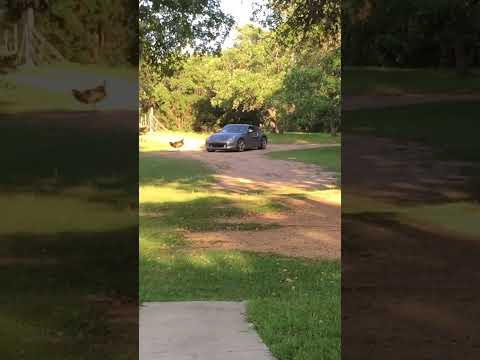
These are the birds raised by well-meaning novices who do no research. They start the chicks in a bathtub instead of a proper brooder. They let them follow them around the house — where they can get stepped on, lost, or worse. They cuddle them constantly. They set no boundaries.

Then, months later, they put this fully bonded bird outside in a pen.

And they wonder why it screams.

And bites.

And holds a grudge for the next thirty years.

A bathtub chick doesn’t just cry for attention. It grows into a large bird with resentment issues and a long memory.

There was no way that was going to fly here.

I was adorable.


The Day the Battle Began

The day after they hatched, Chick 2 started to whistle when I left the room.

Oh no.

I tried to distance myself. Dimming the room for nap time seemed to work.

Then, in the middle of a teleconference, Chick 2 started to whistle.

Loudly.

Not a tiny chick whistle.

A “you can hear it in the other room” whistle.
A “your clients are now aware you have livestock” whistle.

Three ounces of bird. All of it lungs.

And it didn’t stop.

I ignored it as long as I could. Then I finally said, “Hold on,” walked with my laptop into the guest room, and sat on the floor.

The chick saw me.

Silence.

Immediate silence.

Like a toddler who was fully prepared to scream until someone showed up, and now that someone had shown up, everything was fine and always had been.

I showed my teleconference attendee my “predicament” — which got the expected ohs and ahhs.

And I sat on that floor for the next hour.

Because apparently I work for a bird now.

At the time, I didn’t know if I was winning or losing. I didn’t know if this chick was a boy or a girl — and males have it worse with imprinting. I didn’t know if the boundaries I was trying to set would hold.

All I knew was that this was going to be an uphill battle.

Spoiler: it was.


The Realization

I noticed this little one didn’t have object permanence yet after waking up. If I wasn’t visible, I didn’t exist. And if I didn’t exist, that was cause for alarm.

So I dashed out and decided they needed more space. Distance. Boundaries.

You know. The things that work on birds.

That little chick — who was later named Morpheus because of its lung capacity — kept this up every time it saw me, right up until it fell asleep.

At one week, I moved them out to the porch.

From then on, I was summoned every day.

Maybe once.

Maybe.

For months, it was an uphill climb. Boundaries tested. Whistles ignored. Guilt suppressed.

But that’s a story for later.


If you need me, I’ll be realizing there is no spoon, there is no schedule, there is only Morpheus and googling “how to explain to a bird that I have other responsibilities.”

The Month I Decided to Hatch My Own Problems

The end of June marked the beginning of one of the longest months I’ve had in years.

I was two weeks into owning peachicks. I had lost one to circumstances beyond my control. And I had doubled down.

No.

Tripled down.

I had decided to hatch seven eggs myself while still recovering from six broken ribs, fully aware that my expected losses were somewhere around 70%.

This might be the part where my family started wondering about my sanity.


The Part Where I Waited For The Mail

I spent my days recuperating from the accident while happily mother-henning two small chicks. Han and Leia were thriving. I was vertical. Progress.

The eggs arrived a week later.

They had endured way too long in the hands of the US Postal Service. One of the things you’re supposed to be careful about when shipping eggs is transit time — especially if you have warm days or postal holidays.

I had both.

The seven eggs arrived just before the weekend. Had they gone one more day, I might not have had any viable eggs at all.

Into the incubator they went.

And because I am who I am, I started a spreadsheet to track their weight.

Of course I did.

Every week when I candled, I weighed each egg in grams and logged it. The humidity in the incubator got adjusted accordingly. If I was going to do this, I was going to do it right.


The Rings of Death

At one week, I candled them.

For those unfamiliar, candling is when you shine a light through the egg to see what’s happening inside. You’re looking for veins, movement, signs of life.

You’re also looking for rings of death.

That’s not me being dramatic. That’s the actual term. A dark ring inside the egg means the embryo stopped developing. Game over.

I spotted three.

By day fourteen, we lost another.

All four were discarded.

Seven eggs became three.

Here’s the thing I didn’t expect: part of me was relieved.

The math was working. The odds I’d been warned about were holding. And somewhere around day fourteen, reality started kicking in.

I had made this decision on heavy painkillers. I had ordered seven eggs while recovering from six broken ribs, running on optimism and whatever was left of my critical thinking skills.

What if the odds had been wrong?

What if I was staring down nine peacocks instead of the four I eventually ended up with?

James would have buried me in the backyard.

Three viable eggs felt… manageable. Three felt like the universe giving me an out I didn’t know I needed.


The Quiet Weeks

The next two weeks were easier.

The surviving embryos grew. They started twitching. Right before “lockdown” — the final days before hatch when you stop turning the eggs — all three were active.

One chirped at me through the shell that night.

Another kicked me through the egg wall. Literally. I touched the shell and got a tiny foot to the finger.

Our third egg — the largest of them all — was quiet. Not a lot of movement. Not a lot of airspace.

I told myself it was fine.


Lockdown

On the second day of lockdown, at 2 p.m., Chick 1 practically bounded out of the egg.

There was no slow unfolding. No delicate emergence. Just bam — wet, exhausted, and immediately making noise.

Chick 2 followed an hour later. Calmer. Quieter.

They were just Chick 1 and Chick 2 at this point. No names yet. Just two tiny aliens drying off under the heat lamp.

Then Chick 1 jumped the tall divider to get to Chick 2.

They huddled together like they’d known each other forever.


The One That Didn’t Make It

While they dried off and fluffed up, we waited for Egg 3.

The largest egg. The quietest egg.

It got the smallest of holes open.

Then stopped.

Nothing happened for an hour. Then two.

The books said leave it alone. The forums said the same. Some people do assisted hatches, but by the time I was ready to consider it, it was already too late.

Egg 3 never made it out.


The Math, Again

When the dust settled, we had two chicks.

Seven eggs. Three viable. Two hatched. One lost at the finish line.

25% survival rate.

Which meant we still had to make it through the next four months — the window where peafowl are most fragile — to call this anything close to a success.

They didn’t have names yet.

But they already had opinions about each other.

That much was clear.

Interestingly enough, Chick 1 and Chick 2 were Eggs 1 and 2 of the original seven. The largest. The healthiest. The ones that tracked ahead on every weigh-in from day one.

Science does science.

If you need me, I’ll be a little relieved the odds held and googling “how to retroactively thank your husband for not divorcing you when you explained the math on seven eggs.”

If you need me, I’ll be a little relieved the odds held and googling “how to retroactively thank your husband for not divorcing you when you explained the math on seven eggs.”

The Day We Almost Lost Neo

The Text

There’s a specific kind of text message that makes you leave wherever you are immediately.

“Something is wrong with your birds” is one of them.

The Day We Almost Lost Neo

“Leia is 30 feet up in the top of a tree. She won’t come down. Han is very upset calling her, and she is calling him.”

“What’s wrong?”

I mean… she’ll come down or she won’t. There’s not much I can do about a bird in a tree. “I’ll be there in twenty minutes.”

But James was insistent. “Come home quickly. They are very upset.”


Neo Who?

When I arrived, Leia was no longer in the tree.

Neo was missing.

James was searching the property. I told him I’d call for Neo, he’d show up, this would all be fine.

I got out the treats. The clicker (a new tool we’ve been working with). I started calling.

Nothing.

No rustling. No bird sounds. No response at all. Just three peacocks staring at me with expressions that clearly said ” Neo who?”

No panic. No Marco Polo calls. No concern whatsoever.

Then Morpheus started making that guttural clicking sound — the one that’s straight out of a Jurassic Park movie — talking to Han and Leia. My mini raptors were having a conversation.

I imagined it went something like:

” Hey… didn’t we have a fourth bird?”

” Ugh… no? Maybe he was eaten by another dinosaur.”

” Sounds right. Anyway. Lunch?”


The Search

I searched for ninety minutes.

My parents’ property. The road. The barn (a large storage building that is absolutely not a barn but we call it that anyway). Nothing. Not a sound.

I called until I was hoarse and the sun was going down.

I texted my parents. Then I decided it was worth blasting the neighborhood text chain.

“I have a missing peacock. He is nice and uniquely colored.”

I attached a picture. I started imagining worst-case scenarios. Maybe he got spooked by the branch that fell during our recent ice storm. Maybe he was tired of being locked up for days during the sub-freezing temps. Maybe he’d just… run away from home.

Great. My teenage peacock has left to find himself.


The Four-Foot Fence

I turned the corner to go inside, defeated.

And there he was.

Stuck on the other side of a four-foot fence.

A four-foot fence.

Let me be clear: fences are the mortal enemy of peacocks. Mine get stuck behind two-foot fences. They can fly. They just… won’t. Not over something that lacks “real structure.” Up and over an object with no mass? Apparently impossible.

He must have gotten spooked, taken to the air, and landed just on the other side of our property fence — into our neighbor’s yard. The neighbor who doesn’t live there full time. So he was alone. In a yard. Staring at a fence he could absolutely clear but had decided was an insurmountable obstacle.

He hadn’t called for anyone.

Not once.


Moving On

The best I can figure is that Leia went up that tree trying to spot him. She called for an hour. Got no answer. Came back down.

And then… they all just moved on.

Neo ‘s gone. Anyway, what’s for dinner?

He’s fine now. Back with the flock. Acting like nothing happened.

If you need me, I’ll be researching whether peacocks experience object permanence or if my birds genuinely forgot their brother existed for two hours.

Where’s Our Package

It is time for that weekly game of Where ‘s Our Package.

Living down a dirt road has its advantages. No one can find you.
The disadvantage is that no one can find your address.

Every month, we go through the same exercise: figuring out where the latest new delivery driver decided our packages belonged.

You know you live in the middle of nowhere if you have to say sentences like:

“All that is a picture of is a box and gravel.”
“Did you look by the first cattle guard or the second?”
“Well, it could be anywhere between the mailboxes and the house.”

That last one covers about half a mile.

I didn’t say we live on a working ranch. We are definitely not a farm.

But when you step outside, you need to be aware that rattlesnakes, copperheads, scorpions, tarantulas, or peacocks could be right outside the door and you might not see them. Atmosphere matters.

Right now, the birds are very interested in the garage. This is not a bird-friendly place. Anywhere near James’s car is an area that is very clearly off-limits to them.

They disagree.

They know exactly where the blue Tesla lives, and they love James’s car. Han could stand and stare into it for hours. He would also very much like to get on top of it.

We try to discourage any affinity with cars.

This rule exists for a reason.

Years ago, the paint on one of James’s previous cars was actually ruined by wild turkeys. One of them decided the Nissan 370z was his love interest and took the relationship very seriously. I named him Lewis. His equally unhelpful friend was Clark.

Lewis chased that car like it was not allowed to leave the property without him.

If I didn’t have video of it, you would think I was making it up.

That incident is why the rule exists.

Admittedly, I did not fully remember the turkey situation when I decided on peacocks. I also failed to adequately factor in that their closest relative is, in fact, the turkey.

Han helpfully refreshed my memory this November by sitting on my brand new car three days after I bought it. The luggage rack made an excellent perch.

Of course it did…

Oh good. James found the package.

The driver took a picture of it on the gravel. Then picked it up and shoved it into the mailbox.

This was not helpful.

If you need me, I’ll be staring at photos of packages on gravel and trying to determine whether the leaves in the picture offer any forensic clues about its whereabouts.

The Hatching of a New Plan

Six Weeks Old and Already Running Group Therapy

One of the first things I noticed about the chicks was how tightly they were wired to each other.

By six weeks old, they still looked like toddlers. All fluff and ambition. Scrawny, half-feathered baby birds whose wings were getting heavy with new growth. They’d flap, lose steam, and have to lie down and rest like they’d just run a marathon they did not train for.

If one wandered out of sight, the other panicked.

A sharp, high-pitched whistle cut through the brooder. Frantic. Searching.

If the missing chick heard it, it answered immediately. Same pitch. Same urgency.

It was like Marco Polo.
With consequences.

What surprised me was that the same chicks who could not tolerate being separated for thirty seconds also could not tolerate touching.

They pecked at each other’s faces constantly. Not playfully. Not gently. Pure toddler logic.

Stop touching me.
You ‘re touching me.
Stop touching me.

They went at each other hard enough that I started worrying someone was going to lose an eye.

I finally added mirrors to the brooder after reading they could create a “virtual flock.”

It worked instantly.

The two chicks calmed down, sat side by side, and stared at themselves for hours.

Peace, restored through vanity.


Everyone Else Had a Crowd

Han Solo and Leia, meanwhile, had a very different start.

They were raised by the breeder in a barn, almost certainly in a large pen with other chicks. Then there were seven of them total, all boxed together when Marley and I picked them up. She took four. I took three.

They had never been alone.

Until suddenly, they were.

When it came down to just the two of them, it hit me that they’d gone from a crowded barn, to a group of seven, to each other. No buffer. No extras.

That’s when I started worrying.

Not about stress.
Not about loneliness.

About what would happen if one died.

From everything I’d read, a lone peacock is a problem waiting to happen. They can become aggressive. Territorial. Mean in a way that doesn’t unwind later.

If I ended up with one chick, I wouldn’t just have lost the other.

I’d have created a future issue.

And when I start worrying, I start making plans.


None of the Options Were Comforting

I had options. None of them were great.

I was not going back to that breeder. Losing a chick had taken more out of me than I expected.

I also wasn’t in any shape to travel and pick more up.

That left two paths.

I could order chicks through the mail and hope I didn’t open a box to a disaster.

Or I could order eggs and hatch them myself.

Shipped chicks come with their own risks. You open the box, and then you find out whether the universe is feeling generous that day.

Eggs, at least, fail quietly.

A breeder I trusted told me to expect about a 30% success rate getting peachicks hatched and raised to four months.

Those were not odds I loved.

But I loved them more than opening a box and finding a tragedy.


Math, But Make It Emotional

So I chose the harder option.

I ordered eggs.

Then I had to decide how many.

If things went too well, I’d end up with half a dozen chicks and a husband who was going to shoot me.

If things went poorly, I’d be right back where I started. One chick. Same problem. Different spreadsheet.

So I did the math.

Thirty percent of seven is 2.3 peacocks.

Which felt… responsible.

I ordered seven eggs on eBay and waited for the mail.

If you need me, I’ll be staring at tracking numbers and googling “how to tell your husband you might have seven new chicks.”

The Day I Learned There Are 101 Ways a Peafowl Can Die

The morning Luke passed, I made a point to bury him myself.

No help. I grabbed a shovel and hoped I’d find a spot that wasn’t solid rock. This is not a small hope in Central Texas, especially when you have six broken ribs.

I got lucky. I managed a hole just big enough.

I moved a cinderblock on top of his tiny grave. It was painful in every sense. How could this have happened on my watch. I was damn sure I wasn’t going to let coyotes or raccoons disturb it.

I went back inside, sat down, and started rereading every source of information I could find on the various things that can go wrong with peacocks. I read into the night about peachick health issues until my eyes were bleary, as if the answer might be hiding in the margins this time.

That’s where the phrase started forming in my head:

There are 101 ways a peafowl can die.

Not dramatically.
Not metaphorically.
Just practically.

I couldn’t let another life slip through my fingers. I decided I was going to beat the statistics, or at least know when they were beating me. If something went wrong again, I wanted to recognize it while it was happening.

So I read everything.

Bacteria. Parasites. Viruses. Injuries. All the ways things can go wrong quietly and quickly. What became clear, fast, was that peafowl do not give you much of a window. They don’t linger. They don’t wait for plans. They have a habit of just… dying on you.

At an unreasonable hour, I ordered preventative medication for the other chicks. Waiting for shipping isn’t an option. You don’t get to pause a situation and say help is on the way. If something was going to happen, it was going to happen immediately, whether you were ready or not.

As soon as packages started arriving, I started assembling a first aid kit in a box in the corner. Not because I thought I could handle everything, but because I knew there wouldn’t be time to wait once something tipped.

My regular vet wasn’t helpful in that department. That’s not an indictment. It’s just how this works.

The Most Frustrating Part Was the Information

There is no definitive source for peacock care online.

What you get instead is a lot of people, all contradicting each other, all absolutely sure they’re right.

Welcome to the internet.

At some point, you have to pick a source and mostly stay with it.


That’s When the Phrase Really Stuck

There are 101 ways for a peacock to die.

You don’t panic about it.
You don’t dramatize it.
You just accept that this is part of the job now.

Be ready.
Pay attention.
Now play ball.

If you need me, I’ll be organizing a first aid kit again and googling “how many ways peafowl can die and why people keep raising them anyway.”

The Day I Started This with Six Broken Ribs

The Day I Started This with Six Broken Ribs

Twelve hours before the peachicks arrived, I was in the regional trauma hospital emergency room.

I had gotten into a wreck. Totaled my jeep. Broken six ribs.

The pain was bad enough that I passed out, which earned me an overnight stay.

My granddaughter was in the wreck with me.

She was okay.

Thankfully.

My whole family swarmed the hospital. They were worried about me. They were asking questions. They were doing the things families do in waiting rooms.

And all I could think about was that I was supposed to drive to get the chicks the next day.

I was a bit scrambled.


The Part Where I Was Supposed To Be Taking It Easy

I messaged Marley from the hospital bed.

She was also getting chicks. We had planned to pick them up together. I told her she would have to go without me.

She offered to hold onto mine as long as I needed to get back on my feet.

I was optimistically thinking days.

Maybe a week.

By the time I left the hospital, I had already rethought my whole approach. I switched to a full brooder setup on a table so I wouldn’t have to bend down. I adjusted everything I could adjust.

But there was one problem I couldn’t adjust away.

I had promised my husband I would not involve him.

This was exactly the scenario I needed not to happen. It was the one he predicted. The “what if you can’t take care of them” scenario. The one I had waved off with confidence and a 37-point plan.

I had promised, with every bone in my body — six of which were now broken — that I would handle this myself.

I was going to hold to that promise.

So three days later, I told Marley to bring them.


The Day They Arrived

I was set. Brooder together. Supplies ready. James had helped me move the heavy stuff.

So much for not involving him.

I just wasn’t lifting anything yet.

Three one-month-old chicks arrived. Two brown and one white.

They were groggy from the trip. A little out of it. But alive.

The white one seemed to boss the other two around, even half-asleep. After watching them settle in, I felt like they had Star Wars energy.

The white one, surely a girl, had to be Leia.

Which made the other two Han Solo and Luke.

The trio was introduced to their deluxe red brooder, and off we went.


The First Week

I survived the first week after the crash with new peachicks.

Somehow.

It was therapeutic, in a way. Staying moving. Staying motivated. These were living, breathing animals, and they were relying on me.

I couldn’t just lie in bed feeling sorry for myself.

Also, I really didn ‘t need to prove my husband right.

Marley had offered that if the chicks were ever too much, she would happily take them for her flock.

There were days I considered it.

But I kept going.


When Luke Started to Fade

Then Luke stopped thriving.

He became tired. Listless. He didn’t want to eat or drink. I couldn’t figure out what was wrong. I checked the forums. I consulted my books. I watched him constantly.

But there was no helping him.

He passed quickly.

I talked to Marley afterward. Two of her chicks had the exact same issue at the exact same time. They had taken way too long to recover from the travel.

She suspected they had been drugged.


A Hard Lesson

Tranquilizing birds for transport is nothing new.

In theory, it prevents travel shock. The downside is that if they can’t flush the tranquilizer out of their system, they won’t drink well — which is exactly what would help clear it faster.

A bad catch-22.

One-month-old chicks, traveling just an hour, should never have been given tranquilizers.

But they were.

Collectively, we lost three chicks between us because of that decision.


The Math

They say you’re lucky to have 50% survive when raising peafowl from hatched chicks. The percentage improves as they get older.

There were seven chicks total. Three for me. Four for Marley.

We were down to 77% in week one.

Not great odds.

Not a great start.

But Han and Leia were still standing. And so was I.

Barely.

If you need me, I’ll be recalculating my life choices and googling “how long does it take to heal six broken ribs while pretending everything is fine.”

The 5 Things I Didn’t Plan For When Raising Peafowl

The 5 Things I Didn’t Plan For When Raising Peafowl

muddy boot

I thought I had done enough research.

I knew about diet.
Diseases.
Injuries.
Survival rates.

I read about behavior patterns and general temperament.
I took notes.
I felt prepared.

I was adorable.


1. The Mess

Nobody tells you about the mess.

I expected the greenhouse to take a hit. That was part of the agreement. What I did not expect was for everything else to become involved.

My screened-in porch had been an outreach cat space for nine years. It became a brooder barn for six months.

That part was intentional.

The hemp shavings were not.

As chicks get older, they flap. Constantly. That wing flapping turns bedding into an airborne situation that settles into every crack, corner, and surface within range. Droppings follow. Not just inside the enclosure, but outside it too.

Lightweight birds mean lightweight mess.

Everywhere.

With droppings comes smell. At the time, I thought that smell was the problem.

I was wrong.

Then molting begins. First with fluff, then with what we now call ranch confetti. Feathers appear in places you did not know were part of your life.

Once they’re outside at around four months, the shavings stop. The droppings do not.

They get bigger.
They get wetter.
They get smellier.

And unless you already live with farm animals, the smell will arrive without warning or apology.


2. The Expense

I had convinced myself the costs would be reasonable.

A brooder.
Some chick supplies.
Feed.

This optimism did not last.

I was a new homesteader with acreage and nothing on hand. Peafowl are large birds, but they are also fragile ones. Health issues happen fast. You cannot wait for shipping when something goes wrong.

I now maintain a fully stocked veterinary supply area.

This was not on the vision board.

There was the tiny chick gear.
Then the mid-size chick gear.
Then the phase where the birds suddenly became much larger than anticipated but not big enough to go outside yet.

I didn’t have a coop, so I built a greenhouse that could double as one. Then a run. Then modifications to both. Then more modifications. Then a heater. Then a second heater. Then cameras.

Semi-free ranging was always the plan, but until they were ready, they needed containment and space.

A lot of space.

Roughly 100 square feet per bird.

We do not total the cost.

This feels like the correct choice.

If they would like to contribute financially, I am open to discussion.


3. The Noise

Everyone warns you about mating season calls.

No one warns you about chick noise.

My first two birds were a month old when I got them. Quiet. Reasonable. They slept when the sun went down, like birds who had read the manual.

Then I hatched the younger two.

Morpheus imprinted on me despite my best efforts to prevent it. Separation triggered distress calls.

Loud ones.

Impressive ones.

James and I were both surprised by how much volume one small bird could produce.

This happened every dusk.
For three months.

While the older birds calmly went to sleep, Morpheus would whistle at full volume for up to thirty minutes. Nightly. Reliably. Like a tiny feathered air raid siren who had opinions about bedtime.

I tried everything.

Eventually, I tried opera.

Certain tenors worked better than others. The duration dropped to about ten minutes.

There is no scientific explanation for this. I read it worked for others and moved on.

You do not question what works. You just accept it and hope no one asks follow-up questions.


4. The 101 Ways to Die

There is no single guide that prepares you for how fragile peafowl can be.

If you research long enough, you start to notice a theme.

It is very easy to lose them.

Parasites like coccidiosis. Immune systems that aren’t mature until four months. They succumb to things chickens shrug off. Environmental hazards. Predators. Curiosity.

Especially curiosity.

Pecking birds investigate the world with their beaks. Everything is tested. Strings. Shiny objects. Pieces of metal. Anything that looks even remotely interesting gets picked up.

Morpheus once reached his head out of his playpen, grabbed a tiny copper wire mesh shoved in a crack, pulled it out, and swallowed it.

This happens all the time.

I now drag a magnet over construction areas before they do.

You’ve heard the phrase “curiosity killed the cat.”

The peacock heard that and said, “Wait here… check this out.”


5. The Drama

You hear peafowl described as feathered divas.

This does not fully prepare you.

Mixing age groups is where things get complicated. Mine were only eleven weeks apart, but that gap is enormous in peafowl terms.

They do not reach maturity until around two years old.

That is a long adolescence.

Chickens mature in four months. Peafowl take their time. This leaves plenty of room for teenage behavior, territorial disputes, and what may be decades of ongoing interpersonal issues.

They are flock animals. They hate being alone.

They also cannot stand each other.

Both of these things are true at the same time.

They need each other. They resent each other. They will scream if separated and fight if together.

It’s like raising teenagers, except the teenagers have beaks and zero respect for boundaries.


In Conclusion

I did the research.
I read the forums.
I prepared.

I was adorable.

The mess is everywhere. The expense is ongoing. The noise was operatic. The mortality risks are numerous. The drama is relentless.

But I now have four teenage peacocks, multiple camera angles of them being terrible to each other, and a front-row seat to decisions that were never going to involve me.

If you need me, I’ll be dragging a magnet through the yard and googling “how long do peacocks hold grudges.”

The Night My Husband Put Four Teenage Peacocks to Bed

My phone buzzed while I was sitting in traffic, still 15 minutes from home.

James: “I put your birds to bed.”

I stared at the screen.

Me: “You did WHAT?”

I must have misunderstood. This was the evening after my last post—the one where I’d spent an hour negotiating with the Little Ones like some kind of failed UN peacekeeping force.

My husband, James, texted back:

James: “I put your birds to bed.”

Me: “I don’t understand.”

It was 5:45. Forty minutes after sunset. I was late. Again. Rushing home to try to make it before dusk. Again.

And now James—the man who has never spent time with the peacocks, who avoids them like they’re actual chickens—was texting me that he’d somehow wrangled all four birds into the greenhouse.

Me: “How? I mean thanks?? What the…”

James: “I don’t know what birds go on which side so I just guessed. You can check when you get here.”

The Part Where I Arrived to Find James Had Apparently Solved My Week-Long Problem in Three Minutes

When I pulled into the driveway ten minutes later, he was standing in the yard.

Proudly.

Like he’d just solved world peace.

“Okay, I bite,” I said, climbing out of the car. “How the hell did you put up the birds?”

“I did what I do with the cats,” he said. “I didn’t say anything. They started to walk around me. Then the older ones walked in, and the younger ones went in the other side, and I closed the big doors. Then I stood in front of the automatic door until you got here to make sure no one left.”

He paused.

“I didn’t say a word to them. They just all walked in.”

I eyed him suspiciously.

“Seriously? You know what I’ve gone through the last few days and you just… communed with them and they walked in?”

I felt like I’d entered the Twilight Zone.


A Brief Sidebar About James, Certified Cat Whisperer

The man is a certified cat whisperer.

He’s so gentle and cautious with animals—especially cats—that it borders on reverent. It definitely has something to do with his autism and the fact that he is respectful to a fault.

If a cat is in his chair, he will sit anywhere else. Or stand. He will not inconvenience the cat.

I, on the other hand, will boot the cat out of my way in a heartbeat.

Same goes with the peacocks.

I negotiate. I cajole. I strategize.

He just… exists quietly in their space and lets them make their own choices.

Apparently, this is the superior method.


The Night I Tested His Theory (And Felt Like an Idiot)

The next night, I cornered him before dusk.

“Okay, so what did you do?” I asked.

“Just go stand out there and don’t say ANYTHING,” he said. “Don’t make a sound. Just stand there.”

So I went outside.

And I did just that.

I fought every urge I had—every instinct to talk, to move, to help—and just stood there.

Up walked the two Little Ones.

Then the two Big Ones.

I was done in under three minutes.

I slowly walked back into the house.

“What gives?” I asked.

He shrugged. “Your birds are stupid and I think you distract them.”

I started to take offense.

My birds aren’t stupid. Not my babies.

But then… okay. Maybe he has a point.


The Uncomfortable Truth About Peacock Intelligence (Or Lack Thereof)

Peacocks are highly distractible.

They’re also—and I say this with love—not as bright as many bird species.

They’re dingbats, in truth.

They are highly driven by instinct. It’s the only thing that keeps them alive.

I’ve always said that if you disturb their environment at dusk, you risk upsetting their patterns. You risk them not going to bed where they should.

Turns out, I was the disruption.

I was the chaos in their environment.

All my talking, all my strategizing, all my peacock negotiation tactics—I was the problem.

The birds just wanted to follow their instincts. And I kept getting in the way.


The Next Two Nights (A Humbling Experience)

The next two nights, I did the same thing.

Stood there.

Said nothing.

Got the same results.

It was that simple.

The birds walked into the greenhouse like they’d been doing it all along. Like the previous week of bedtime battles had never happened.

Like I’d imagined the whole thing.

I had spent days buying heaters, installing lights, yelling through cameras, physically moving birds off perches, and standing outside in the cold trying to influence four birds with maybe three brain cells between them.

And all I had to do was shut up and stand still.

It was humbling.

It was also deeply annoying.


The Epilogue (Because Nothing Is Ever Truly Solved at the Ranch of Questionable Choices)

Now, this doesn’t address the bullying.

Han and Leia are still running their protection racket from the perches. That will continue until Neo and Morpheus are older and can push back.

But at least they’re all sleeping inside the greenhouse now.

Warm. Safe. Only mildly traumatized by each other.

And I have learned a valuable lesson about peacock management:

Sometimes the best strategy is no strategy at all.

Sometimes you just have to stand there, be quiet, and let the tiny feathered gargoyles figure it out themselves.

So ends the official “The Night…” series.

And the story of how I stopped trying to negotiate bedtime with peafowl.

If you need me, I’ll be inside, processing the fact that James solved in three minutes what took me a week to fail at.

Stay tuned for whatever questionable choice I make next.

If you need me, I’ll be observing silently and googling “ why do peacocks listen to him and not me.


The Night I Trained My Gargoyles (In The Sleet)

It was an hour after sunset, with a north wind blowing sleet straight into my face, and my not-so-Little Ones were huddled on the roof of the greenhouse.

Naturally.

Earlier that day, we had gone to a 2 p.m. showing of Avatar 3 in Austin. I did not do the math on what time we would get home. I also forgot that James Cameron believes three hours is a reasonable ask of the human bladder.

We barreled home knowing the second coldest night of the winter was aiming directly for us.

On the drive, I watched the cameras. Birds in. Birds out. Everyone milling around nearby. That was good. That meant options.

Then Neo and Morpheus disappeared.

Leia, meanwhile, had stationed herself at the greenhouse door like a nightclub bouncer who had seen the list and decided absolutely no one was getting past her.

Perfect.


The Part Where I Thought I Had This Figured Out

For three nights, I had been winning.

Actual wins. Real ones.

After witnessing what may have been the most aggressive case of animal bullying I’ve ever seen — and from Leia of all birds — I put the net barrier back up at night. Daytime access for everyone. Nighttime separation.

Think Fight Club, except only one side is fighting and the other didn’t realize it was an option.

It worked.

Two full nights with all four birds inside the greenhouse.
One outlier where Leia rage-quit to the roof and everyone else stayed out of solidarity.

The only downside was that I had to manually shush the Little Ones into their side every night.

Not ideal, but manageable.

Unless you’re late.


Headlights, Regret, and the Worst Possible Configuration

We pulled in well past dark.

I swung the headlights toward the greenhouse and immediately saw it.

Neo and Morpheus.
On the roof.

Han and Leia.
Inside.

This was worst case.

Cold. Wind. Sleet. The Little Ones exposed. The bullies warm, dry, and undoubtedly smug.

I ran inside, flipped on the floodlights, grabbed the ladder, and climbed up behind them.

They were delighted to see me.

They were not moving.

You would think you could just pick them up and put them down where you want them.

That is not how peafowl work.


Enter: The Stick

This is where the stick comes in.

A long, single branch. The most effective peacock negotiation tool I own.

I learned this over the summer. I am terrifying to them. A large human with arms reads as chaos.

A stick, kept low and close, is guidance.

Like a shepherd.
With sheep.
That honk.

I used it to ease them toward the front of the greenhouse, climbed back down, and took my position like this was a religious ceremony.

” Come on, guys,” I yelled into the sleet.
“You can do it.”
“Just fly down to me.”

My hands were numb. My face hurt. Ice pellets were bouncing off my jacket. I was actively bargaining with the universe.

Then Morpheus figured it out.

I had treats.

I called her.
“Come on, Morph. You can do it.”

And she did.

I have never wanted to hug a bird more in my life.

“Neo,” I said, holding up the worms like currency.
“Look. Morph is getting all the good stuff.

This is where prayer turned into full negotiation.

Then Neo flew down.

Bingo.

Once they were on the ground, getting them inside from the dark was easy. Almost pleasant. Like the hard part hadn’t just tried to end me.


What I Didn’t Realize Until Later

All those nightly negotiations? The ones I kept losing?

They weren’t failures.

They were training.

If I hadn’t spent days losing arguments to four birds, the Little Ones would never have practiced flying down to me in the dark. They wouldn’t have known the drill. They wouldn’t have trusted it.

Turns out I wasn’t just training peacocks.

I was training feathered gargoyles to respond to sleet-based emergencies.

This was not in any of the books.

If you need me, I’ll be standing in the cold, holding a stick, and googling “can peafowl be trained or do they just allow it briefly.”

The Night I Discovered Why My Birds Hate Bedtime

My husband laughs at me.

I have cameras all over the peacock area. One pointed at the greenhouse. Two inside the greenhouse. At this point it’s starting to feel less like a ranch and more like a research facility studying the behavioral patterns of small feathered chaos agents.

But I wanted to be able to monitor things! Spot issues! Be a responsible peacock owner who doesn’t have to stand outside in the dark every single night!

Tonight, I thought I had finally won.

I got all four birds inside the greenhouse. Victory was mine. I was ready to update my LinkedIn with “Peacock Negotiator: Expert Level.”

I won a battle only to lose the entire war.

The Problem Was Inside The Greenhouse All Along

Once I got everyone tucked in, I pulled up the camera feed to admire my work like a proud parent on the first day of kindergarten.

That’s when I saw it.

The real reason Neo and Morpheus have been choosing rooftop camping over a warm, enclosed building with perches and heaters.

Han and Leia were making it very clear who controlled the perches.

Not the “oh they’re just establishing pecking order” kind of bullies.

The full “I will make your life miserable until you leave” kind of bullies.


A Brief History Of How We Got Here

When I first set up the greenhouse, there was one perch and two birds: Han and Leia, who grew up as siblings. They got along great. Zero drama. A peacock utopia.

Same with Neo and Morpheus when they arrived. Two birds, one perch, harmonious sleeping arrangements.

But when I put the two groups together?

Holy smokes.

It was the definition of “pecking order,” except it looked more like Fight Club with feathers.

The older birds let it be known, in no uncertain terms, who the top birds were. It was full Mean Girls energy—territorial, vicious, and someone was definitely not sitting where they want to.

I separated them with a divider. They could see each other every day but couldn’t actually make contact. Eventually, things calmed down. They seemed fine. I took the divider down.

I thought we were past this.

I was adorable.


What I Saw On The Cameras (A Documentary Nobody Asked For)

Han likes to monopolize Neo and Morpheus’s tree limb in the greenhouse.

Leia works in tandem like a wingman in a con movie, except the con is “make the younger birds miserable.”

Here’s how it works:

If either of the younger birds flies up to a perch, the older bird already sitting there starts to slide over to crowd them. Just enough to make them deeply uncomfortable.

If the younger bird doesn’t immediately leave, the older bird starts pecking them.

This usually causes the younger bird to fly to the other perch.

Where it starts all over again.

Eventually, someone gets tired, and the two older birds end up on one perch while the two younger ones huddle together on the other like refugees from a bad roommate situation.

Tonight, though, it escalated.


The Incident (Or: The Night I Yelled At A Bird Through A Camera)

Tonight it wasn’t just uncomfortable shuffling and light pecking.

Tonight it was full Fight Club.

Leia is not the sweet, worried mother hen I thought she was, but apparently a teenage bully with a grudge—was going after Neo.

And Neo was pinned in a corner.

Leia was laying into him. Pecking, pecking, pecking, like she had a point to prove and that point was “this is my perch and you should have read the fine print about hostile takeovers.”

I could only stand so much before I flipped on the camera microphone and bellowed :

” STOP IT, LEIA!”

You have never seen a bird’s head whip around so fast.

She froze.

For exactly two seconds.

Then she made a move toward Neo again.

STOP IT, LEIA!

She froze again.

We did this two more times, like I was a disembodied voice of judgment raining down from the sky.

Finally, I marched outside, opened the greenhouse door, and physically pushed her off the younger ones ‘ perch and over to Han’s side.

Then I switched off the inside light, shut the door, and walked back inside.


The Part Where I Admit I Have A Problem

So here’s where we are:

The lights are starting to work. The peacocks are going into the greenhouse.

But now I know why Neo and Morpheus were choosing the roof over a warm building.

Because their options were:

  1. Sleep outside in the cold and wind, but in peace.
  2. Sleep inside where it’s warm, but get bullied all night by two older birds who have decided the perches belong to them.

And honestly? I get it.

If I had to choose between a nice hotel where the other guests kept shoving me out of bed, or sleeping on the roof where at least nobody bothered me, I’d probably pick the roof too.


I Have No Idea How To Solve This

I don’t know what to do.

Do I add more perches? Do I reinstall the divider? Do I spend every night yelling at Leia through a camera like some kind of ranch-based surveillance operator?

Do I just accept that my younger birds have chosen rooftop camping as a form of protest, and wait until it gets cold enough that they decide bullying is preferable to freezing?

I genuinely do not know.

What I do know is that I now have multiple camera angles of my peacocks being terrible to each other, and I’m pretty sure that’s not what I signed up for when I decided to raise peafowl.

Stay tuned. This is not over.

If you need me, I’ll be inside, reviewing security footage and googling: “How to run a peacock conflict resolution meeting.”